
Private Label Footwear
Private-Label Italian-Style Leather Shoe Packaging Brief
A private-label footwear brief should identify the shoe and its presentation in the same current record. This buyer-side format separates known branding, packaging, artwork, and lot-identity inputs from questions that still need project review.
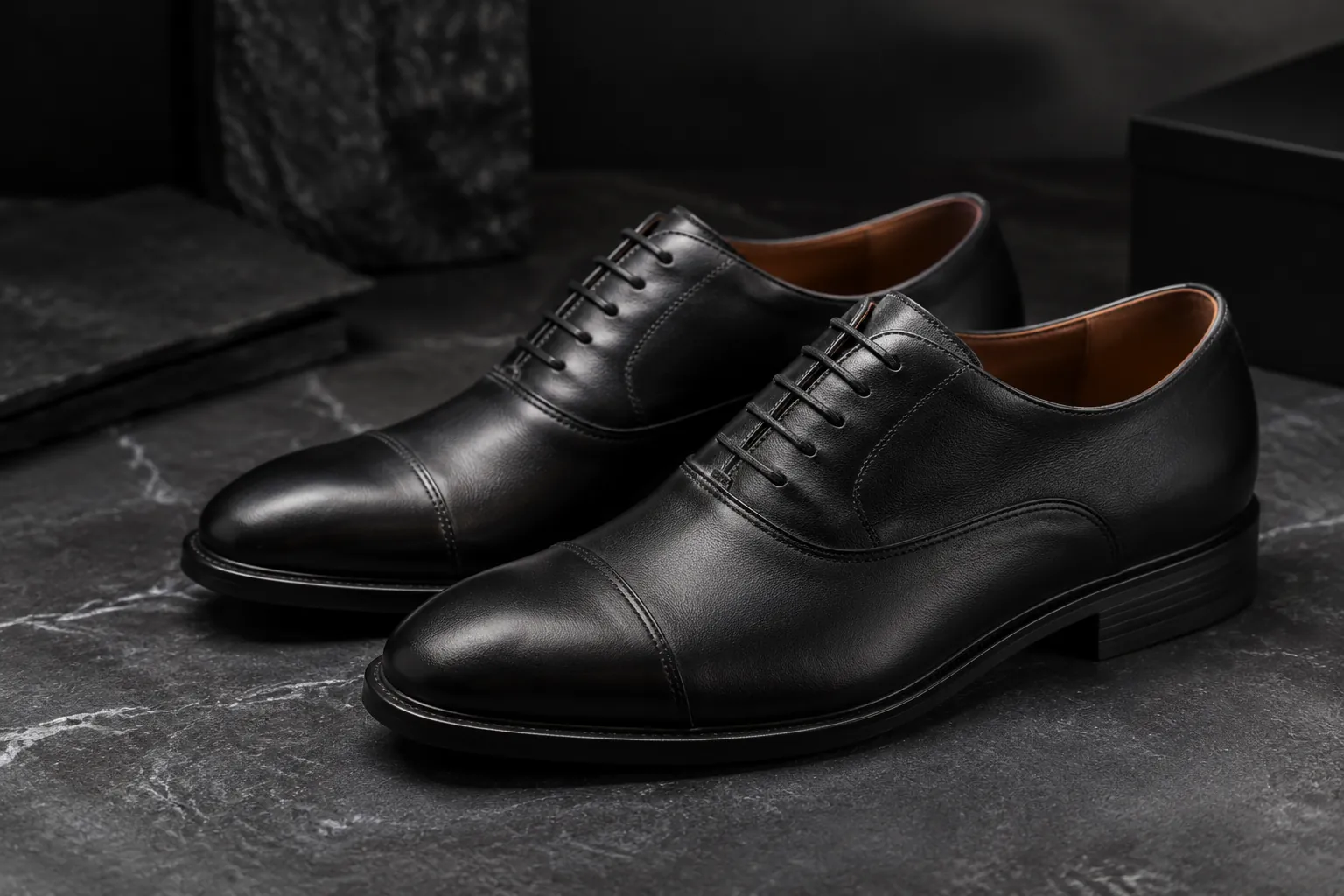
A footwear inquiry can describe the silhouette, materials, and size range clearly while leaving branding, packaging, artwork, and lot identity in separate messages. That does not establish a factory failure or a missing service. It means the buyer's current product definition has a gap: the shoe reference and the presentation references cannot yet be read as one instruction.
A private label Italian-style leather shoe packaging brief is most useful when it treats those presentation details as buyer-controlled identity inputs. The aim is not to predict a production method or assume a packaging capability. It is to show which inputs are known today, which reference belongs to which shoe, and which points remain open for project review.
A definition that includes the pair and its presentation
For a private-label collection, a shoe is presented under more than a style name. A buyer may also need to communicate a brand expression, an intended packaging description, and a way to identify a lot. When those items are disconnected from the shoe reference, teams can make different assumptions about what applies to the same proposed product.
This article uses an editorial recommendation for the buyer: keep the footwear definition and the presentation definition together, but do not call an undecided point a requirement. A current artwork reference, for example, is not automatically a final production instruction. A packaging note without a link to a style reference may be incomplete. The record should make both limitations visible.
Use the published review scope as the boundary
The manufacturer's contact page says that style, market, quantity, size range, materials, branding, packaging, and delivery need are reviewed together rather than priced as isolated line items. That is the documented scope for the inquiry discussion. It gives the buyer a reason to submit connected information for the same proposed product instead of treating presentation details as an afterthought.
The source does not say that every input must be complete before contact, or that the manufacturer designs, prints, sources, or supplies a presentation component. The practical editorial recommendation is narrower: provide the known inputs together, identify their status, and leave unresolved matters as questions. This preserves the difference between a buyer's current direction and a confirmed factory commitment.
The OEM/ODM page separately directs the buyer to state the customer, market, style family, target price position, expected quantity, size range, delivery need, and decisions the factory may propose. That commercial frame belongs alongside the identity record, but it should not be used to fill gaps in artwork or packaging information.
Build a buyer-owned identity record
The following format is editorial guidance, not a required factory form. It can serve as a working leather shoe branding specification because every entry is tied to a shoe reference and marked with its current status. A shoe packaging artwork brief for manufacturers can remain concise when it identifies what the buyer knows rather than adding unsupported technical detail.
- Shoe or style reference
Identify the style, model code, image, or other buyer reference to which the presentation information applies. Where a reference covers more than one variation, name the applicable variations instead of assuming that one note covers all of them.
- Commercial frame
Place the currently known customer, market, style family, target price position, expected quantity, size range, and delivery need beside the shoe reference. Keep any decision the factory may propose distinct from an instruction already fixed by the buyer.
- Footwear materials
Describe the current leather, lining, outsole, or other shoe-material input independently of the presentation references. A logo or packaging description should not be expected to communicate a material decision.
- Brand wording and artwork reference
Record the exact brand-name spelling and a buyer-controlled identifier for the current artwork reference. Note whether that reference is confirmed for discussion, still provisional, or open to internal change.
- Packaging description
State the intended packaging only to the level the buyer has decided, and connect it to the relevant shoe reference. An unknown point can stay open; it need not be converted into an assumed format, material, dimension, or process.
- Lot-identity input
Where a buyer has a lot-identification requirement, identify the affected product reference and describe the requirement in the current record. Where the need is known but the detail is not, label it as an inquiry topic.
Give every entry a visible status
For editorial purposes, three labels are enough: confirmed, provisional, and open. In this record, confirmed means the buyer currently intends the item to be part of the inquiry. Provisional means a reference exists but may change. Open means the buyer has not made the decision. None of those labels represents factory approval, a print instruction, or a production promise.
This small distinction prevents a familiar handoff problem. An attachment can remain useful without being mistaken for the controlling version, and an internal idea can be preserved without being presented as settled. Date or revision references can help the buyer identify the current record, but this is buyer-side document discipline, not evidence of an approval workflow.
In that sense, private label leather shoe packaging requirements are the buyer's known requirements for a particular definition. They are not a claim that every field applies to every program or that any unresolved topic has a pre-established answer.
What incoming control actually covers
The manufacturer's factory-quality page describes an incoming-control step before mixed or unclear materials enter production. The listed review scope includes leather article, color, thickness, lining, outsoles, hardware, packaging, artwork, and lot identity.
That statement is limited in both time and scope. It supports recognizing packaging, artwork, and lot identity as named inputs alongside physical shoe inputs. It does not establish a final inspection regime, an audit result, a traceability certification, a quality guarantee, or a rule that every listed item applies to every project.
| Documented incoming-control item group | Editorial use in the buyer record |
|---|---|
| Leather article, color, thickness, lining, outsoles, and hardware | Keep the physical shoe inputs attached to the footwear definition rather than embedding them in a branding reference. |
| Packaging, artwork, and lot identity | Identify the known presentation and identity inputs beside the same shoe reference, with their current status. |
| Review before mixed or unclear materials enter production | Make ambiguity visible early in the inquiry while retaining unsettled points as questions for review. |
The final column is an editorial recommendation, not a description of a guaranteed process. It reflects the narrow point supported by the source: unclear inputs should not be disguised as settled buyer instructions.
Italian-style is a design label here
Editorial recommendation: use “Italian-style” only to describe an aesthetic direction in the design portion of the brief. It can sit with a visual reference, proportion, or merchandising direction. It should not be used as shorthand for country of origin, manufacturing location, leather provenance, or certification.
Those statements require their own records and support. Keeping that language separate is especially useful when the same definition covers a dress-shoe collection, a loafer program, or another leather footwear style. An aesthetic qualifier should not answer a claim question by implication.
Separate fixed inputs from inquiry questions
The buyer does not need to settle every subject before making contact. The useful division is between what the buyer can state now and what the buyer wants reviewed. The table below keeps that distinction visible without presenting project-specific options as confirmed services.
| State in the current definition | Leave as an inquiry topic |
|---|---|
| The current commercial frame where known: customer, market, style family, target price position, expected quantity, size range, and delivery need. | Which development, sampling, or quotation options may apply to this project. |
| The shoe reference, current material description, brand-name spelling, and identified artwork reference. | Whether any supplied reference needs clarification for the project review. |
| The known packaging description and lot-identity requirement, each linked to the applicable shoe reference. | Any packaging, artwork, or identity decision that remains provisional or open within the buyer's team. |
| The current status of each entry: confirmed, provisional, or open. | Which decisions the factory may propose within the stated commercial frame. |
This format avoids two different errors: asking a factory to infer a requirement from scattered material, and treating a question as though it were an agreed instruction. It also leaves internal teams a concise list of the decisions that still need ownership.
Send one current definition
Before contacting the manufacturer, compare the footwear specification, branding reference, packaging description, and lot-identity note against the same style reference. Retire superseded buyer references from the current set, show provisional material clearly, and make open questions easy to distinguish from confirmed inputs.
Then use the contact page to share the current leather footwear definition and ask which development, sampling, or quotation options may apply to the project. This keeps the inquiry evidence-bound: it requests project review without assuming timing, availability, terms, or a specific presentation capability.
Sources and verification
- Request a Quote | Leather Shoe Manufacturer First-party site source
- Leather Shoe Factory in China | Capability & Export QC First-party site source
- OEM Shoes & ODM Leather Footwear | Custom Shoe Manufacturer First-party site source
Share the current leather footwear definition and ask which development, sampling or quotation options may apply to the project.
Send your project brief