
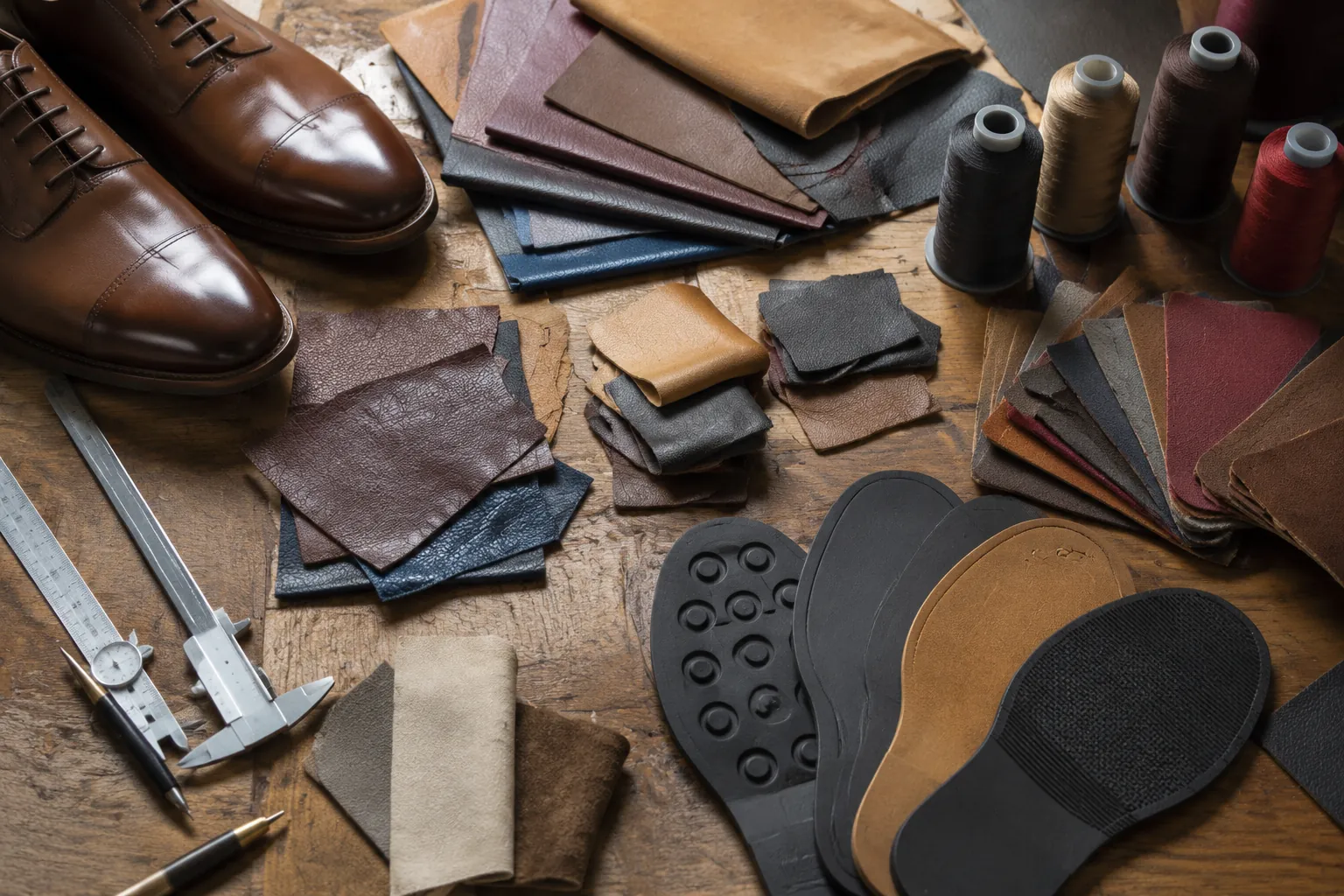
Material board
QC-01
Leather and suede
Choose the surface feel and visual depth that fits your price point.
We keep the process visible from material selection to packing so buyers can approve the style with less risk.
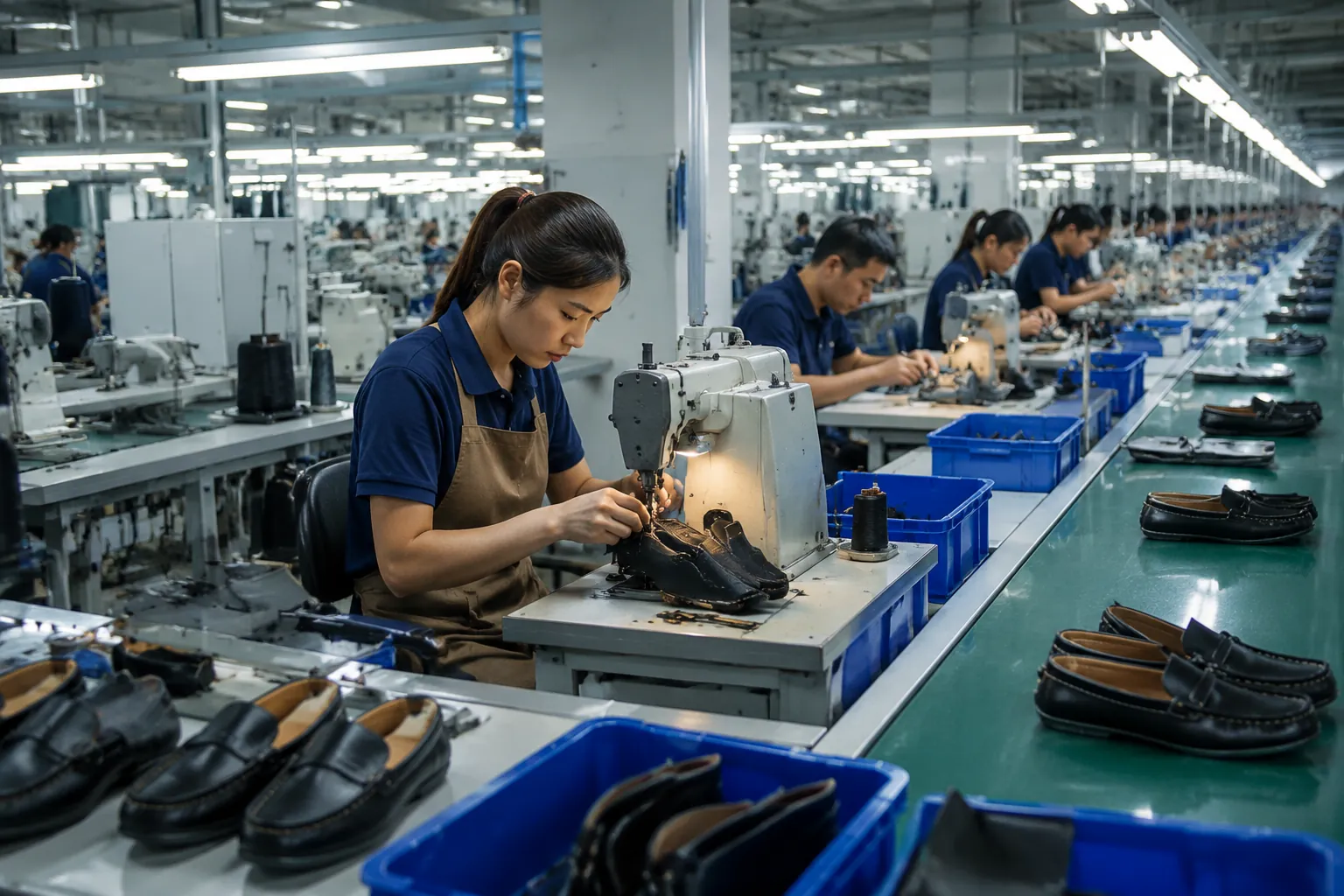
Check leather, lining, sole, and accessory consistency before work starts.
Align upper pieces, stitching lines, and panel symmetry.
Shape the shoe, refine edges, and bring the look into spec.
Confirm pair count, inserts, carton labels, and shipment readiness.
We review color consistency, stitching lines, alignment, glue traces, finishing quality, and packing condition.
| Incoming check | Leather appearance, accessories, and style agreement. |
|---|---|
| In-process check | Stitch direction, symmetry, and fit against the approved sample. |
| Final check | Surface finish, shape, pair match, and label accuracy. |
| Packing check | Box, tissue, carton, and shipment documentation review. |
Choose the surface feel and visual depth that fits your price point.
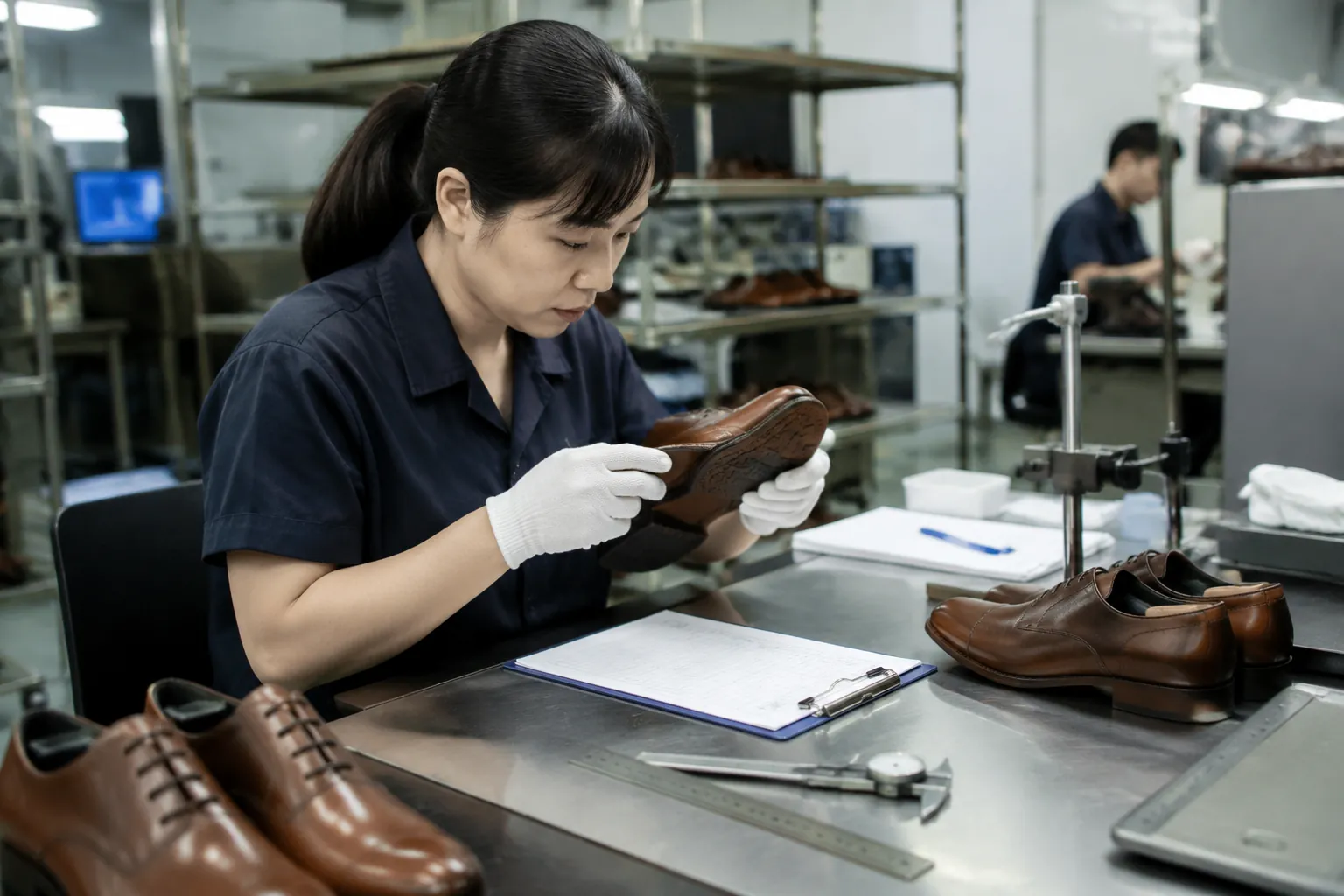
Compare the sample against the bulk pair before shipment.
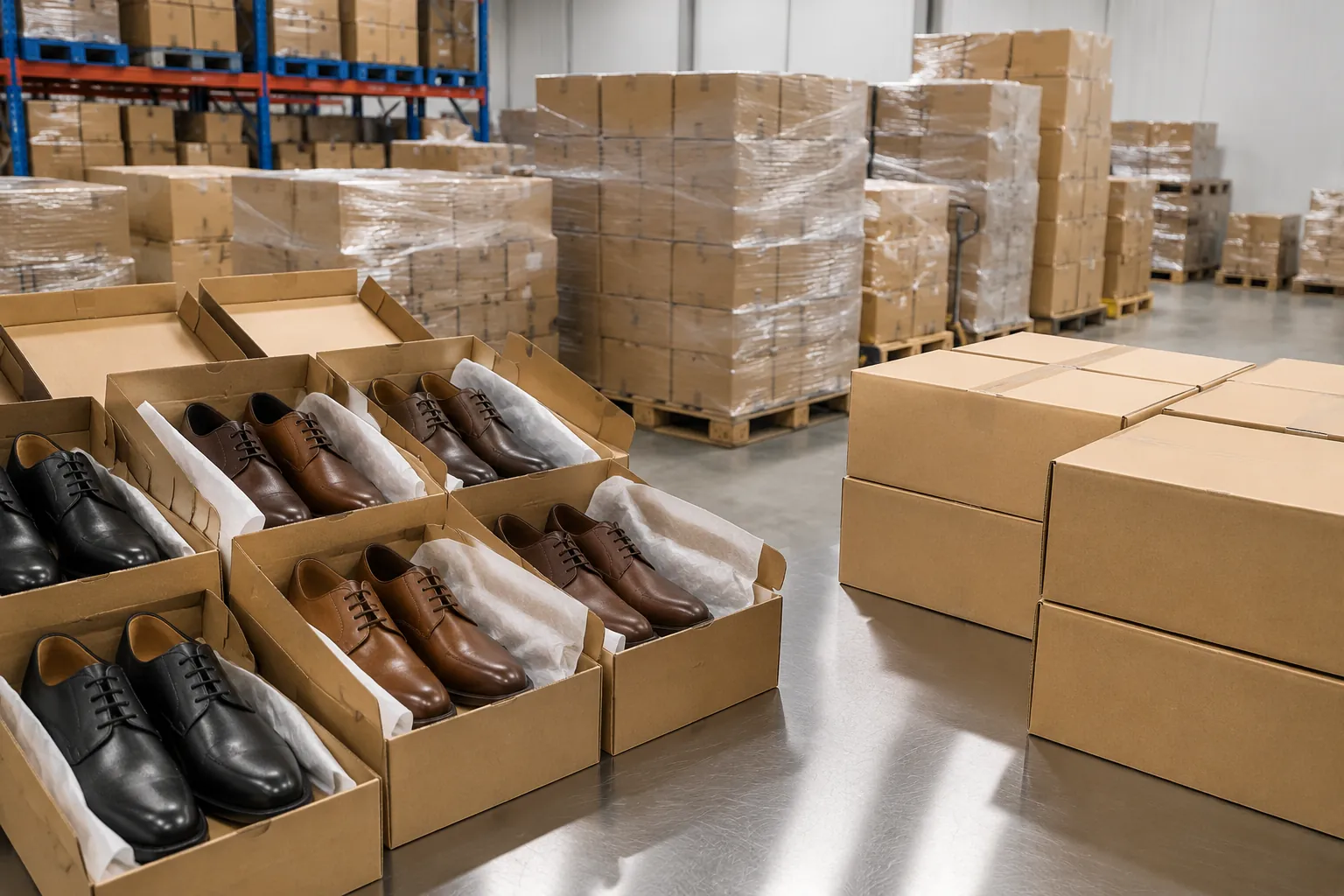
Retail boxes, master cartons, and inserts ready for cross-border delivery.
A final inspection cannot repair leather shade problems, incorrect cutting direction, pattern mismatch, weak stitching, distorted lasting, poor surface preparation, or mixed packaging data after the order is complete. The quality plan should connect incoming material checks, cutting, stitching, lasting, sole attachment, finishing, pair matching, labeling, assortment, and packing to named standards and decision authority.
Before production, agree the approved sample, specification revision, measurement table, defect catalogue, critical points, tests, AQL or customer sampling method, and reporting format. During startup, review first pieces across representative sizes and colors. Inline inspection should focus on the operations most likely to create hidden or repeated defects, with corrective action recorded before output increases.
A final report should identify the order, SKU, quantity, sampled cartons and pairs, defect classification, measurements, functional checks, packaging and label results, photos, unresolved deviations, corrective action, and shipment decision. Retain signed references and reports for claims and reorder learning.
Check leather article, color, thickness, lining, outsoles, hardware, packaging, and artwork before they enter production. Quarantine unclear or mixed materials instead of sorting problems on the line.
Inspect first pieces and high-risk operations such as seam position, reinforcement, lasting shape, adhesive preparation, pressing, finishing, and pair matching while correction remains practical.
Use a documented sampling plan plus quantity, assortment, functional, measurement, labeling, carton, and visual checks. Final inspection confirms control; it should not be the first serious review.
Ask us for the route, the checkpoint list, and the sample-to-bulk plan.