
Construction
Adjust shape, toe profile, height, and the overall commercial feel.
Bring a reference pair, sketch, or market brief. We map a sample-to-production path around your budget.
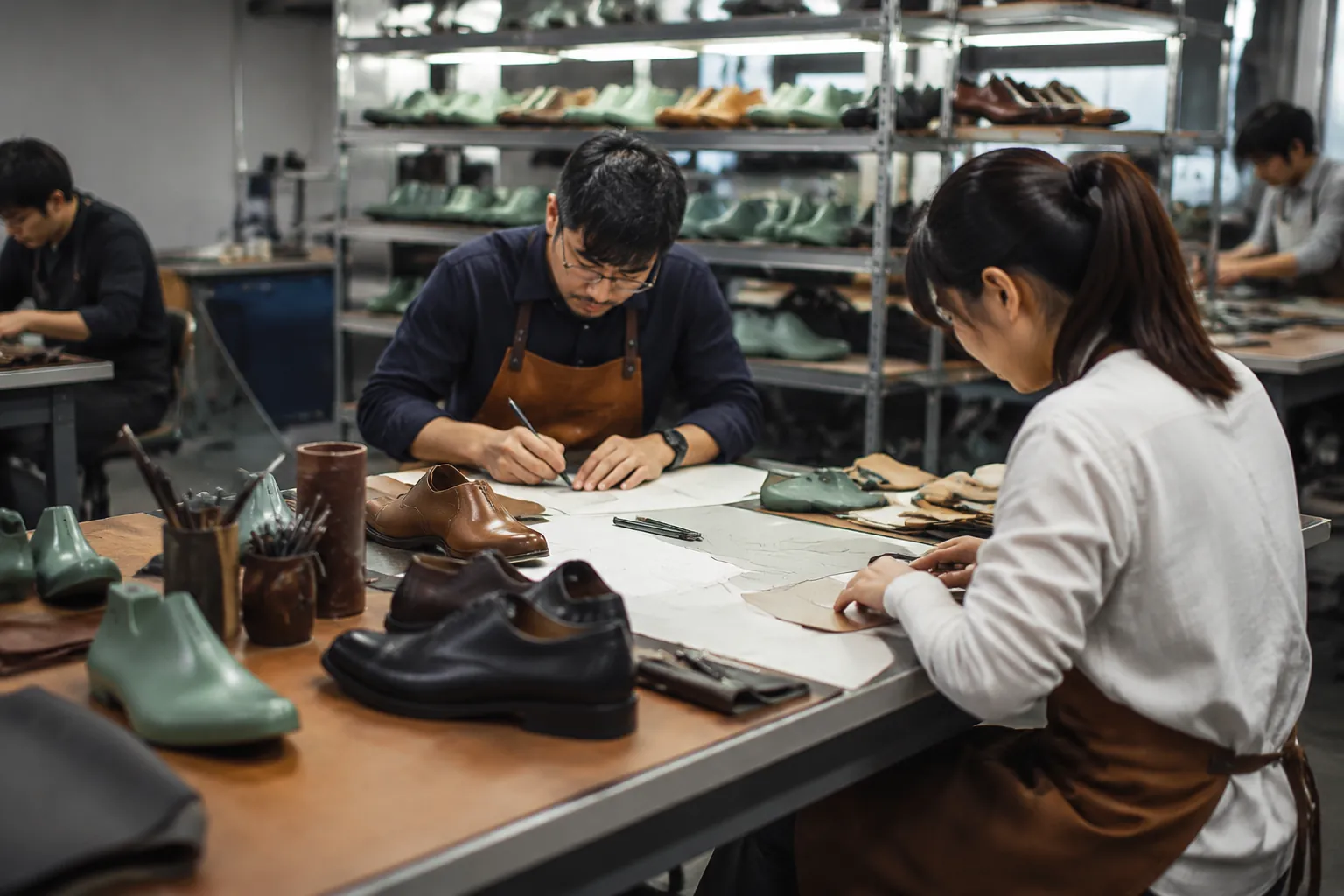
Adjust shape, toe profile, height, and the overall commercial feel.
Select upper leather, lining, outsole, and finishing style for each SKU.
Apply logo embossing, insole print, box art, and dust bag direction.
Share the product family, target market, quantity, preferred materials, logo needs, size range, and reference imagery.
| Best input | Sample pair, tech pack, or clear reference photos. |
|---|---|
| Best buyer fit | Private label brands, importers, and distributor programs. |
| Typical outcome | A sample path that balances style, cost, and repeatability. |
| Our role | We map materials, production path, and branding steps. |
Tell us what the market needs and what the budget should protect.
We align materials, brand details, and sample route.
We review the physical sample and refine details if needed.
Once approved, we move into production and export packing.
An OEM project normally starts with a stronger buyer-controlled reference, drawing, tech pack, last, component, or approved construction. An ODM project gives the factory more room to propose an existing platform, pattern direction, material combination, or range solution. Many delays happen when the project is called ODM but the buyer expects every visible detail to match a protected reference, or when an OEM brief leaves fit and material decisions open.
At kickoff, list the non-negotiable design points, target consumer, price position, size range, quantity, market requirements, artwork ownership, packaging, and delivery window. Then assign who selects the last, sources components, prepares drawings, approves substitutions, pays for tooling, and holds the final physical reference. The quotation should state assumptions instead of hiding them inside a single unit price.
Name the purpose of every sample, such as concept, fit, material confirmation, size set, sales sample, pre-production, or shipment reference. Comments should identify the version, measurement, photo, component, reviewer, due date, and whether the point is open, accepted, or rejected.
Use OEM when the buyer must preserve a defined fit, construction, appearance, or technical package. The factory should confirm manufacturability and risk without silently redesigning the product.
Use ODM when an existing factory platform can reduce development time or tooling. Confirm which parts are shared, what may be customized, and whether the same platform is available to other buyers.
Do not release production from email images alone. Link the purchase order to a named sample, revision-controlled specification, test plan, defect standard, packing file, and approval authority.
We will reply with the most realistic path. We can start from scratch or develop from a sample you already have.