
Dress Shoes
Cap-Toe Oxford Specifications for a Leather Shoe Manufacturer
Use the published cap-toe Oxford control points to turn a visual direction into a buyer-side definition with material notes and commercial context.
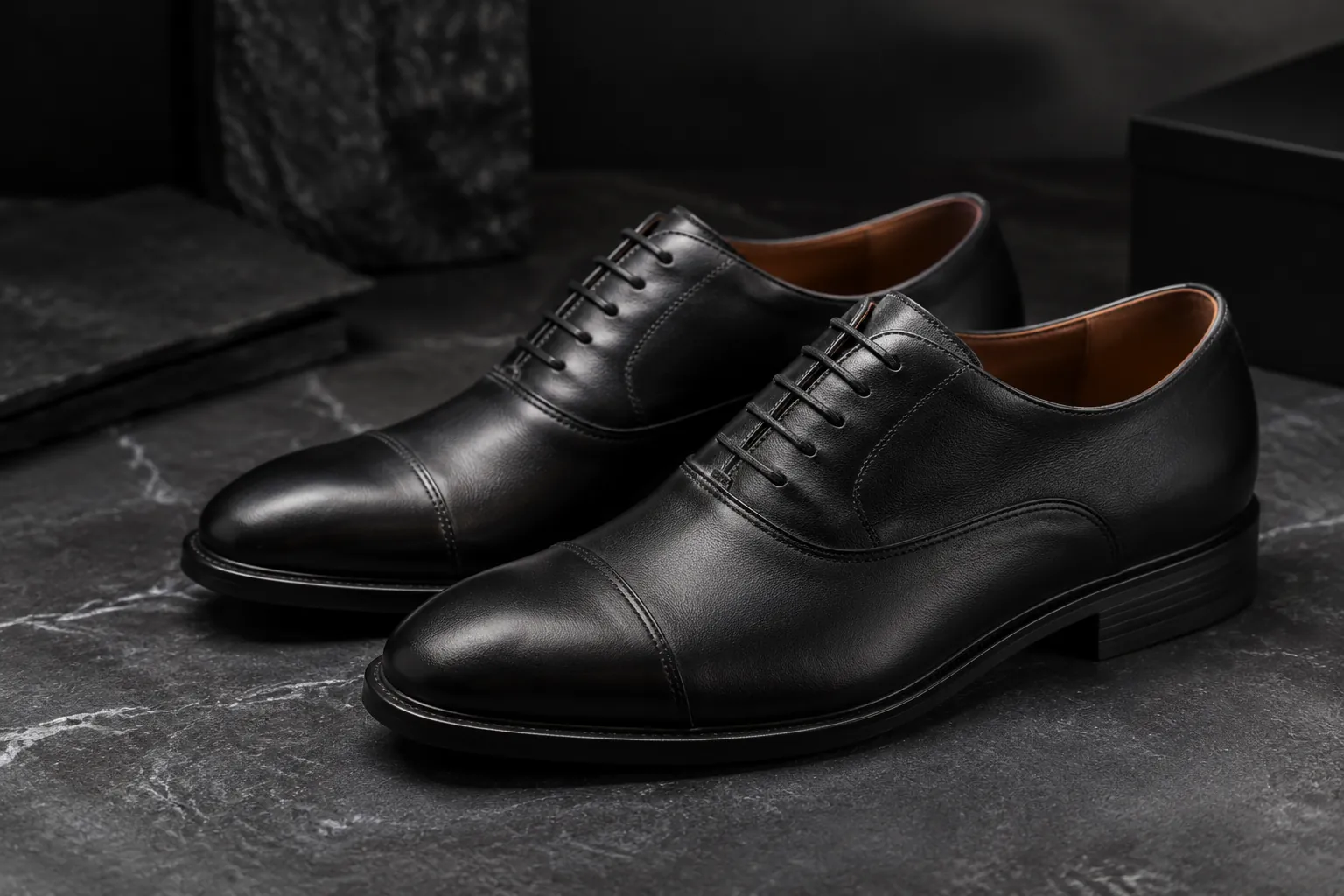
A visual reference can establish the direction of a cap-toe Oxford without recording the decisions behind it. For a buyer, that distinction matters before an inquiry: the image may be the preferred direction, while its toe proportion, polish, or cap placement may still be open for internal decision.
This article recommends a buyer-side decision sheet for cap-toe Oxford specifications for a leather shoe manufacturer. It is not presented as a factory document, technical standard, or production promise. Its purpose is narrower: keep the chosen visual references, the available material notes, and the commercial context in one readable definition, while making unresolved points visible.
Name the Published Five Control Points
The dress-shoes page describes black cap-toe dress shoe D-01 as a Cap-toe Oxford. It treats facing gap, toe proportion, cap placement, polish, and pair symmetry as control points. Those terms give the buyer a focused place to begin rather than a complete specification for the shoe.
For this cap-toe Oxford specification checklist, attach the reference that best shows each point and state its status. The wording can remain brief. The useful distinction is whether the reference represents a confirmed decision, a working direction, or an open question.
- Facing gap: Identify the view the buyer intends to use when discussing this point. Mark whether that view is final direction or a preference under review.
- Toe proportion: Record the reference that represents the intended proportion. When references differ, keep the difference visible instead of silently selecting one.
- Cap placement: Place the relevant image or drawing beside the note. State whether its direction is fixed or still awaiting a decision.
- Polish: Keep the intended visible appearance beside the reference that supports it. Avoid allowing a general image label to stand in for a settled choice.
- Pair symmetry: Use the published term directly. Label the intended direction and its current status without turning it into an unstated technical standard.
These leather dress shoe control points are most useful when the record exposes uncertainty rather than disguising it. A single line that says a point is open can prevent a reference image from being treated as a complete instruction.
Give Each Entry a Decision Status
The five points are visual anchors, but a buyer still needs a simple way to distinguish an instruction from a discussion topic. This article recommends three status labels: confirmed, directional, and open. They describe the buyer's present position, not a documented approval process or factory workflow.
- Confirmed
- The buyer is ready to present the reference as the intended direction for the current inquiry.
- Directional
- The reference expresses a preference, but the buyer has not yet treated it as a settled choice.
- Open
- The buyer wants the point to remain visible because no direction has been selected.
A short decision sheet can therefore include both a clear cap placement reference and an open note on polish. That is more informative than implying every visible feature has already been decided. It also keeps a later discussion attached to the exact point under review.
Keep Material Notes With the Shoe Definition
The factory-quality page says the company reviews leather article, color, thickness, lining, outsoles, hardware, packaging, artwork, and lot identity before mixed or unclear materials enter production. For the buyer's own brief, the practical recommendation is to keep the material information already available beside the cap-toe Oxford references instead of leaving it in disconnected files.
| Published incoming-review category | Editorial recommendation for the buyer brief |
|---|---|
| Leather article | Record the current material description and the reference associated with it. |
| Color | Identify the available color reference and label any uncertainty. |
| Thickness | Keep the buyer's current information with the relevant style version. |
| Lining | State whether lining information is available, provisional, or open. |
| Outsoles | Keep outsole notes separate from the upper reference while retaining both in the same brief. |
| Hardware | Indicate whether hardware is relevant to the current style direction. |
| Packaging | List the buyer's existing packaging input as a separate item from the shoe appearance. |
| Artwork | Attach or identify the artwork available for the inquiry without treating it as part of the upper definition. |
| Lot identity | Retain the reference information available to the buyer and mark any missing detail as open. |
The supplied page supports the stated incoming-material review and its timing before mixed or unclear materials enter production. This article does not treat that statement as evidence of certifications, testing, sourcing origin, buyer approval procedures, or wider production-stage inspection. A buyer can keep such subjects as separate questions when they are relevant to the project.
Keep the Commercial Inputs in Their Source Context
The OEM and ODM page asks the buyer to state the customer, market, style family, target price position, expected quantity, size range, delivery need, and decisions the factory may propose. That is one published set of commercial inputs.
The contact page separately says style, market, quantity, size range, materials, branding, packaging, and delivery need are reviewed together rather than priced as isolated line items. This is a second published statement with its own list and scope.
| Source | What the published page says to provide or review |
|---|---|
| OEM and ODM page | Customer, market, style family, target price position, expected quantity, size range, delivery need, and decisions the factory may propose. |
| Contact page | Style, market, quantity, size range, materials, branding, packaging, and delivery need are reviewed together rather than priced as isolated line items. |
For a formal shoe manufacturing inquiry, this article recommends retaining these as separate source notes instead of merging them into a new company-wide checklist. The buyer can use the notes to explain the commercial setting of the cap-toe Oxford, but neither page is evidence of a guaranteed quotation, production result, or development path.
Use the Unanswered Column Only for Questions
A useful handoff separates information the buyer can state today from subjects the buyer wants to ask about. This makes the inquiry readable without presenting a preference as a commitment or an unanswered topic as a documented service.
| State as a current buyer input | Ask as a project-specific question |
|---|---|
| The selected references for facing gap, toe proportion, cap placement, polish, and pair symmetry, with a status for each point. | Which development options, if any, may apply to the project? |
| The available notes for leather article, color, thickness, lining, outsoles, hardware, packaging, artwork, and lot identity, including identified gaps. | Which sampling options, if any, may apply to the project? |
| The buyer's available customer, market, style-family, price-position, quantity, size-range, and delivery information. | Which quotation options, if any, may apply to the project? |
The question column does not state that development, sampling, or quotation services are available. It simply gives the buyer a bounded way to ask what may apply after sharing the style and commercial inputs.
Send the Definition as One Brief
Before making contact, gather the controlling references, the five published cap-toe Oxford points, the status assigned to each point, the available material notes, and the buyer's commercial information. Remove superseded references or mark them as alternatives so the recipient can identify the direction the buyer is discussing.
Then use the contact page to share the current definition and ask which development, sampling, or quotation options may apply to the project. The contact-page statement places style and commercial inputs together for review rather than treating them as isolated price lines. A concise brief that keeps those inputs connected gives the inquiry a defined subject without claiming more than the published pages support.
Sources and verification
- Custom Leather Dress Shoes Manufacturer | OEM & Private Label First-party site source
- Leather Shoe Factory in China | Capability & Export QC First-party site source
- OEM Shoes & ODM Leather Footwear | Custom Shoe Manufacturer First-party site source
- Request a Quote | Leather Shoe Manufacturer First-party site source
Share the current leather footwear definition and ask which development, sampling or quotation options may apply to the project.
Send your project brief