
Sourcing Guides
Genuine Leather Shoe Quote Request Checklist: A Decision Map
A buyer-owned way to present a current leather footwear brief, distinguish unresolved items, and frame questions for project review.
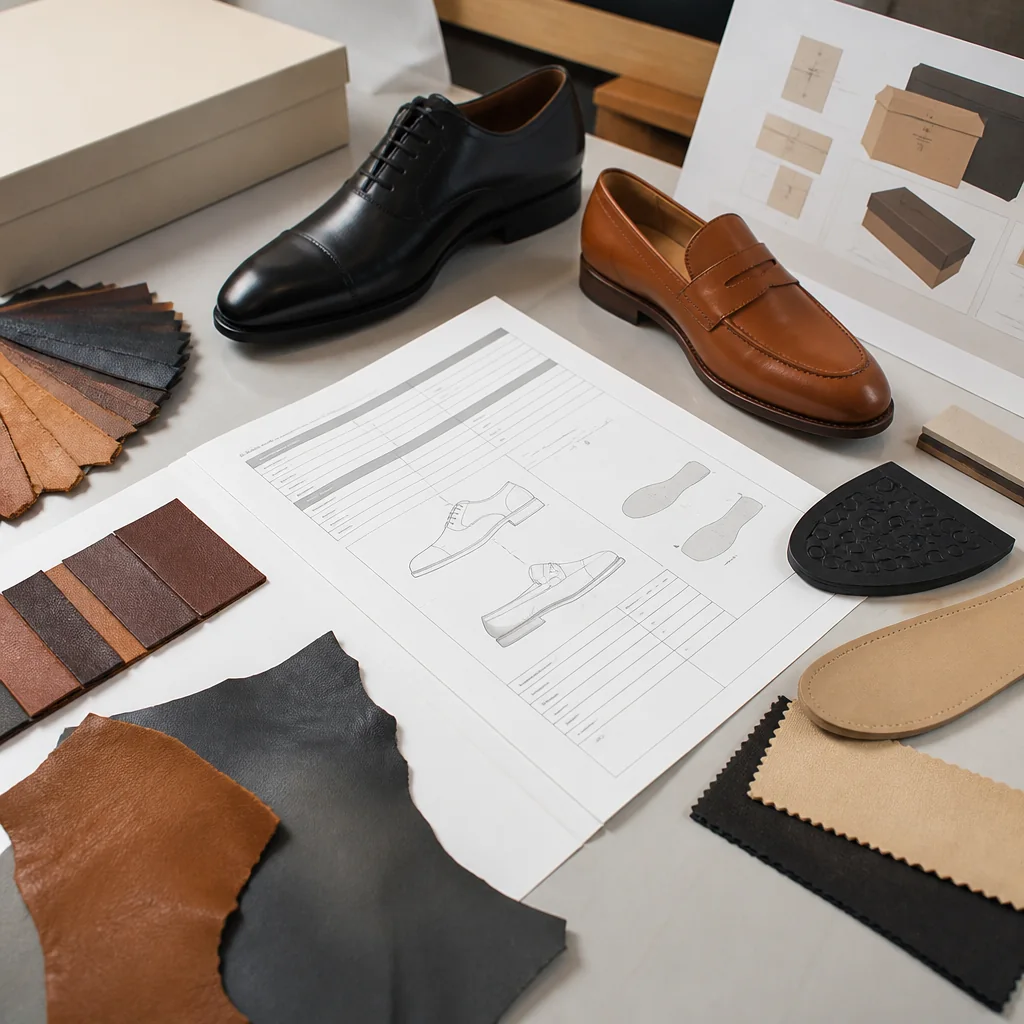
A quote inquiry becomes harder to read when a design reference, material preference, brand file, and commercial assumption arrive as though each carries the same authority. A genuine leather shoe quote request checklist can give those inputs a visible place without pretending that every decision has already been made. The aim is a working definition of the project: what the buyer has set, what is still preferred, and what needs discussion.
On its contact page, Leather Shoe Manufacturer states that style, market, quantity, size range, materials, branding, packaging, and delivery need are reviewed together rather than priced as isolated line items. This article uses that published commercial frame as the basis for a buyer-owned preparation method. It is not a published submission form, a quotation commitment, or a statement about timing, pricing, sampling, or production.
What belongs in the commercial frame?
The contact-page statement joins product and commercial information in one review. For the buyer, the recommended arrangement is to give each listed topic its own short entry rather than burying it in an image annotation or a general email introduction. This makes an OEM leather shoe sourcing brief easier to update when one part of the definition changes.
- Style
- Name the intended silhouette and identify the design reference that best represents it. Note any visible feature that the reference does not capture.
- Market
- Record the intended market as it is currently understood. Where the destination is unsettled, identify that point as open.
- Quantity
- State the present quantity view when the buyer has one. Do not turn an estimate into a settled requirement.
- Size range
- List the current size-range direction separately from quantity so the two decisions remain distinct.
- Materials
- Separate a selected material from a material preference or an unresolved material choice.
- Branding
- Identify available brand elements and distinguish them from assets that are still being prepared.
- Packaging
- Describe the packaging direction independently from the footwear specification and from artwork files.
- Delivery need
- State the delivery context known to the buyer without presenting it as a commitment from the manufacturer.
These entries do not need matching levels of detail. A style direction may be clear while the branding file is not ready, or a size range may be available while the quantity remains open. The recommended practice is to leave that difference visible. A short, candid note is more useful than filling an unknown field with a guess.
Status labels for the working brief
The following labels are a buyer recommendation, not factory terminology or a required workflow. They give the reader a way to distinguish a current instruction from background material and open project questions.
- Defined: The buyer's current choice for the project.
- Preferred: The direction the buyer favors but has not set as final.
- Reference: A sample, swatch, file, or reference image that communicates direction without becoming the controlling instruction.
- Open: A matter the buyer wants to raise for project-specific discussion.
For a private label leather shoe quote request, these labels can sit beside a file name, component note, or commercial entry. A reference image can be useful without being mistaken for a finished specification. Likewise, a preferred lining or packaging direction should not be read as a defined choice merely because it appears in the same folder as final artwork.
Component detail needs separate lines
The factory and quality page describes an incoming control that reviews leather article, color, thickness, lining, outsoles, hardware, packaging, artwork, and lot identity before mixed or unclear materials enter production. That statement concerns the company's incoming production control. It does not establish a buyer inspection duty or a pre-quotation approval sequence.
For preparing an inquiry, the recommendation is to use those published items as separate prompts for information already known and for information still open. This approach does not imply that every line has been approved or must be complete before contact.
| Published incoming item | Buyer preparation note |
|---|---|
| Leather article | Name the current article direction when selected, or mark the article as open. |
| Color | Identify the applicable color reference and its status in the working brief. |
| Thickness | Record a thickness requirement only where the buyer has defined one; otherwise identify it for discussion. |
| Lining | State the selected lining or distinguish a broad preference from the current choice. |
| Outsoles | Give the outsole a separate entry instead of folding it into a general material description. |
| Hardware | Where hardware applies, identify the relevant reference. Where it does not apply, the brief can say so. |
| Packaging | Keep packaging direction distinct from the shoe details and brand artwork. |
| Artwork | List available artwork files and identify assets still in progress. |
| Lot identity | Record any lot-identity point the buyer already has, or leave the item open for discussion. |
This is a practical way to make a leather footwear specification for quotation more legible. It separates an exact component instruction from a visual preference and makes omissions visible without inventing a requirement that the buyer has not made.
Oxford and penny-loafer notes are not interchangeable
Two product excerpts identify control points for their respective styles. The cap-toe Oxford description identifies facing gap, toe proportion, cap placement, polish, and pair symmetry as control points. Separately, the penny loafer description identifies saddle proportion, apron symmetry, vamp length, opening retention, heel hold, and flex for that core style.
For this buyer-owned method, the recommendation is to keep these source-bounded lists in separate style notes. The product pages do not prescribe a quotation-request workflow, and neither list should be carried across to another silhouette as though it were a universal footwear specification.
| Applicable style | Published control points | Recommended brief treatment |
|---|---|---|
| Cap-toe Oxford | Facing gap, toe proportion, cap placement, polish, and pair symmetry. | Place these points in an Oxford-specific note and distinguish defined details from open ones. |
| Penny loafer | Saddle proportion, apron symmetry, vamp length, opening retention, heel hold, and flex. | Keep these details in a separate loafer note rather than hiding them in a general materials section. |
A collection can therefore use one shared commercial frame with more than one product note. The buyer recommendation is to add a style note only when an applicable reference supports the discussion. The Oxford list does not establish requirements for a penny loafer, sneaker, or another shoe type; the same limit applies to the penny-loafer list.
Questions for project review
A working definition does not need to conceal its gaps. The following sequence is a buyer recommendation for separating current project information from matters that need a project-specific response.
- Present the defined material. Group the commercial frame, available references, known component information, branding direction, packaging direction, and any applicable style note.
- Make open matters visible. Keep unresolved materials, artwork, quantity, size-range, and style details out of the defined section.
- Name the governing reference. When files differ, identify which one reflects the current buyer direction and which ones remain background references.
- Ask direct questions. Ask whether development, sampling, or quotation options may apply to the project rather than assuming that an option is available.
This format keeps the request focused. It lets the buyer ask for assessment while preserving the difference between a commercial decision already made and a topic still under consideration.
A current definition can start the conversation
The finished inquiry can remain compact: a commercial frame, the relevant product detail, the status of key references, and a short list of questions. Share the current definition through the contact page and ask which development, sampling, or quotation options may apply to the project.
As the buyer resolves choices, update the same brief instead of letting a later preference silently replace an earlier instruction. A visible defined choice, visible open question, and style-specific note give the next project discussion a clearer starting point.
Sources and verification
- Request a Quote | Leather Shoe Manufacturer First-party site source
- Leather Shoe Factory in China | Capability & Export QC First-party site source
- Custom Leather Dress Shoes Manufacturer | OEM & Private Label First-party site source
- Custom Loafers Manufacturer | OEM & Private Label Leather Loafers First-party site source
Share the current leather footwear definition and ask which development, sampling or quotation options may apply to the project.
Send your project brief