
Direct answer
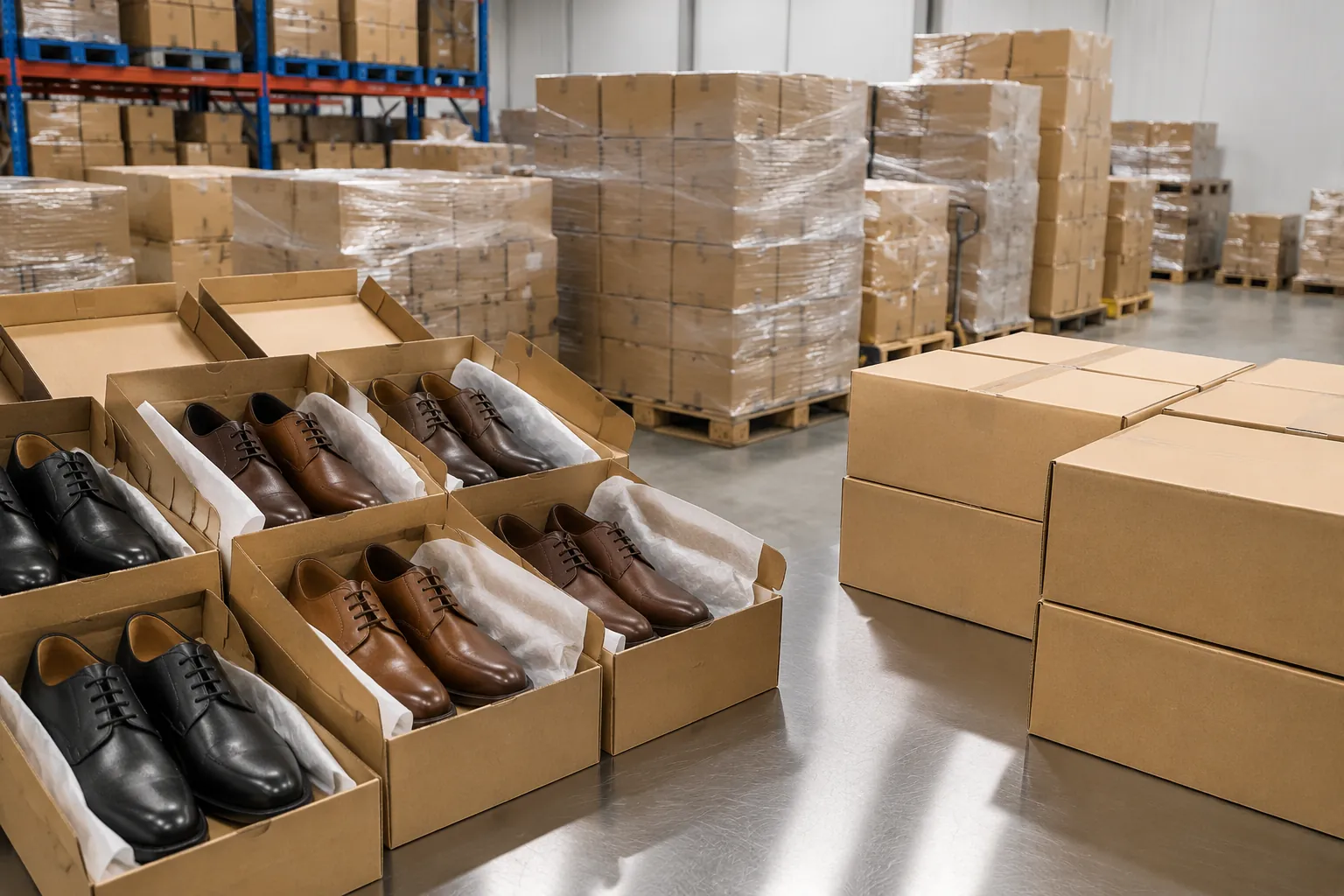
Approve a complete pack-out using production-representative shoes and packaging. Define internal supports, contact protection, moisture strategy, box clearance, labels, pairs per carton, carton strength, gross weight, sealing, marks, loading, and receiving checks.
Buyer terminology and search intent
Buyers often reach the same sourcing problem through different phrases. Use each term to build a controlled product brief rather than a broad supplier promise.
- shoe packagingThis guide uses the phrase as a practical buying topic and connects it to the specification, risk, and approval decisions behind leather shoe packaging and shipping guide.
- shoe box manufacturersThis supplier-search phrase usually signals commercial intent. Buyers should still verify the actual factory, category capability, and order model.
- private label shoesThis phrase points to development or brand ownership. It should lead to a clear brief covering fit, materials, construction, artwork, quantity, and approvals.
- shoes manufacturing companyThis product phrase should be qualified by target customer, material, construction, fit, size range, outsole, and intended occasion.
Specification points to confirm
Use these five controls to make quotations and samples comparable. Name the reference, method, tolerance, owner, and approval status for every point that can change cost or quality.
| Control point | What the buyer should define | Why it matters |
|---|---|---|
| Shape protection | Specify toe stuffing, trees or sticks where appropriate, heel support, paper placement, strap or lace position, and pair orientation. | Support should preserve shape without stretching the upper or creating pressure marks. |
| Surface separation | Use tissue, bags, wraps, films, or separators suited to leather finish, suede nap, patent surfaces, and metal hardware. | Materials that are safe for one finish may transfer color, trap moisture, or mark another. |
| Moisture control | Define material conditioning, storage humidity, ventilation, desiccant or mold-prevention measures where appropriate, and packing timing. | Moisture risk must be controlled across production, storage, transit, and destination climate. |
| Box and labels | Set dimensions, board, print, SKU, size, color, barcode, country marking, care information, and label placement. | Packaging data is part of order accuracy and customs or retail receiving. |
| Carton and loading | Define assortment, pairs per carton, carton dimensions, strength, weight limit, marks, sealing, palletization or floor loading, and count checks. | Outer packing must survive the selected route and fit the buyer's warehouse process. |
A four-stage buyer workflow
Turn the research into a decision that the factory can quote, sample, manufacture, inspect, and repeat.
Map product and market
Define destination, channel, product classification inputs, labels, packing, trade term, delivery need, and responsible parties. Apply this control: Specify toe stuffing, trees or sticks where appropriate, heel support, paper placement, strap or lace position, and pair orientation. Support should preserve shape without stretching the upper or creating pressure marks.
Freeze pack and documents
Approve the complete pack-out, artwork, carton plan, shipment data, document list, and change cutoff. Apply this control: Use tissue, bags, wraps, films, or separators suited to leather finish, suede nap, patent surfaces, and metal hardware. Materials that are safe for one finish may transfer color, trap moisture, or mark another.
Inspect and hand over cargo
Connect final inspection, release, payment, booking, cargo-ready status, loading, and document issue to one checklist. Apply this control: Define material conditioning, storage humidity, ventilation, desiccant or mold-prevention measures where appropriate, and packing timing. Moisture risk must be controlled across production, storage, transit, and destination climate.
Receive and close the loop
Count, inspect, record damage or variance, preserve evidence, and feed receiving results into the next order. Apply this control: Set dimensions, board, print, SKU, size, color, barcode, country marking, care information, and label placement. Packaging data is part of order accuracy and customs or retail receiving.
Sourcing risks and practical controls
Raise the assumptions most likely to change fit, appearance, cost, quality, or delivery before final sample approval.
Metal hardware contacts the opposite shoe
Control: Add fixed orientation and non-abrasive separation tested through transport simulation or handling review.
Shoes are packed before finishing materials stabilize
Control: Set conditioning and inspection time before wrapping and boxing.
Carton assortment differs from the packing list
Control: Use scan, count, seal, and independent verification steps linked to carton IDs.
RFQ checklist
Attach images, drawings, a reference pair, or a tech pack, then state the order, market, and approval assumptions the factory must confirm.
- Shape protection: Specify toe stuffing, trees or sticks where appropriate, heel support, paper placement, strap or lace position, and pair orientation.
- Surface separation: Use tissue, bags, wraps, films, or separators suited to leather finish, suede nap, patent surfaces, and metal hardware.
- Moisture control: Define material conditioning, storage humidity, ventilation, desiccant or mold-prevention measures where appropriate, and packing timing.
- Box and labels: Set dimensions, board, print, SKU, size, color, barcode, country marking, care information, and label placement.
- Carton and loading: Define assortment, pairs per carton, carton dimensions, strength, weight limit, marks, sealing, palletization or floor loading, and count checks.
- Order architecture: Estimated pairs by style, color, material, and size, plus launch and reorder expectations.
- Market requirements: Destination, channel, labels, testing, packaging, trade term, and customer-specific standards.
- Approval path: Sample purpose, reviewers, comment format, physical references, inspection plan, and release authority.
Frequently asked questions
These answers frame the most common buying decisions for this topic.
Should leather shoes be packed in plastic bags?
It depends on leather finish, moisture condition, route, climate, and packaging system. Any bag should be evaluated for breathability, transfer, condensation, and market requirements.
How can boxes avoid crushing?
Use suitable dimensions, board and structure, efficient carton packing, weight limits, stacking design, loading discipline, and transport handling controls.
What should a packing approval sample include?
Include finished shoes, every internal support and wrap, labels, box, inserts, accessories, master carton orientation, carton marks, and a documented pack sequence.