
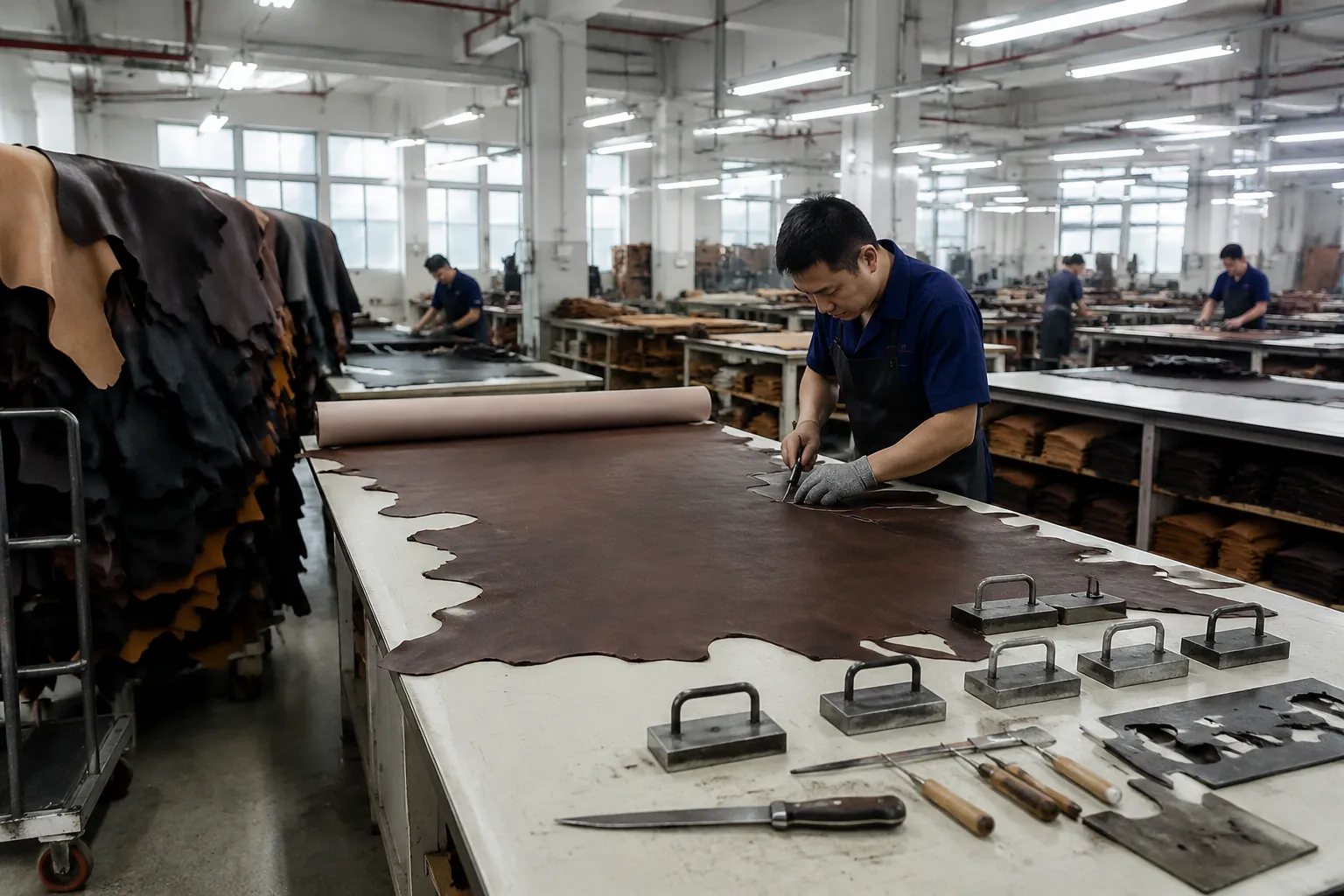
Direct answer
Build a milestone plan backward from the required delivery date. Assign an owner, input, approval deadline, and contingency to every stage. Do not start the production clock until specification, materials, order details, payment conditions, and approval status meet the agreed release gate.
Buyer terminology and search intent
Buyers often reach the same sourcing problem through different phrases. Use each term to build a controlled product brief rather than a broad supplier promise.
- shoe production lead timeThis guide uses the phrase as a practical buying topic and connects it to the specification, risk, and approval decisions behind leather shoe production lead times: how to build a realistic plan.
- shoe manufactureUse the term as an entry point, then replace broad language with measurable specifications and named approval evidence.
- manufacturing shoesThis product phrase should be qualified by target customer, material, construction, fit, size range, outsole, and intended occasion.
- custom shoe manufacturersThis supplier-search phrase usually signals commercial intent. Buyers should still verify the actual factory, category capability, and order model.
Specification points to confirm
Use these five controls to make quotations and samples comparable. Name the reference, method, tolerance, owner, and approval status for every point that can change cost or quality.
| Control point | What the buyer should define | Why it matters |
|---|---|---|
| Milestone definition | Separate brief, quotation, sample rounds, material approval, tooling, order release, production, inspection, packing, booking, and transit. | One total number hides the stage that is most likely to delay the program. |
| Critical materials | Identify leather, custom outsole, hardware, packaging, labels, and imported or seasonal components with their supplier lead times. | The slowest approved component often controls the production start. |
| Approval calendar | Set dates for comments, color, fit, wear, testing, artwork, packaging, and confirmation sample decisions. | Buyer response time is part of the schedule and should be visible. |
| Capacity and sequence | Confirm line window, cutting release, stitching, lasting, bottom work, finishing, inspection, and packing sequence by style. | Factory capacity must match the actual SKU mix, not only total pairs. |
| Logistics handoff | Define cargo-ready date, booking cutoffs, document deadlines, consolidation, port or airport handling, and destination receiving. | Production completion is not the same as market delivery. |
A four-stage buyer workflow
Turn the research into a decision that the factory can quote, sample, manufacture, inspect, and repeat.
Map product and market
Define destination, channel, product classification inputs, labels, packing, trade term, delivery need, and responsible parties. Apply this control: Separate brief, quotation, sample rounds, material approval, tooling, order release, production, inspection, packing, booking, and transit. One total number hides the stage that is most likely to delay the program.
Freeze pack and documents
Approve the complete pack-out, artwork, carton plan, shipment data, document list, and change cutoff. Apply this control: Identify leather, custom outsole, hardware, packaging, labels, and imported or seasonal components with their supplier lead times. The slowest approved component often controls the production start.
Inspect and hand over cargo
Connect final inspection, release, payment, booking, cargo-ready status, loading, and document issue to one checklist. Apply this control: Set dates for comments, color, fit, wear, testing, artwork, packaging, and confirmation sample decisions. Buyer response time is part of the schedule and should be visible.
Receive and close the loop
Count, inspect, record damage or variance, preserve evidence, and feed receiving results into the next order. Apply this control: Confirm line window, cutting release, stitching, lasting, bottom work, finishing, inspection, and packing sequence by style. Factory capacity must match the actual SKU mix, not only total pairs.
Sourcing risks and practical controls
Raise the assumptions most likely to change fit, appearance, cost, quality, or delivery before final sample approval.
The schedule begins before materials are approved
Control: Use a formal release gate and show provisional work separately from committed production.
All styles are assumed to move in parallel
Control: Map shared lasts, molds, materials, operators, and inspection resources that create dependencies.
No time is reserved for failed inspection or testing
Control: Add decision and corrective-action buffers based on product risk rather than an arbitrary percentage.
RFQ checklist
Attach images, drawings, a reference pair, or a tech pack, then state the order, market, and approval assumptions the factory must confirm.
- Milestone definition: Separate brief, quotation, sample rounds, material approval, tooling, order release, production, inspection, packing, booking, and transit.
- Critical materials: Identify leather, custom outsole, hardware, packaging, labels, and imported or seasonal components with their supplier lead times.
- Approval calendar: Set dates for comments, color, fit, wear, testing, artwork, packaging, and confirmation sample decisions.
- Capacity and sequence: Confirm line window, cutting release, stitching, lasting, bottom work, finishing, inspection, and packing sequence by style.
- Logistics handoff: Define cargo-ready date, booking cutoffs, document deadlines, consolidation, port or airport handling, and destination receiving.
- Order architecture: Estimated pairs by style, color, material, and size, plus launch and reorder expectations.
- Market requirements: Destination, channel, labels, testing, packaging, trade term, and customer-specific standards.
- Approval path: Sample purpose, reviewers, comment format, physical references, inspection plan, and release authority.
Frequently asked questions
These answers frame the most common buying decisions for this topic.
How long does leather shoe production take?
There is no reliable universal number. Timing depends on development status, materials, tooling, quantity, SKU complexity, approvals, capacity, quality issues, packing, and shipping route. Ask for a milestone plan.
What usually delays custom shoes?
Common causes include incomplete specifications, late comments, unavailable materials, tooling revisions, fit problems, artwork errors, fragmented quantities, capacity changes, failed tests, rework, and freight cutoffs.
Can sampling and material booking happen at the same time?
Sometimes, but early commitments create risk if fit, color, or construction changes. Define which materials may be reserved provisionally and who carries the cost if approval changes.