
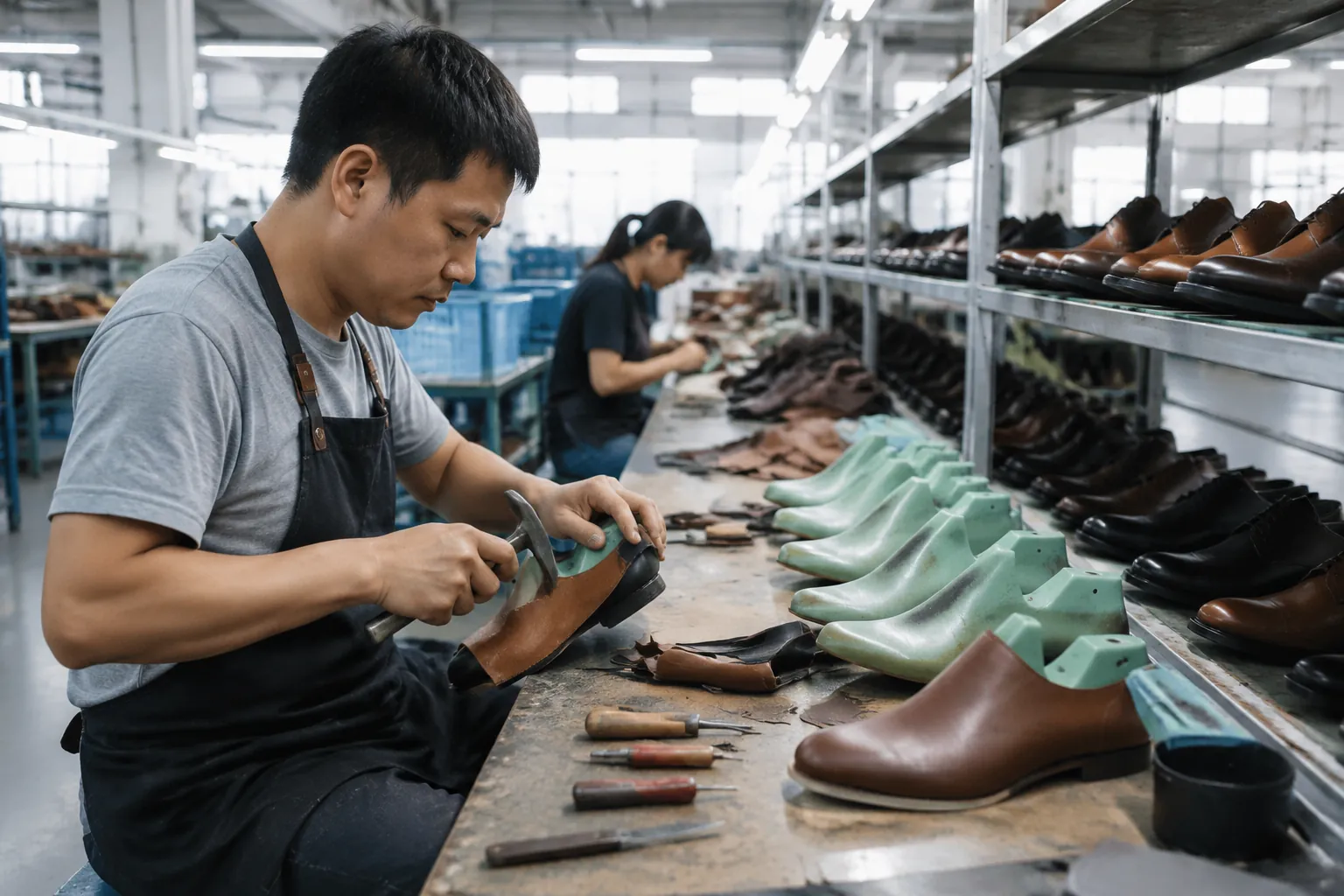
Direct answer
Treat the approved sample and specification as the control point for every process. Inspect leather before cutting, check pattern and stitching before lasting, verify last and outsole compatibility during bottom work, and complete pair matching and packing checks before shipment.
Buyer terminology and search intent
Buyers often reach the same sourcing problem through different phrases. Use each term to build a controlled product brief rather than a broad supplier promise.
- manufacturing shoesThis guide uses the phrase as a practical buying topic and connects it to the specification, risk, and approval decisions behind leather shoe manufacturing process: a buyer-focused guide.
- shoes manufacturing companyThis product phrase should be qualified by target customer, material, construction, fit, size range, outsole, and intended occasion.
- shoe manufactureUse the term as an entry point, then replace broad language with measurable specifications and named approval evidence.
- handmade leather footwearUse the term as an entry point, then replace broad language with measurable specifications and named approval evidence.
Related buyer searches
These SEMrush variants express closely related product research. They are grouped on this page because the sourcing answer depends on the same fit, material, construction, quality, and order controls.
- handmade leather slip on shoes
- beautifully crafted handmade leather loafers for men
Specification points to confirm
Use these five controls to make quotations and samples comparable. Name the reference, method, tolerance, owner, and approval status for every point that can change cost or quality.
| Control point | What the buyer should define | Why it matters |
|---|---|---|
| Material receiving | Check leather identity, color range, thickness or hand feel, usable area, defects, lining, components, and approved references before release. | Early segregation prevents unsuitable material from becoming costly work in progress. |
| Cutting and preparation | Control pair matching, cutting direction, skiving, splitting, reinforcement, marking, and bundle identification. | Natural leather variation and incorrect preparation can create visible pair differences or weak seams. |
| Closing and stitching | Inspect seam allowance, stitch density, thread, alignment, folded edges, reinforcements, and upper symmetry. | Upper defects become harder to repair after lasting and sole attachment. |
| Lasting and bottom work | Confirm the correct last, conditioning, toe and heel shape, feather edge, insole position, roughing, adhesive process, and outsole alignment. | Shape and bond performance depend on disciplined preparation, timing, and component compatibility. |
| Finishing and packing | Review cleaning, edge color, polish, pair shade, size marking, final measurements, metal detection if specified, and complete pack-out. | The final stage must protect the approved appearance instead of hiding upstream defects. |
A four-stage buyer workflow
Turn the research into a decision that the factory can quote, sample, manufacture, inspect, and repeat.
Define the standard
Link the approved sample, specification, defect catalogue, measurements, tests, packing, and decision authority. Apply this control: Check leather identity, color range, thickness or hand feel, usable area, defects, lining, components, and approved references before release. Early segregation prevents unsuitable material from becoming costly work in progress.
Control incoming and first pieces
Verify materials and the first production output before avoidable variation moves through the line. Apply this control: Control pair matching, cutting direction, skiving, splitting, reinforcement, marking, and bundle identification. Natural leather variation and incorrect preparation can create visible pair differences or weak seams.
Inspect where correction is possible
Place inline checks at the operations that create shape, stitching, bond, finish, labeling, and assortment risk. Apply this control: Inspect seam allowance, stitch density, thread, alignment, folded edges, reinforcements, and upper symmetry. Upper defects become harder to repair after lasting and sole attachment.
Release with evidence
Complete final sampling, required tests, quantity and packing checks, corrective action, and written shipment approval. Apply this control: Confirm the correct last, conditioning, toe and heel shape, feather edge, insole position, roughing, adhesive process, and outsole alignment. Shape and bond performance depend on disciplined preparation, timing, and component compatibility.
Sourcing risks and practical controls
Raise the assumptions most likely to change fit, appearance, cost, quality, or delivery before final sample approval.
Bulk leather is released without shade grouping
Control: Approve the acceptable shade range and pair components from compatible areas before stitching.
Inspection happens only at the end
Control: Set incoming, first-piece, inline, pre-final, and final checkpoints matched to process risk.
Finishing is used to correct construction defects
Control: Define which cosmetic variation is acceptable and reject structural or shape problems at the stage where they originate.
RFQ checklist
Attach images, drawings, a reference pair, or a tech pack, then state the order, market, and approval assumptions the factory must confirm.
- Material receiving: Check leather identity, color range, thickness or hand feel, usable area, defects, lining, components, and approved references before release.
- Cutting and preparation: Control pair matching, cutting direction, skiving, splitting, reinforcement, marking, and bundle identification.
- Closing and stitching: Inspect seam allowance, stitch density, thread, alignment, folded edges, reinforcements, and upper symmetry.
- Lasting and bottom work: Confirm the correct last, conditioning, toe and heel shape, feather edge, insole position, roughing, adhesive process, and outsole alignment.
- Finishing and packing: Review cleaning, edge color, polish, pair shade, size marking, final measurements, metal detection if specified, and complete pack-out.
- Order architecture: Estimated pairs by style, color, material, and size, plus launch and reorder expectations.
- Market requirements: Destination, channel, labels, testing, packaging, trade term, and customer-specific standards.
- Approval path: Sample purpose, reviewers, comment format, physical references, inspection plan, and release authority.
Frequently asked questions
These answers frame the most common buying decisions for this topic.
Which stage has the greatest effect on shoe shape?
The last establishes the shape, while pattern, leather behavior, preparation, and lasting execution determine how accurately the upper follows it. Shape control is shared across development and production.
Is handmade leather footwear made without machines?
Usually not. Handmade can describe meaningful manual cutting, stitching, lasting, welt work, finishing, or low-volume craft, but factories often combine skilled hand operations with specialized machinery. Ask what the term means for the specific product.
Where should a buyer place quality inspections?
Use risk-based checkpoints: incoming materials, first pieces, stitching, lasting and sole attachment, finishing, and final packed goods. The exact plan should reflect the construction and known failure modes.