
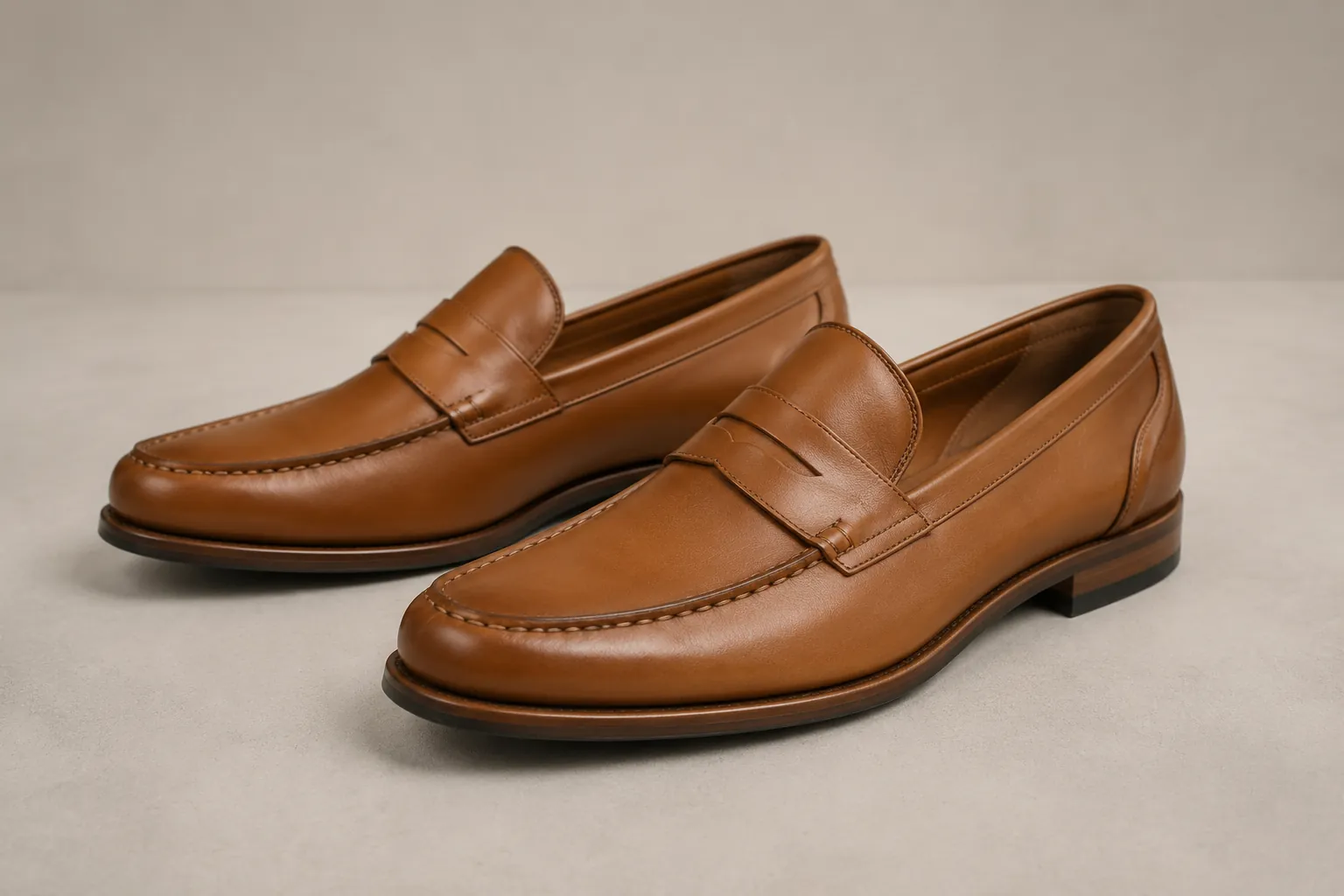
Direct answer
Define the target foot and wearing occasion first. Approve heel hold, instep pressure, throat position, and flex in the intended leather, then refine saddle width, slot, apron, toe shape, outsole, edge, and branding around that fit platform.
Buyer terminology and search intent
Buyers often reach the same sourcing problem through different phrases. Use each term to build a controlled product brief rather than a broad supplier promise.
- penny loafersThis guide uses the phrase as a practical buying topic and connects it to the specification, risk, and approval decisions behind penny loafers manufacturing guide for footwear buyers.
- leather penny loafersThis product phrase should be qualified by target customer, material, construction, fit, size range, outsole, and intended occasion.
- suede penny loafersThis product phrase should be qualified by target customer, material, construction, fit, size range, outsole, and intended occasion.
- rubber sole penny loafersThis product phrase should be qualified by target customer, material, construction, fit, size range, outsole, and intended occasion.
Related buyer searches
These SEMrush variants express closely related product research. They are grouped on this page because the sourcing answer depends on the same fit, material, construction, quality, and order controls.
- penny loafers men with penny
- mens penny loafers
- men's penny loafers
- penny loafers men
- womens penny loafers
Specification points to confirm
Use these five controls to make quotations and samples comparable. Name the reference, method, tolerance, owner, and approval status for every point that can change cost or quality.
| Control point | What the buyer should define | Why it matters |
|---|---|---|
| Last and instep | Set heel seat, waist, instep volume, ball girth, toe allowance, and opening for a secure slip-on fit. | A loafer that relies on undersizing for hold will create returns and inconsistent fit feedback. |
| Vamp and throat | Control vamp length, throat curve, opening depth, tongue shape, and topline tension. | These points determine entry, flex, gaping, and how the shoe holds the foot. |
| Saddle and keeper | Specify saddle width, slot size, corner shape, seam, reinforcement, edge finish, and alignment across the pair. | The signature detail must stay balanced across sizes and resist distortion in wear. |
| Material package | Choose upper leather or suede, lining, counter, reinforcements, insole, sock, and cushioning around stretch and climate needs. | Soft suede and structured polished leather require different pattern and reinforcement decisions. |
| Outsole and range role | Define leather, rubber, or combined sole, heel, tread, edge, construction, color, and intended formal or casual position. | Bottom design can move the same upper from dress to everyday or travel use. |
A four-stage buyer workflow
Turn the research into a decision that the factory can quote, sample, manufacture, inspect, and repeat.
Give the style a range role
Define the consumer, occasion, price position, material story, color, channel, and the job this SKU performs. Apply this control: Set heel seat, waist, instep volume, ball girth, toe allowance, and opening for a secure slip-on fit. A loafer that relies on undersizing for hold will create returns and inconsistent fit feedback.
Approve the fit platform
Set the last, opening, hold, toe allowance, flex, lining, insole, outsole, and wearing conditions before decoration. Apply this control: Control vamp length, throat curve, opening depth, tongue shape, and topline tension. These points determine entry, flex, gaping, and how the shoe holds the foot.
Engineer visible details
Control pattern geometry, seams, hardware, reinforcement, edge treatment, branding, grading, and component compatibility. Apply this control: Specify saddle width, slot size, corner shape, seam, reinforcement, edge finish, and alignment across the pair. The signature detail must stay balanced across sizes and resist distortion in wear.
Turn the sample into QC
Convert approved fit and appearance into measurements, photos, workmanship points, tests, packing rules, and defect limits. Apply this control: Choose upper leather or suede, lining, counter, reinforcements, insole, sock, and cushioning around stretch and climate needs. Soft suede and structured polished leather require different pattern and reinforcement decisions.
Sourcing risks and practical controls
Raise the assumptions most likely to change fit, appearance, cost, quality, or delivery before final sample approval.
The heel slips in the approved sample
Control: Correct last, topline, counter, opening, or insole geometry before using extra padding as a temporary fix.
The keeper curls or collapses
Control: Review leather temper, reinforcement, skiving, edge construction, and stitch placement.
Suede and leather versions use the same pattern without review
Control: Refit each material because stretch, thickness, and recovery change opening behavior.
RFQ checklist
Attach images, drawings, a reference pair, or a tech pack, then state the order, market, and approval assumptions the factory must confirm.
- Last and instep: Set heel seat, waist, instep volume, ball girth, toe allowance, and opening for a secure slip-on fit.
- Vamp and throat: Control vamp length, throat curve, opening depth, tongue shape, and topline tension.
- Saddle and keeper: Specify saddle width, slot size, corner shape, seam, reinforcement, edge finish, and alignment across the pair.
- Material package: Choose upper leather or suede, lining, counter, reinforcements, insole, sock, and cushioning around stretch and climate needs.
- Outsole and range role: Define leather, rubber, or combined sole, heel, tread, edge, construction, color, and intended formal or casual position.
- Order architecture: Estimated pairs by style, color, material, and size, plus launch and reorder expectations.
- Market requirements: Destination, channel, labels, testing, packaging, trade term, and customer-specific standards.
- Approval path: Sample purpose, reviewers, comment format, physical references, inspection plan, and release authority.
Frequently asked questions
These answers frame the most common buying decisions for this topic.
What makes a loafer a penny loafer?
The defining feature is a saddle across the vamp with a characteristic slot or keeper detail. Toe, apron, sole, color, and material can vary.
Are penny loafers formal or casual?
They can cover business, smart-casual, and relaxed positions. Last shape, upper material, color, outsole, edge, heel, and finishing determine the range role.
Can penny loafers use a rubber sole?
Yes. Rubber sole penny loafers can add grip and everyday practicality. Control weight, flex, edge profile, tread, and compatibility with the desired appearance.