
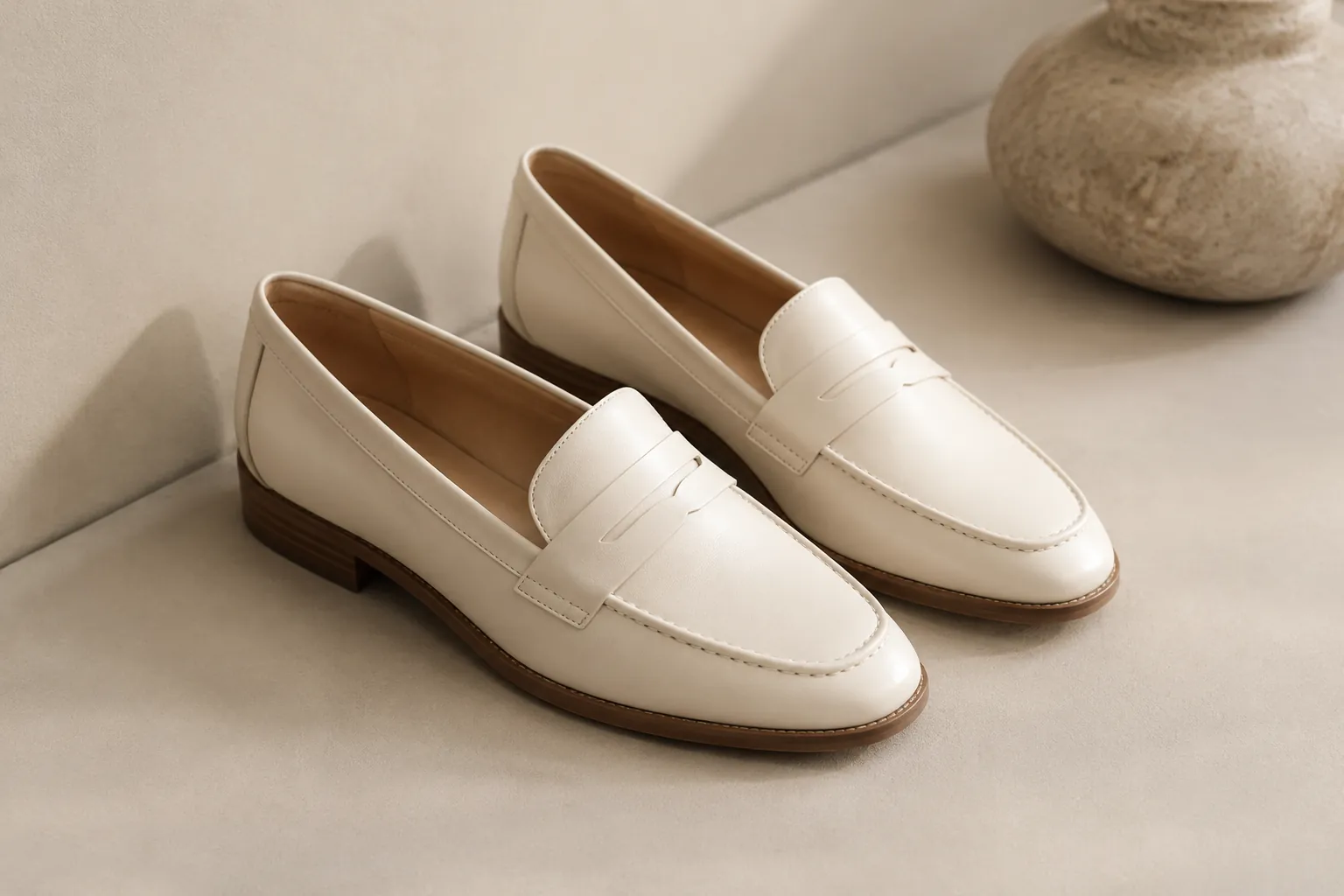
Direct answer
Define the customer, wardrobe occasion, toe character, heel height, outsole weight, and fit platform for each group. Use penny, tassel, bit, apron, or minimal uppers as design languages, then control topline, heel hold, instep, and entry for the specific construction.
Buyer terminology and search intent
Buyers often reach the same sourcing problem through different phrases. Use each term to build a controlled product brief rather than a broad supplier promise.
- womens loafersThis guide uses the phrase as a practical buying topic and connects it to the specification, risk, and approval decisions behind women's loafer range planning for private label brands.
- types of loafers women'sThis research phrase signals a comparison or classification need. The useful answer is a decision framework rather than a one-line winner.
- womens leather loafersThis product phrase should be qualified by target customer, material, construction, fit, size range, outsole, and intended occasion.
- womens suede loafersThis product phrase should be qualified by target customer, material, construction, fit, size range, outsole, and intended occasion.
Related buyer searches
These SEMrush variants express closely related product research. They are grouped on this page because the sourcing answer depends on the same fit, material, construction, quality, and order controls.
- womens loafers wide width
- brown women's loafers
- brown womens loafers
- women's loafers casual
- women's loafers black
Specification points to confirm
Use these five controls to make quotations and samples comparable. Name the reference, method, tolerance, owner, and approval status for every point that can change cost or quality.
| Control point | What the buyer should define | Why it matters |
|---|---|---|
| Fit segment | Set width, instep, heel shape, toe allowance, topline, opening, sock or hosiery use, and target comfort position. | A soft flat and a structured platform loafer require different last and support logic. |
| Toe and upper style | Plan almond, round, square, pointed, apron, penny, tassel, bit, or minimal forms around distinct consumer roles. | Shape should create real choice rather than superficial SKU duplication. |
| Heel and outsole | Define flat, low heel, block heel, platform, lug, driving, flexible, or dress constructions with weight and pitch targets. | Bottom architecture changes both fashion position and fit balance. |
| Material strategy | Balance polished leather, soft leather, suede, patent, grain, unlined, seasonal color, and hardware stories. | Material and finish influence stretch, topline support, care, and consumer expectation. |
| Size and width plan | Build the size curve from channel data and review fit at small, base, and large sizes, with width options where justified. | Fashion proportions and heel hold can shift significantly at range extremes. |
A four-stage buyer workflow
Turn the research into a decision that the factory can quote, sample, manufacture, inspect, and repeat.
Give the style a range role
Define the consumer, occasion, price position, material story, color, channel, and the job this SKU performs. Apply this control: Set width, instep, heel shape, toe allowance, topline, opening, sock or hosiery use, and target comfort position. A soft flat and a structured platform loafer require different last and support logic.
Approve the fit platform
Set the last, opening, hold, toe allowance, flex, lining, insole, outsole, and wearing conditions before decoration. Apply this control: Plan almond, round, square, pointed, apron, penny, tassel, bit, or minimal forms around distinct consumer roles. Shape should create real choice rather than superficial SKU duplication.
Engineer visible details
Control pattern geometry, seams, hardware, reinforcement, edge treatment, branding, grading, and component compatibility. Apply this control: Define flat, low heel, block heel, platform, lug, driving, flexible, or dress constructions with weight and pitch targets. Bottom architecture changes both fashion position and fit balance.
Turn the sample into QC
Convert approved fit and appearance into measurements, photos, workmanship points, tests, packing rules, and defect limits. Apply this control: Balance polished leather, soft leather, suede, patent, grain, unlined, seasonal color, and hardware stories. Material and finish influence stretch, topline support, care, and consumer expectation.
Sourcing risks and practical controls
Raise the assumptions most likely to change fit, appearance, cost, quality, or delivery before final sample approval.
A heavy outsole is paired with an unsupported upper
Control: Engineer reinforcement, topline, counter, and flex around the bottom weight.
Fashion toe shape reduces usable toe room
Control: Fit the internal last volume, not the visible point, and communicate sizing accurately.
Patent and soft leather versions use identical reinforcement
Control: Develop each material package around its stretch, stiffness, crease, and edge behavior.
RFQ checklist
Attach images, drawings, a reference pair, or a tech pack, then state the order, market, and approval assumptions the factory must confirm.
- Fit segment: Set width, instep, heel shape, toe allowance, topline, opening, sock or hosiery use, and target comfort position.
- Toe and upper style: Plan almond, round, square, pointed, apron, penny, tassel, bit, or minimal forms around distinct consumer roles.
- Heel and outsole: Define flat, low heel, block heel, platform, lug, driving, flexible, or dress constructions with weight and pitch targets.
- Material strategy: Balance polished leather, soft leather, suede, patent, grain, unlined, seasonal color, and hardware stories.
- Size and width plan: Build the size curve from channel data and review fit at small, base, and large sizes, with width options where justified.
- Order architecture: Estimated pairs by style, color, material, and size, plus launch and reorder expectations.
- Market requirements: Destination, channel, labels, testing, packaging, trade term, and customer-specific standards.
- Approval path: Sample purpose, reviewers, comment format, physical references, inspection plan, and release authority.
Frequently asked questions
These answers frame the most common buying decisions for this topic.
What are the main types of women's loafers?
Common groups include penny, tassel, bit, apron, Venetian, driver, platform, lug, heeled, and soft unstructured loafers. Their fit and construction can differ substantially.
Can women's loafers be unlined?
Yes. Unlined construction can create softness and flexibility, but seams, edge finishing, stretch, shape retention, color transfer, and internal comfort need dedicated development.
How should a brand choose heel height?
Match heel height and pitch to the last, intended occasion, outsole construction, comfort position, and target customer rather than treating the heel as a cosmetic add-on.