
Footwear Sourcing
Reference Check: wholesale mens dress shoes style control audit
A buyer-side method for recording source-stated Oxford and penny loafer controls before asking which project options may apply.
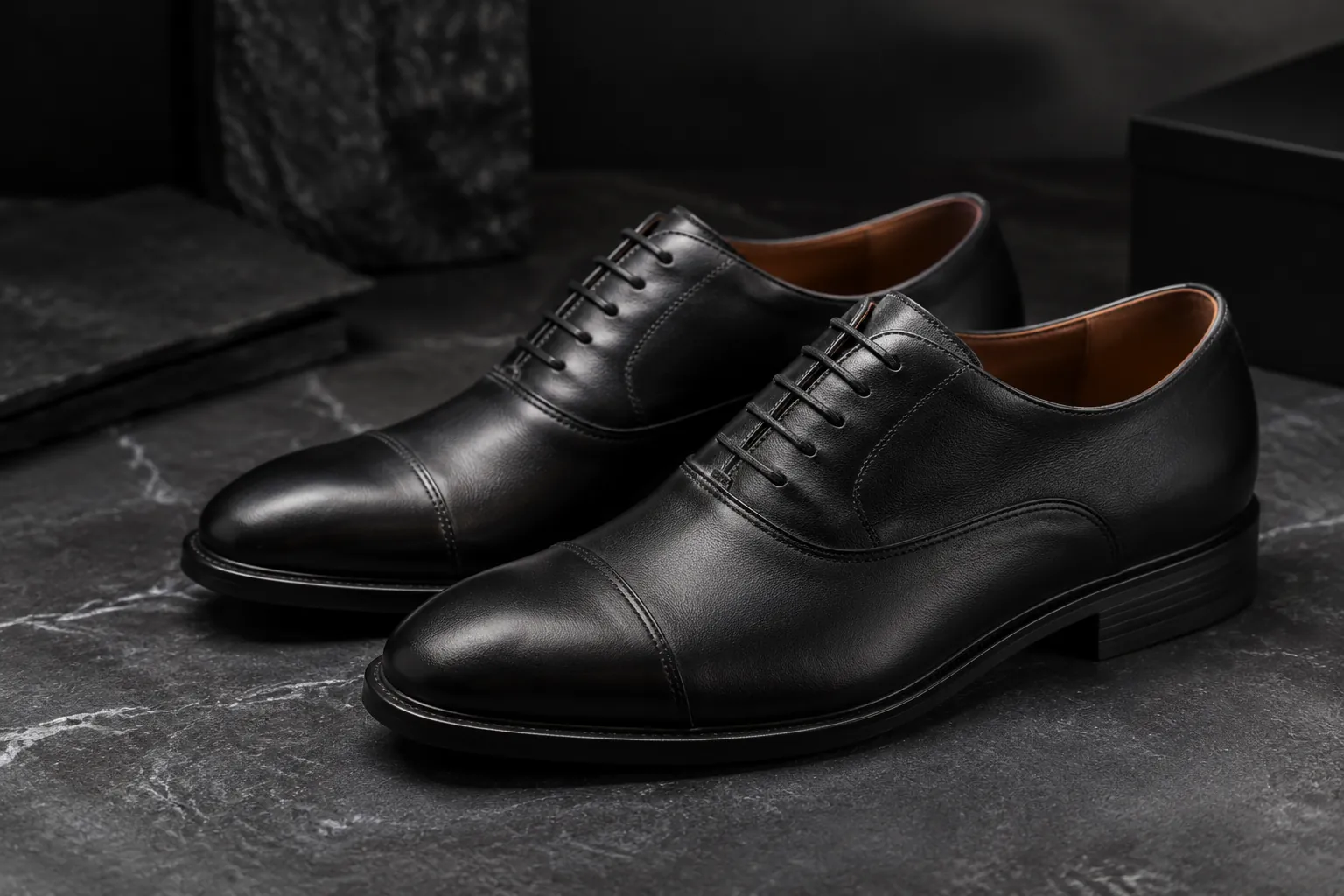
The wholesale mens dress shoes style control audit begins with a narrow buyer decision: does the reference contain enough stated detail to send for assessment? A photograph can identify an Oxford or a penny loafer while leaving important points unnamed. The buyer's job at this stage is not to turn those gaps into a complete technical specification. It is to record what the reference actually identifies, keep unresolved material matters visible, and ask which project options may apply.
This is an editorial organizing method for the buyer, not a documented company process or a manufacturing requirement. It sorts the supplied footwear details into separate lanes so a current definition is not confused with a question that still needs an answer.
A Picture Is Not Yet a Working Definition
A recognizable shoe can still be difficult to describe precisely. Terms such as "formal," "classic," or "premium" do not preserve the individual details named in a source reference. For a pre-inquiry record, the editorial recommendation is to capture each stated point in its own field and leave any unstated point open. That approach gives the assessment request a defined starting point without supplying measurements, tolerances, construction choices, or performance expectations that the sources do not provide.
The resulting record does not need to be long. It needs to distinguish three things: the named shoe reference, the controls associated with that particular reference, and the material questions that are still unresolved. A buyer can then present the existing definition without treating a source image as a complete approval document.
The Four Lanes of a Reference Record
The four lanes below are buyer-side categories. They organize the details named in the supplied excerpts; they do not create acceptance thresholds or describe how footwear will be made.
| Lane | Source-specific entry | How to record it |
|---|---|---|
| Shoe proportion and geometry | Black cap-toe dress shoe D-01: facing gap, toe proportion, and cap placement. | Keep each named relationship as its own current control point. |
| Shoe proportion and geometry | Black cap-toe Oxford M-01: facing gap and toe shape. | Retain M-01 wording rather than replacing it with D-01 terminology. |
| Shoe proportion and geometry | Tan men's penny loafer L-01: saddle proportion, apron symmetry, and vamp length. | Place these named loafer details in a separate reference record. |
| Pair presentation | D-01: polish and pair symmetry. | Keep these separate from D-01 proportion and placement entries. |
| Pair presentation | M-01: polish level and pair symmetry. | Note that the M-01 source says its named points need a documented approval standard. |
| Retention and flex labels | L-01: opening retention, heel hold, and flex. | Preserve these labels without expanding them into fit or performance claims. |
| Material appearance questions | Materials reference: natural variation, defects, color approval, and hide or component-lot pairing across the order. | Mark every item as an unanswered question. |
The value of the lanes is separation. A geometry entry is not a material decision, and a material question is not evidence of an agreed practice. The record should make that difference easy to see before anyone asks for an assessment.
Keep the Oxford Records Separate
The dress-shoes source describes black cap-toe dress shoe D-01 as a core-business Cap-toe Oxford. It treats facing gap, toe proportion, cap placement, polish, and pair symmetry as control points. Those cap-toe Oxford specification controls can be recorded exactly as stated for D-01.
The men's leather-shoes source describes black cap-toe Oxford M-01 as a core-formal Cap-toe Oxford. Its wording names facing gap, toe shape, polish level, and pair symmetry, and says those points need a documented approval standard. That statement belongs to the M-01 record. It does not supply a standard, a tolerance, or a process for the D-01 reference.
Keeping the two records apart avoids a synthesized Oxford brief that neither source provides. In particular, toe proportion and toe shape should remain the terms used by their respective sources. Cap placement is named for D-01, while the documented-approval-standard statement is associated with M-01. A buyer may later ask how a project should be assessed, but the source excerpts do not convert those entries into a shared specification.
For a Penny Loafer, Treat These Labels Differently
The loafers source identifies tan men's penny loafer L-01 as a men's-core penny loafer. It names saddle proportion, apron symmetry, vamp length, opening retention, heel hold, and flex for a repeatable core style.
For this audit, saddle proportion, apron symmetry, and vamp length belong in the shape lane. Opening retention, heel hold, and flex belong in a separate lane because they are distinct source labels. This grouping is an editorial reading aid, not source terminology and not a statement about comfort, fit, durability, wear life, construction, or test results.
That separation also keeps a buyer's note from becoming vague. Rather than asking for a loafer that should "feel right," the record can name the L-01 labels already supplied and identify any additional questions as open. The source provides no threshold for any of the six labels, so the audit should not add one.
Material Appearance Is Still an Inquiry
The materials reference provides four questions to raise about appearance range. Each remains unresolved until the project receives a specific response:
- What variation is natural?
- What becomes a defect?
- How are colors approved?
- How are hides or component lots paired across the order?
These leather appearance approval questions should be entered as questions, using that scope. The source does not define what variation is acceptable for a particular look. It also does not state a defect threshold, a color-approval method, or a hide- or component-lot pairing practice. Recording the questions plainly is more useful than assigning them an answer that the evidence does not contain.
The Assessment Request
Once the reference record is organized, an assessment request can stay focused. The buyer is not claiming that development, sampling, or quotation is available. The buyer is asking which of those options may apply and what information may be needed to assess the project.
- Reference
- Name the source style being used, such as D-01, M-01, or L-01, and attach the current image or source reference.
- Recorded controls
- List only the control points named for that particular source. Keep D-01, M-01, and L-01 entries in separate groups.
- Open appearance questions
- State what variation is natural, what becomes a defect, how colors are approved, and how hides or component lots are paired across the order.
- Assessment question
- Ask which development, sampling, or quotation options may apply to the project and what additional information may be needed.
A hypothetical request could identify D-01, record its facing gap, toe proportion, cap placement, polish, and pair symmetry, then place the four material questions in a separate section. This request format is not a customer case or evidence that any project option is available. It simply shows the difference between a buyer's present definition and the matters that require an answer. The contact page can be used to submit that question.
Evidence Boundary
The supplied excerpts identify selected Oxford and penny loafer control points and direct buyers to material-appearance questions. They do not establish prices, minimum order quantities, lead times, production capacity, stock availability, payment terms, shipping terms, certifications, testing, inspections, construction methods, material composition, fit results, comfort, durability, or manufacturing outcomes.
They also do not establish numerical tolerances for Oxford proportions, a threshold for loafer retention or flex, a definition of an acceptable material defect, a color-approval procedure, or a practice for pairing hides or component lots. The audit is useful precisely because it keeps those unprovided details open while preserving the footwear controls the sources actually name.
Sources and verification
- Custom Leather Dress Shoes Manufacturer | OEM & Private Label First-party site source
- Men's Leather Shoes Manufacturer | Custom Oxfords & Loafers First-party site source
- Custom Loafers Manufacturer | OEM & Private Label Leather Loafers First-party site source
- Leather Shoe Materials | Full Grain, Suede, Lining & Outsoles First-party site source
Share the current leather footwear definition and ask which development, sampling or quotation options may apply to the project.
Send your project brief