
Direct answer
Use leather when traditional dress appearance and edge finishing lead the brief, rubber when grip and abrasion options are central, and TPR when molded detail, weight, flexibility, and cost need a balanced solution. Validate the exact outsole with the last, construction, and target use.
Buyer terminology and search intent
Buyers often reach the same sourcing problem through different phrases. Use each term to build a controlled product brief rather than a broad supplier promise.
- leather sole shoesThis guide uses the phrase as a practical buying topic and connects it to the specification, risk, and approval decisions behind tpr vs rubber vs leather soles for dress shoes.
- rubber sole loafersThis product phrase should be qualified by target customer, material, construction, fit, size range, outsole, and intended occasion.
- leather shoes with leather soleThis product phrase should be qualified by target customer, material, construction, fit, size range, outsole, and intended occasion.
- shoe sole manufacturersThis supplier-search phrase usually signals commercial intent. Buyers should still verify the actual factory, category capability, and order model.
Related buyer searches
These SEMrush variants express closely related product research. They are grouped on this page because the sourcing answer depends on the same fit, material, construction, quality, and order controls.
- shoe sole leather
- lug sole loafers women
- loafers with lug soles
- mens lug sole loafers
- lug sole loafers men
Specification points to confirm
Use these five controls to make quotations and samples comparable. Name the reference, method, tolerance, owner, and approval status for every point that can change cost or quality.
| Control point | What the buyer should define | Why it matters |
|---|---|---|
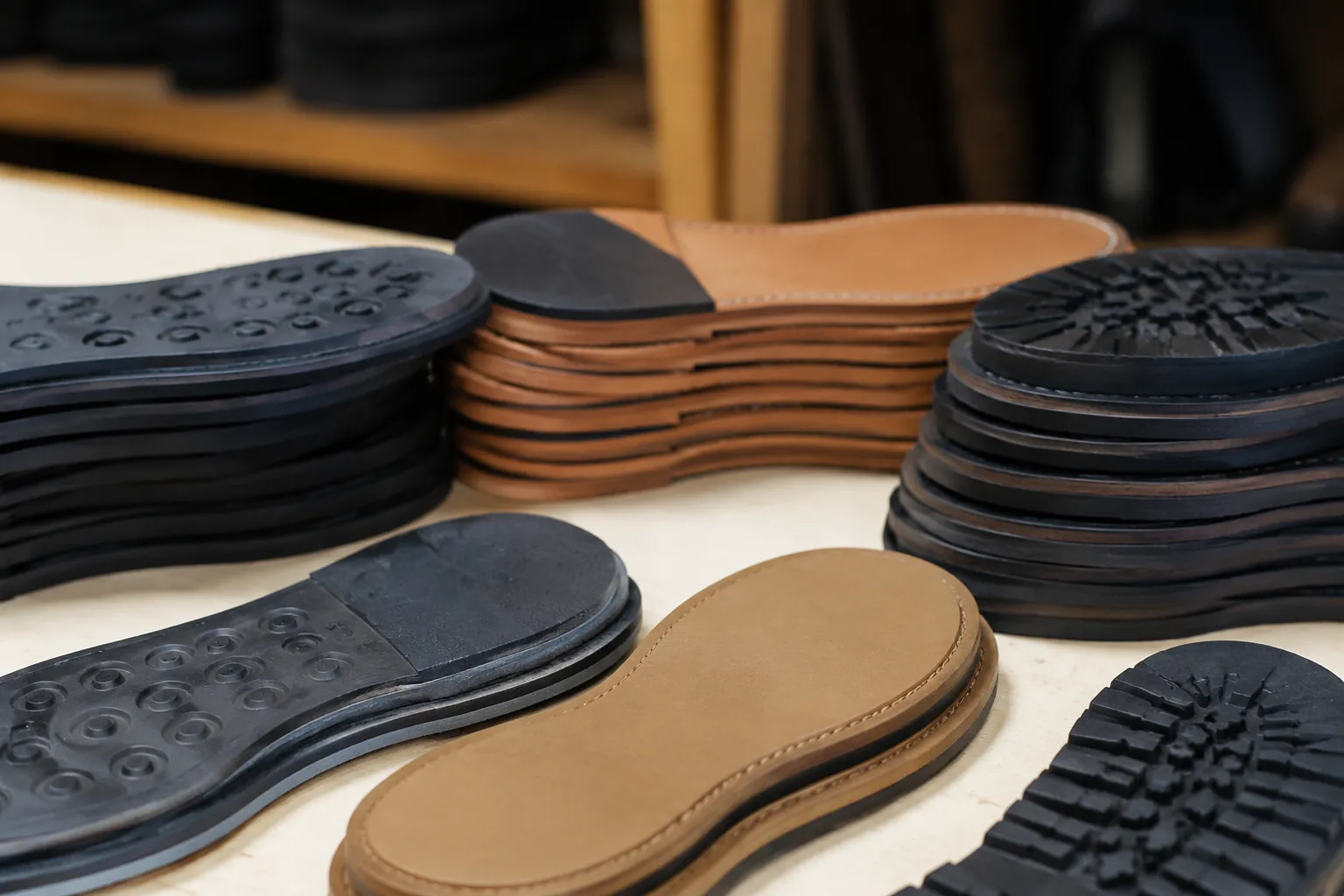
| Appearance and edge | Compare surface texture, gloss, tread, color, sidewall, welt line, stitching, paint, burnish, and logo detail. | The outsole is a visible part of the product story, especially in formal footwear. |
| Weight and flex | Measure representative soles and test flex with the complete shoe construction. | Material name alone does not predict the feel created by thickness, geometry, filler, and reinforcement. |
| Grip and abrasion | Define intended surfaces and select relevant slip and wear checks for the actual compound and tread. | A smooth dress profile and a deep casual tread solve different commercial needs. |
| Attachment process | Confirm roughing, priming, adhesive, pressing, stitching, welt, or molding requirements with the upper and midsole system. | Poor material compatibility or process control can cause bond failure even when each component is acceptable alone. |
| Tooling and supply | Record mold ownership, size set, compound code, color, minimums, replacement rule, and approved supplier. | Reorders depend on both tooling availability and repeatable material formulation. |
A four-stage buyer workflow
Turn the research into a decision that the factory can quote, sample, manufacture, inspect, and repeat.
Normalize the baseline
Compare options against the same consumer, specification, quantity, quality level, trade term, and approval scope. Apply this control: Compare surface texture, gloss, tread, color, sidewall, welt line, stitching, paint, burnish, and logo detail. The outsole is a visible part of the product story, especially in formal footwear.
Separate real tradeoffs
List the effects on fit, appearance, performance, tooling, minimums, unit cost, landed cost, and reorder risk. Apply this control: Measure representative soles and test flex with the complete shoe construction. Material name alone does not predict the feel created by thickness, geometry, filler, and reinforcement.
Validate with evidence
Use samples, sections, measurements, test results, factory records, and qualified professional advice where required. Apply this control: Define intended surfaces and select relevant slip and wear checks for the actual compound and tread. A smooth dress profile and a deep casual tread solve different commercial needs.
Record the decision
Document why the selected option fits the range and which assumptions must be reconfirmed before bulk or reorder. Apply this control: Confirm roughing, priming, adhesive, pressing, stitching, welt, or molding requirements with the upper and midsole system. Poor material compatibility or process control can cause bond failure even when each component is acceptable alone.
Sourcing risks and practical controls
Raise the assumptions most likely to change fit, appearance, cost, quality, or delivery before final sample approval.
Rubber is assumed to guarantee slip resistance
Control: Test the actual compound and tread using a method appropriate to the market and use.
Leather sole thickness varies across the pair
Control: Define selection, splitting, finishing, and measurement controls before cutting or assembly.
A TPR sole changes hardness between batches
Control: Control the compound reference, processing conditions, physical standard, and agreed checks.
RFQ checklist
Attach images, drawings, a reference pair, or a tech pack, then state the order, market, and approval assumptions the factory must confirm.
- Appearance and edge: Compare surface texture, gloss, tread, color, sidewall, welt line, stitching, paint, burnish, and logo detail.
- Weight and flex: Measure representative soles and test flex with the complete shoe construction.
- Grip and abrasion: Define intended surfaces and select relevant slip and wear checks for the actual compound and tread.
- Attachment process: Confirm roughing, priming, adhesive, pressing, stitching, welt, or molding requirements with the upper and midsole system.
- Tooling and supply: Record mold ownership, size set, compound code, color, minimums, replacement rule, and approved supplier.
- Order architecture: Estimated pairs by style, color, material, and size, plus launch and reorder expectations.
- Market requirements: Destination, channel, labels, testing, packaging, trade term, and customer-specific standards.
- Approval path: Sample purpose, reviewers, comment format, physical references, inspection plan, and release authority.
Frequently asked questions
These answers frame the most common buying decisions for this topic.
Which sole is best for formal shoes?
Leather supports a traditional formal position, while fine rubber and TPR designs can add grip or value without looking overly casual. Choose around the consumer, climate, price, construction, and brand identity.
Can leather soles include rubber inserts?
Yes. Inserts can add grip or wear protection while retaining a leather-led appearance. Control insert bond, thickness, placement, and edge finishing.
Is TPR the same as rubber?
No. TPR is a thermoplastic rubber family processed differently from conventional vulcanized rubber compounds. Both categories include many formulations and performance levels.