
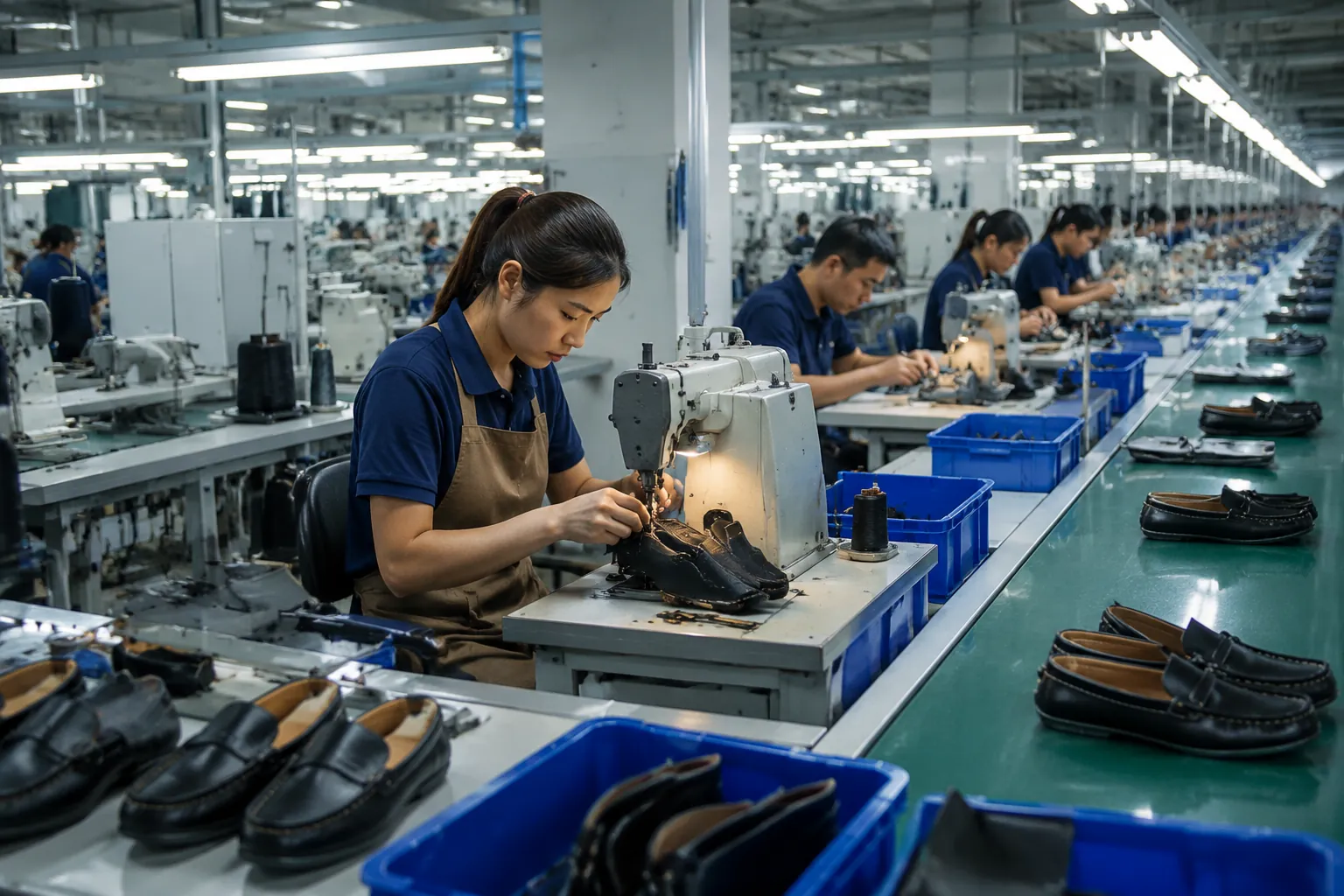
Direct answer
Start with factories that already make your category, then test how clearly they confirm the last, materials, construction, branding, packaging, quantity, and approval path. A strong supplier makes assumptions visible before the sample, not after production begins.
Buyer terminology and search intent
Buyers often reach the same sourcing problem through different phrases. The terms below are used naturally in this guide, but every phrase should lead back to a controlled product brief rather than a broad supplier promise.
- shoe manufacturerThis guide uses the phrase as a practical buying topic and connects it to the specification, risk, and approval decisions behind how to find a leather shoe manufacturer.
- shoe factoryThis supplier-search phrase usually signals commercial intent. Buyers should still verify the actual factory, category capability, and order model.
- custom shoe manufacturersThis supplier-search phrase usually signals commercial intent. Buyers should still verify the actual factory, category capability, and order model.
- shoes china manufacturerThis supplier-search phrase usually signals commercial intent. Buyers should still verify the actual factory, category capability, and order model.
Related buyer searches
These SEMrush variants express closely related product research. They are grouped on this page because the sourcing answer depends on the same fit, material, construction, quality, and order controls.
- manufacturer shoes china
- vietnam shoe manufacturers
- shoes manufacturer china
- india footwear manufacturers
Specification points to confirm
Use these five controls to make quotations and samples comparable. The final specification should name the reference, method, tolerance, owner, and approval status for every point that can change cost or quality.
| Control point | What the buyer should define | Why it matters |
|---|---|---|
| Category fit | Name the exact styles, gender, price position, and target market in the first inquiry. | A formal shoe line and a casual loafer line can require different lasts, machinery, and finishing skills. |
| Development input | State whether you have a tech pack, reference pair, sketches, an existing last, or only a concept. | The factory can quote the correct pattern, last, tooling, and sample work instead of hiding development cost in a rough unit price. |
| Material standard | Describe leather type, thickness or hand feel, lining, insole, outsole, hardware, and color target. | Material names alone are too broad; the same label can cover very different performance and cost. |
| Quality evidence | Ask how the approved sample becomes the bulk reference and what is checked inline and at final inspection. | A documented standard reduces arguments about shape, shade, stitching, pair match, and packing. |
| Commercial fit | Confirm sample terms, order structure, payment stages, packing, delivery market, and export responsibilities. | A technically capable factory can still be the wrong partner if its order model does not fit your buying plan. |
A four-stage buyer workflow
The workflow below turns research into a decision that a factory can quote, sample, manufacture, inspect, and repeat.
Define the buying brief
Turn the target customer, product, quantity, market, commercial model, and approval path into one controlled brief. Apply this control: Name the exact styles, gender, price position, and target market in the first inquiry. A formal shoe line and a casual loafer line can require different lasts, machinery, and finishing skills.
Qualify the operating supplier
Verify who develops, produces, inspects, communicates, and owns each commitment before comparing price. Apply this control: State whether you have a tech pack, reference pair, sketches, an existing last, or only a concept. The factory can quote the correct pattern, last, tooling, and sample work instead of hiding development cost in a rough unit price.
Sample and verify
Use representative materials, written comments, fit or performance checks, and dated approvals to test the proposed solution. Apply this control: Describe leather type, thickness or hand feel, lining, insole, outsole, hardware, and color target. Material names alone are too broad; the same label can cover very different performance and cost.
Release a controlled order
Connect the purchase order to the approved sample, specification, quality plan, packing standard, and change process. Apply this control: Ask how the approved sample becomes the bulk reference and what is checked inline and at final inspection. A documented standard reduces arguments about shape, shade, stitching, pair match, and packing.
Sourcing risks and practical controls
Most preventable problems begin as an assumption that was never added to the brief. Raise these points before the final sample or purchase order.
The quotation is unusually low
Control: Check whether leather grade, outsole tooling, packaging, testing, and development work were excluded or downgraded.
The supplier says yes to every request
Control: Ask for a written construction proposal and sample plan; capability is easier to judge from decisions than promises.
The sample is good but the bulk standard is vague
Control: Create an approved sample, signed specification sheet, color standard, and defect limits before production release.
RFQ checklist
Attach images, drawings, a reference pair, or a tech pack where available. Then include the following information in the inquiry so the manufacturer can respond with assumptions and exclusions visible.
- Category fit: Name the exact styles, gender, price position, and target market in the first inquiry.
- Development input: State whether you have a tech pack, reference pair, sketches, an existing last, or only a concept.
- Material standard: Describe leather type, thickness or hand feel, lining, insole, outsole, hardware, and color target.
- Quality evidence: Ask how the approved sample becomes the bulk reference and what is checked inline and at final inspection.
- Commercial fit: Confirm sample terms, order structure, payment stages, packing, delivery market, and export responsibilities.
- Order architecture: estimated pairs by style, color, material, and size, plus launch and reorder expectations.
- Market requirements: destination, channel, labels, testing, packaging, trade term, and any customer-specific standard.
- Approval path: sample purpose, reviewers, comment format, physical references, inspection plan, and release authority.
Frequently asked questions
Should I choose a factory or a trading company?
Choose based on control and service, not the label alone. A direct factory can shorten technical communication, while a capable sourcing company may coordinate several processes. Verify who develops, produces, inspects, and owns each commitment.
What should I send in the first inquiry?
Send product images or drawings, target market, estimated quantity, size range, material direction, branding needs, packaging, target delivery window, and any target price that is commercially realistic.
How do I compare two shoe manufacturer quotations?
Normalize the comparison. Confirm that both quotes use the same leather, lining, outsole, construction, logo method, box, carton, inspection scope, trade term, and quantity before judging the price gap.