
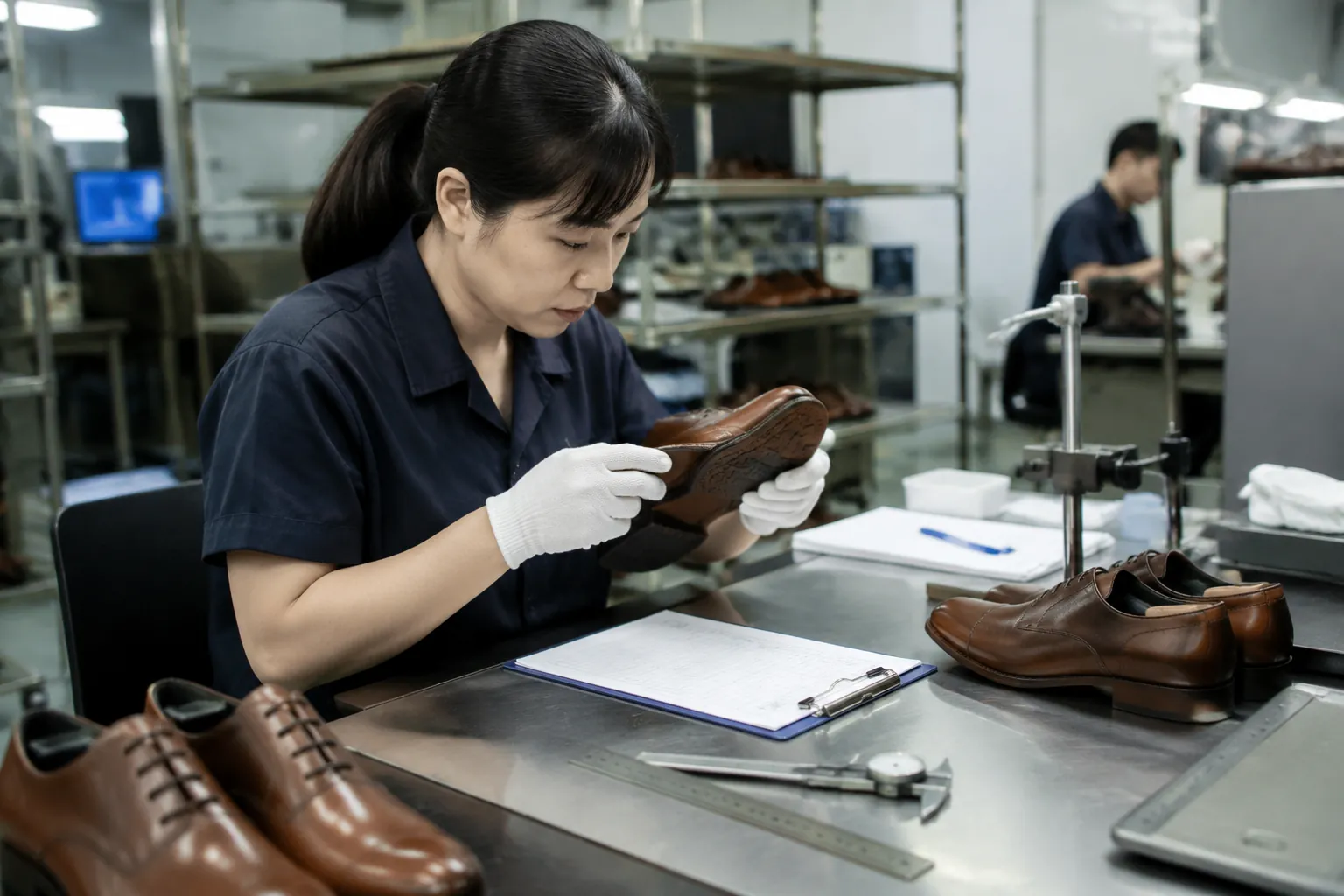
Direct answer
Audit the order flow from incoming material through packing. Match documents to what is physically happening, sample a few records rather than accepting a presentation, and focus on the stages where your product has the highest technical or commercial risk.
Buyer terminology and search intent
Buyers often reach the same sourcing problem through different phrases. Use each term to build a controlled product brief rather than a broad supplier promise.
- shoe factoryThis guide uses the phrase as a practical buying topic and connects it to the specification, risk, and approval decisions behind shoe factory audit checklist for buyers.
- shoes factoryThis supplier-search phrase usually signals commercial intent. Buyers should still verify the actual factory, category capability, and order model.
- china shoe factoryThis supplier-search phrase usually signals commercial intent. Buyers should still verify the actual factory, category capability, and order model.
- footwear manufacturersThis supplier-search phrase usually signals commercial intent. Buyers should still verify the actual factory, category capability, and order model.
Specification points to confirm
Use these five controls to make quotations and samples comparable. Name the reference, method, tolerance, owner, and approval status for every point that can change cost or quality.
| Control point | What the buyer should define | Why it matters |
|---|---|---|
| Business identity | Match the legal company name, factory address, invoicing entity, export party, and bank beneficiary. | Mismatched entities can create payment, contract, customs, and accountability problems. |
| Process ownership | Map which stages are in-house and which are subcontracted, including cutting, stitching, lasting, sole attachment, finishing, and packing. | Subcontracting is not automatically bad, but hidden handoffs weaken schedule and quality control. |
| Material control | Review receiving checks, lot identification, storage conditions, issue records, and handling of rejected leather or components. | Traceability matters when shade, thickness, hardware plating, or sole compound varies between lots. |
| Quality records | Inspect approved samples, work instructions, inline reports, final inspection reports, defect samples, and corrective actions. | Records show whether quality is managed as a system rather than repaired at the packing table. |
| Capacity fit | Compare your planned styles and quantities with line loading, skill requirements, tooling needs, and peak-season commitments. | A factory can have high total output yet lack the right free capacity for your construction and delivery window. |
A four-stage buyer workflow
Turn the research into a decision that the factory can quote, sample, manufacture, inspect, and repeat.
Define the standard
Link the approved sample, specification, defect catalogue, measurements, tests, packing, and decision authority. Apply this control: Match the legal company name, factory address, invoicing entity, export party, and bank beneficiary. Mismatched entities can create payment, contract, customs, and accountability problems.
Control incoming and first pieces
Verify materials and the first production output before avoidable variation moves through the line. Apply this control: Map which stages are in-house and which are subcontracted, including cutting, stitching, lasting, sole attachment, finishing, and packing. Subcontracting is not automatically bad, but hidden handoffs weaken schedule and quality control.
Inspect where correction is possible
Place inline checks at the operations that create shape, stitching, bond, finish, labeling, and assortment risk. Apply this control: Review receiving checks, lot identification, storage conditions, issue records, and handling of rejected leather or components. Traceability matters when shade, thickness, hardware plating, or sole compound varies between lots.
Release with evidence
Complete final sampling, required tests, quantity and packing checks, corrective action, and written shipment approval. Apply this control: Inspect approved samples, work instructions, inline reports, final inspection reports, defect samples, and corrective actions. Records show whether quality is managed as a system rather than repaired at the packing table.
Sourcing risks and practical controls
Raise the assumptions most likely to change fit, appearance, cost, quality, or delivery before final sample approval.
The audit is limited to a meeting room
Control: Walk the actual material, production, QC, and packing routes and select records from the floor.
Capacity is stated as one large number
Control: Ask for line-level loading and the expected allocation for your styles during the planned production month.
Defects are repaired without root-cause records
Control: Review how repeated issues are contained, analyzed, corrected, and checked on the next lot.
RFQ checklist
Attach images, drawings, a reference pair, or a tech pack, then state the order, market, and approval assumptions the factory must confirm.
- Business identity: Match the legal company name, factory address, invoicing entity, export party, and bank beneficiary.
- Process ownership: Map which stages are in-house and which are subcontracted, including cutting, stitching, lasting, sole attachment, finishing, and packing.
- Material control: Review receiving checks, lot identification, storage conditions, issue records, and handling of rejected leather or components.
- Quality records: Inspect approved samples, work instructions, inline reports, final inspection reports, defect samples, and corrective actions.
- Capacity fit: Compare your planned styles and quantities with line loading, skill requirements, tooling needs, and peak-season commitments.
- Order architecture: Estimated pairs by style, color, material, and size, plus launch and reorder expectations.
- Market requirements: Destination, channel, labels, testing, packaging, trade term, and customer-specific standards.
- Approval path: Sample purpose, reviewers, comment format, physical references, inspection plan, and release authority.
Frequently asked questions
These answers frame the most common buying decisions for this topic.
Can a shoe factory audit be done remotely?
A remote audit can screen documents, live production areas, equipment, sample rooms, and records, but it offers less control over what is shown. Use it for qualification, then arrange independent or in-person verification when risk justifies it.
Which production areas matter most for leather shoes?
Material inspection, cutting, upper stitching, lasting, sole attachment, finishing, final inspection, metal detection where required, and packing are the core areas. Focus more deeply on the stages linked to your construction.
Should I audit before or after sampling?
An early screen avoids wasting development time, while a post-sample audit lets you evaluate the exact process proposed for your product. Many buyers use a document screen first and a deeper audit before bulk approval.