
Direct answer
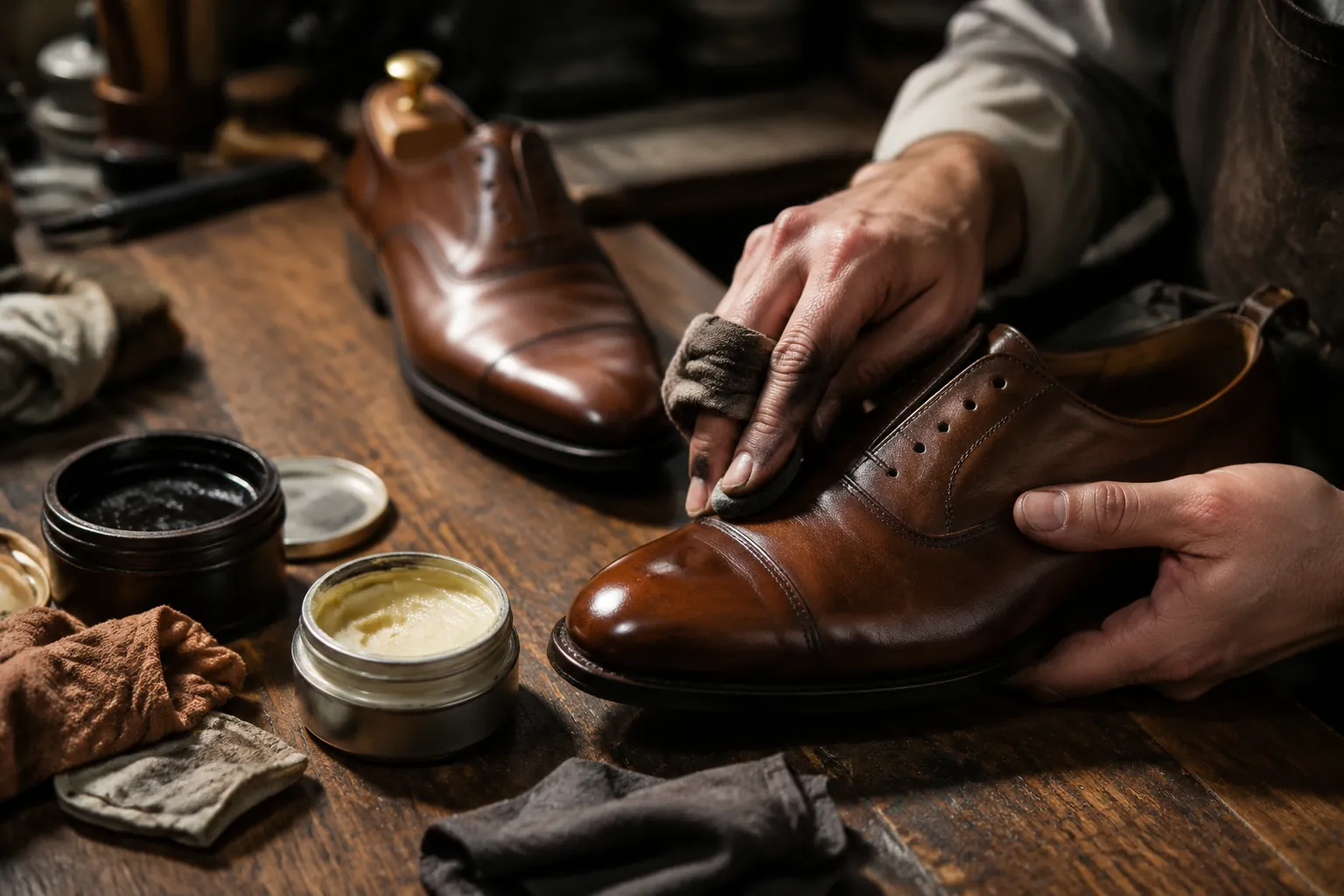
Ask the manufacturer to map manual and machine-assisted steps, explain why each manual operation is used, and show how workmanship is standardized. A credible handmade story is specific, observable, and supported by production records rather than a broad label.
Buyer terminology and search intent
Buyers often reach the same sourcing problem through different phrases. Use each term to build a controlled product brief rather than a broad supplier promise.
- handmade leather footwearThis guide uses the phrase as a practical buying topic and connects it to the specification, risk, and approval decisions behind handmade leather footwear: what the term should mean.
- hand made leather shoesThis product phrase should be qualified by target customer, material, construction, fit, size range, outsole, and intended occasion.
- custom made leather shoesThis phrase points to development or brand ownership. It should lead to a clear brief covering fit, materials, construction, artwork, quantity, and approvals.
- custom leather shoesThis phrase points to development or brand ownership. It should lead to a clear brief covering fit, materials, construction, artwork, quantity, and approvals.
Related buyer searches
These SEMrush variants express closely related product research. They are grouped on this page because the sourcing answer depends on the same fit, material, construction, quality, and order controls.
- handmade leather shoes womens
- ladies handmade leather shoes
- mens handmade leather shoes
- handmade leather loafers
- handmade leather shoes for men
Specification points to confirm
Use these five controls to make quotations and samples comparable. Name the reference, method, tolerance, owner, and approval status for every point that can change cost or quality.
| Control point | What the buyer should define | Why it matters |
|---|---|---|
| Manual operations | List cutting, skiving, closing, lasting, welting, sole stitching, edge work, polishing, patina, and packing as hand or machine-assisted. | Specific process language makes marketing accurate and helps the buyer understand cost and variation. |
| Construction definition | Document every structural layer, stitch, adhesive, reinforcement, filler, and finishing process. | Handmade does not tell the buyer whether the shoe is welted, Blake stitched, cemented, or built another way. |
| Workmanship standard | Approve stitch appearance, pair symmetry, shape, edge finish, polish, and acceptable craft variation with physical references. | Manual work needs a clear quality range, not exemption from consistency. |
| Skill and traceability | Define operator qualification, first-piece approval, process records, and inspection responsibility for critical operations. | Skilled work becomes scalable only when the standard can be taught and checked. |
| Commercial capacity | Discuss order size, scheduling, repair or replacement policy, component availability, and repeat-order consistency. | Labor-intensive processes affect planning and should not be hidden behind a generic lead-time promise. |
A four-stage buyer workflow
Turn the research into a decision that the factory can quote, sample, manufacture, inspect, and repeat.
Define the buying brief
Turn the target customer, product, quantity, market, commercial model, and approval path into one controlled brief. Apply this control: List cutting, skiving, closing, lasting, welting, sole stitching, edge work, polishing, patina, and packing as hand or machine-assisted. Specific process language makes marketing accurate and helps the buyer understand cost and variation.
Qualify the operating supplier
Verify who develops, produces, inspects, communicates, and owns each commitment before comparing price. Apply this control: Document every structural layer, stitch, adhesive, reinforcement, filler, and finishing process. Handmade does not tell the buyer whether the shoe is welted, Blake stitched, cemented, or built another way.
Sample and verify
Use representative materials, written comments, fit or performance checks, and dated approvals to test the proposed solution. Apply this control: Approve stitch appearance, pair symmetry, shape, edge finish, polish, and acceptable craft variation with physical references. Manual work needs a clear quality range, not exemption from consistency.
Release a controlled order
Connect the purchase order to the approved sample, specification, quality plan, packing standard, and change process. Apply this control: Define operator qualification, first-piece approval, process records, and inspection responsibility for critical operations. Skilled work becomes scalable only when the standard can be taught and checked.
Sourcing risks and practical controls
Raise the assumptions most likely to change fit, appearance, cost, quality, or delivery before final sample approval.
Handmade is used only as a promotional phrase
Control: Request a process map and production evidence that can support accurate product copy.
Natural variation and workmanship variation are mixed together
Control: Set separate standards for leather character, manual finish, symmetry, dimensions, and functional performance.
A craft sample cannot be repeated at order scale
Control: Review operator training, first production pieces, inline checks, and realistic scheduling before launch.
RFQ checklist
Attach images, drawings, a reference pair, or a tech pack, then state the order, market, and approval assumptions the factory must confirm.
- Manual operations: List cutting, skiving, closing, lasting, welting, sole stitching, edge work, polishing, patina, and packing as hand or machine-assisted.
- Construction definition: Document every structural layer, stitch, adhesive, reinforcement, filler, and finishing process.
- Workmanship standard: Approve stitch appearance, pair symmetry, shape, edge finish, polish, and acceptable craft variation with physical references.
- Skill and traceability: Define operator qualification, first-piece approval, process records, and inspection responsibility for critical operations.
- Commercial capacity: Discuss order size, scheduling, repair or replacement policy, component availability, and repeat-order consistency.
- Order architecture: Estimated pairs by style, color, material, and size, plus launch and reorder expectations.
- Market requirements: Destination, channel, labels, testing, packaging, trade term, and customer-specific standards.
- Approval path: Sample purpose, reviewers, comment format, physical references, inspection plan, and release authority.
Frequently asked questions
These answers frame the most common buying decisions for this topic.
Are handmade shoes completely made by hand?
Usually not. Many handmade shoes use sewing machines, presses, skiving machines, and other tools while retaining skilled manual operations. The meaningful question is which steps are manual and why.
Does handmade mean made to measure?
No. Handmade, made to order, custom, bespoke, and made to measure describe different ideas. Define fit method, last ownership, pattern changes, options, and production process separately.
How can a brand write an accurate handmade claim?
Describe the real operations, such as hand lasting or hand-applied finishing, and avoid implying that every step is manual if it is not. Keep supplier evidence behind the claim.