
Footwear Sourcing
How to Frame a Women's Leather Shoe Wholesale OEM Inquiry
A wholesale label alone does not name a supply route. State OEM, private-label, or made-to-spec intent, then send one product-commercial definition for assessment.
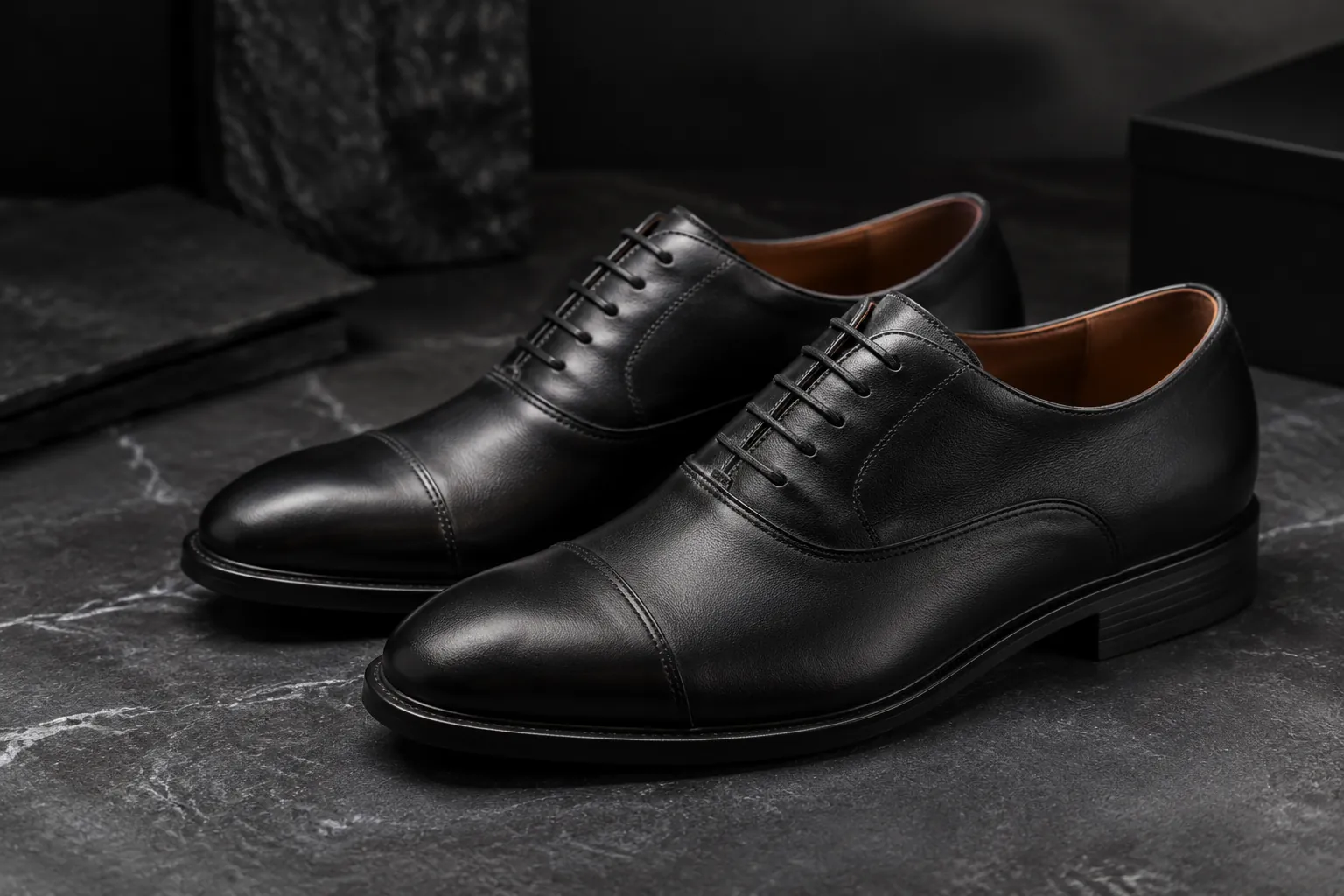
When the first line of a message says only “wholesale,” the recipient still has to guess what commercial relationship you mean. In a women's leather shoe wholesale OEM inquiry, that single word may stand for a ready-goods availability question, an OEM project, a private-label collection, or footwear made to a defined specification. Those are different routes. Until one of them is named, style notes, brand ideas, and quantity figures sit on an undefined request.
The site's business context positions leather footwear work as OEM, private-label, and made-to-spec programs. The evidence supplied for this article does not establish current women's ready-stock availability. Treat availability as a question you ask directly. The steps below are buyer-side guidance for structuring first contact so documented review scope and open project questions stay separate.
Name the route you want assessed
Route labels below are buyer-named options drawn from how this manufacturer is positioned for OEM and private-label footwear programs. They are not listed as published review fields on the contact excerpt. State the route in the opening sentence; do not leave it to be inferred from a photo or a category name.
- Availability question
- Ask whether particular goods or styles can be supplied now. Do not imply stock exists unless it has been confirmed separately.
- OEM route
- State that you are requesting assessment of a buyer-led product direction under OEM, then supply the product-commercial frame.
- Private-label route
- State brand presentation requirements (for example branding and packaging) as part of the definition. A women's private label leather shoes inquiry should say so in the opening line.
- Made-to-spec route
- State which product elements are fixed and which remain open for discussion.
One clear opener works better than a long preamble. For example: “We are requesting assessment of a private-label women's leather footwear project; this is not a ready-stock wholesale assumption.”
State the route. OEM, private label, made to specification, or a separate availability question.
State the decision you need now. Product assessment is the baseline. Ask which development, sampling, or quotation options may apply to the project. Do not list those as confirmed services for every request.
Mark fixed versus open points. Category, brand identity, and delivery need may be fixed; construction, materials, or commercial suitability may still be open.
A women's leather shoe OEM manufacturer request that begins with only a reference image benefits from this order. The image can show visual direction. It does not, by itself, identify material article, size range, packaging approach, or commercial frame. Call the reference a direction for assessment, not a complete specification.
Commercial details such as minimum quantity, packing method, unit price, and lead time are project-specific research questions. Raise them only after the route and product definition are clear, and only as open gaps for that project, not as a menu of factory options already attached to every inquiry.
Keep the product and commercial frame together
The published contact page describes how the company reads an incoming request: style, market, quantity, size range, materials, branding, packaging, and delivery need are reviewed together rather than priced as isolated line items. That is the documented product-commercial frame. It is not a promise that any project will receive a quotation, sample, or production approval.
Use the same grouping when you write. Connected inputs describe one project; disconnected line items force the reader to invent links between them.
Style: footwear category plus the clearest design reference or description you have.
Market: the market context that affects how the product should be read.
Quantity and size range: commercial scale and sizes under consideration, stated as planning information only.
Materials: known requirements versus items still open.
Branding and packaging: brand presentation required for the project.
Delivery need: the delivery requirement you are trying to meet, without assuming a committed date.
For a custom women's leather footwear quotation inquiry, this frame supports assessment. It does not convert the message into confirmed pricing or program acceptance.
Identify materials by component, not by one leather label
At inquiry stage, material language should identify what you intend. A single word “leather” rarely distinguishes upper, lining, and outsole. Separate those roles when any of them matters to the brief.
The published factory-quality incoming stage has a narrow scope: leather article, color, thickness, lining, outsoles, hardware, packaging, artwork, and lot identity are reviewed before mixed or unclear materials enter production. That statement describes an incoming control step. It is not a catalog of available materials, a pre-quotation service, approval criteria for every project, or a guarantee that every material will be accepted.
Practical buyer note: name the leather article when known; separate color intent from thickness when both matter; list lining, outsole, hardware, packaging, and artwork as distinct items if they are in scope. If lot identity is relevant to a prior reference or supplier, ask what information would be useful for discussion rather than assuming a control process already applies to your file.
Keep the note short. A component list that removes ambiguity is more useful than a long technical appendix on first contact.
Published review versus open project questions
The left column stays inside the wording of the supplied excerpts. The right column is for questions the buyer still needs to raise. Route names on the right are buyer-stated options from the business context, not fields documented on the contact excerpt.
| Published scope | Question to raise in the inquiry |
|---|---|
The contact page states that style, market, quantity, size range, materials, branding, packaging, and delivery need are reviewed together rather than priced as isolated line items. | With this product-commercial frame completed, can the project be assessed under the route I am naming (OEM, private label, or made-to-spec)? |
The factory-quality page states that leather article, color, thickness, lining, outsoles, hardware, packaging, artwork, and lot identity are reviewed before mixed or unclear materials enter production. | What material and component identification would be useful for this project's initial discussion? |
The supplied excerpts do not document women's ready-stock availability or which development, sampling, or quotation options apply to a given project. | Which development, sampling, or quotation options may apply to this defined project? |
Keeping those columns apart stops a published review sentence from being stretched into a broader capability claim. It also gives the recipient a direct set of answers instead of a vague wholesale request.
What to send for assessment
A compact first submission can include:
The route you are requesting: OEM, private label, made to specification, or a separate availability question.
The women's footwear style or category, with a reference when available.
Target market, planned quantity, and size range.
Known material and component requirements, with open items labeled open.
Branding, packaging, and delivery need for the project.
A direct ask: which development, sampling, or quotation options may apply.
Share the current footwear definition through the company's contact page and ask which development, sampling, or quotation options may apply to the project. When material identification is central, the published factory-quality incoming-review statement provides the limited context described above. A route-clear definition gives that exchange a defined commercial purpose without overstating what the available information confirms.
Sources and verification
- Request a Quote | Leather Shoe Manufacturer First-party site source
- Leather Shoe Factory in China | Capability & Export QC First-party site source
Share the current leather footwear definition and ask which development, sampling or quotation options may apply to the project.
Send your project brief