
Wholesale Leather Shoes
Wholesale Leather Shoes: Control Material Identity
A buyer-side method for keeping material definitions connected to the current footwear specification between commercial inquiry and incoming-material review.
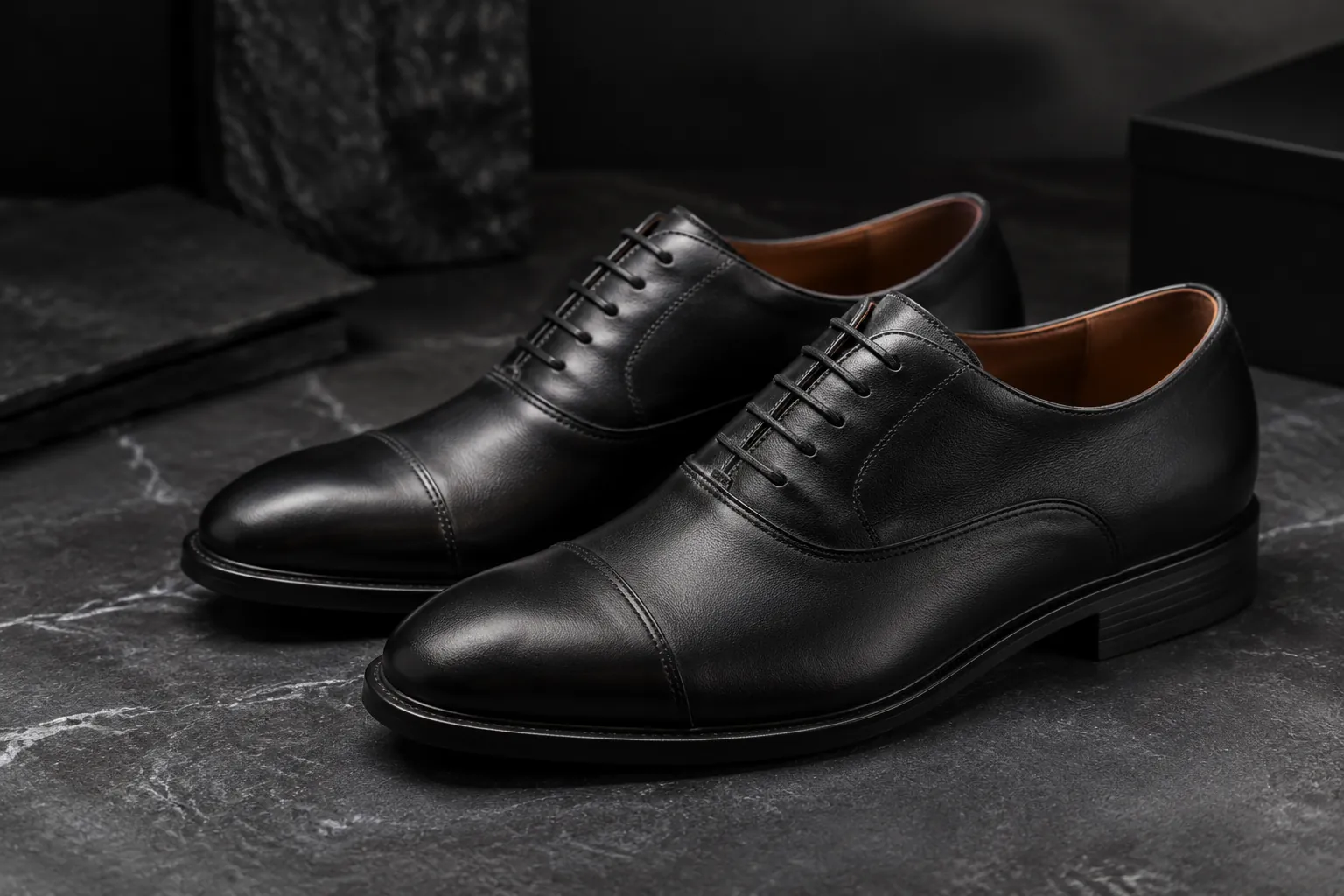
Start with the leather article identifier, not a description such as “black leather.” Then record the color reference and requested thickness separately. This gives reviewers three distinct fields to compare instead of one phrase that may conceal an unresolved detail.
Apply the same discipline to lining, outsoles, hardware, packaging, artwork and available lot identity. For buyers sourcing wholesale leather shoes, the editorial recommendation is to keep these entries attached to the current style and commercial definition. The resulting material identity record is a buyer-created control, not a documented manufacturer form.
What the published checkpoints establish
Leather Shoe Manufacturer documents two relevant stages. On its contact page, the company says it reviews the product and commercial frame. The stated inquiry inputs are style, market, quantity, size range, materials, branding, packaging and delivery need.
The factory quality page describes an incoming-material step. It names leather article, color, thickness, lining, outsoles, hardware, packaging, artwork and lot identity, and says these controlled materials are reviewed before mixed or unclear materials enter production.
These excerpts support the timing and scope of the two published checkpoints. They do not document an integrated traceability system, checks continuing throughout production, material authentication, supplier auditing, substitution approval, test methods or numerical tolerances. Questions about those subjects should remain marked as project-specific inquiries.
Build a record around identity
A leather shoe material specification may contain a component name without identifying the exact reference intended for the current style. To reduce that ambiguity, buyers can create one row for every incoming-material category named on the factory quality page.
The table below is an editorial recordkeeping format. It is not a company template, mandatory procedure or documented approval service.
| Category | Current buyer definition | Reference | Status | Question to retain |
|---|---|---|---|---|
| Leather article | Article identifier in the current footwear definition | Buyer-held specification or swatch reference | Defined or open | How should the article be identified for this project? |
| Color | Color name linked to a specific reference | Current color standard or file | Defined or open | Which reference should be considered? |
| Thickness | Currently requested thickness definition | Material specification | Defined or open | Are any applicable tolerances available for discussion? |
| Lining | Lining assigned to the style or identified area | Component specification | Defined or open | Which areas still require definition? |
| Outsoles | Outsole reference assigned to the style | Drawing, sample reference or specification | Defined or open | How should alternatives or construction questions be raised? |
| Hardware | Hardware reference where applicable | Trim reference or artwork file | Defined or open | Is any finish or placement detail unresolved? |
| Packaging | Current packaging definition | Packaging specification | Defined or open | Which packing information should accompany the inquiry? |
| Artwork | Current version and intended placement | Identified artwork file | Defined or open | Which file should be submitted for review? |
| Lot identity | Lot reference available to the buyer, if known | Relevant buyer-held material record | Recorded or open | How might lot identification apply to this project? |
An empty field should be marked as open rather than completed from assumption. This keeps an unanswered private label shoe material approval question from appearing to be an agreed requirement.
Separate decisions from supporting material
One status column may not be enough when a record contains both a requirement and its supporting reference. Buyers can use three distinct labels:
- Current requirement
- The definition presently requested by the buyer. It records buyer intent and does not indicate manufacturer acceptance.
- Attached reference
- A file, drawing, specification or physical identifier supplied to clarify the requirement. Its presence does not establish approval.
- Open inquiry topic
- A matter requiring project-specific discussion, such as substitution handling, lot identification, applicable tolerances or the availability of approval evidence.
This separation prevents a question from being read as a capability. An attached outsole drawing, for example, identifies what the buyer means; it does not establish whether an alternative can be considered. A question about lot handling does not document lot segregation.
Keep the inquiry context with the record
The contact-page excerpt says the inquiry inputs are reviewed together rather than priced as isolated line items. Following that structure, buyers should keep the material record connected to the commercial definition submitted for review.
- Identify the style or buyer reference used in the inquiry.
- State the intended market.
- Record the buyer’s current quantity requirement without assuming an applicable minimum.
- Identify the requested size range.
- Link the material record version.
- Connect branding to the relevant artwork reference.
- Identify the current packaging definition.
- State the delivery need as a buyer requirement, not an accepted schedule.
This buyer-side header keeps the wholesale shoe production inquiry readable as one product definition. It does not establish pricing, minimums, timing or acceptance of any requested term.
Attach materials to the correct style
A shared material name does not replace a style reference. The company’s product pages illustrate why buyers should preserve that connection through separate examples.
Cap-toe Oxford
The dress-shoe page names facing gap, toe proportion, cap placement, polish and pair symmetry as control points for its cap-toe Oxford description. A buyer can keep the Oxford’s leather article, color and thickness references beside that style definition so another reviewer can recognize which materials belong to it.
Penny loafer
The loafer page separately names saddle proportion, apron symmetry, vamp length, opening retention, heel hold and flex for the penny loafer. Its material references should remain attached to the loafer definition rather than being treated as interchangeable with the Oxford record.
The two sets of control points are style-specific. They are not a combined footwear checklist and do not document material tests, measurable acceptance standards or universal approval procedures.
Review the buyer-side handoff
The buyer’s objective is to make the definitions used at inquiry recognizable when the named incoming-material categories are later considered. That is a recordkeeping goal, not a claim that the manufacturer operates an end-to-end handoff process.
Before sending the definition, the editorial recommendation is to check the following:
- Record leather article, color and thickness in separate fields.
- Identify the lining, outsoles and hardware associated with the current style.
- Connect packaging and artwork to the current buyer-held references.
- Record available lot identity without implying broader tracking.
- Keep the inquiry’s style, market, quantity, size range, branding, packaging and delivery need accessible with the record.
- Distinguish current requirements from attached references and open questions.
- Keep Oxford and loafer control points separate and style-specific.
- Clearly identify superseded buyer references so they are not presented as current.
Share the current leather footwear definition through the contact page and ask which development, sampling or quotation options may apply. Substitution handling, lot identification, applicable tolerances and approval evidence can also be raised as project-specific questions without assuming that a particular service or document is available.
Sources and verification
- Leather Shoe Factory in China | Capability & Export QC First-party site source
- Request a Quote | Leather Shoe Manufacturer First-party site source
- Custom Leather Dress Shoes Manufacturer | OEM & Private Label First-party site source
- Custom Loafers Manufacturer | OEM & Private Label Leather Loafers First-party site source
Share the current leather footwear definition and ask which development, sampling or quotation options may apply to the project.
Send your project brief