
Sourcing
Wholesale Leather Boots Lot Pairing as a Spec Decision
Treat wholesale leather boots lot pairing as a buyer-written rule that names which hide and component lots may share an order, separate from lot identity and appearance-range language.
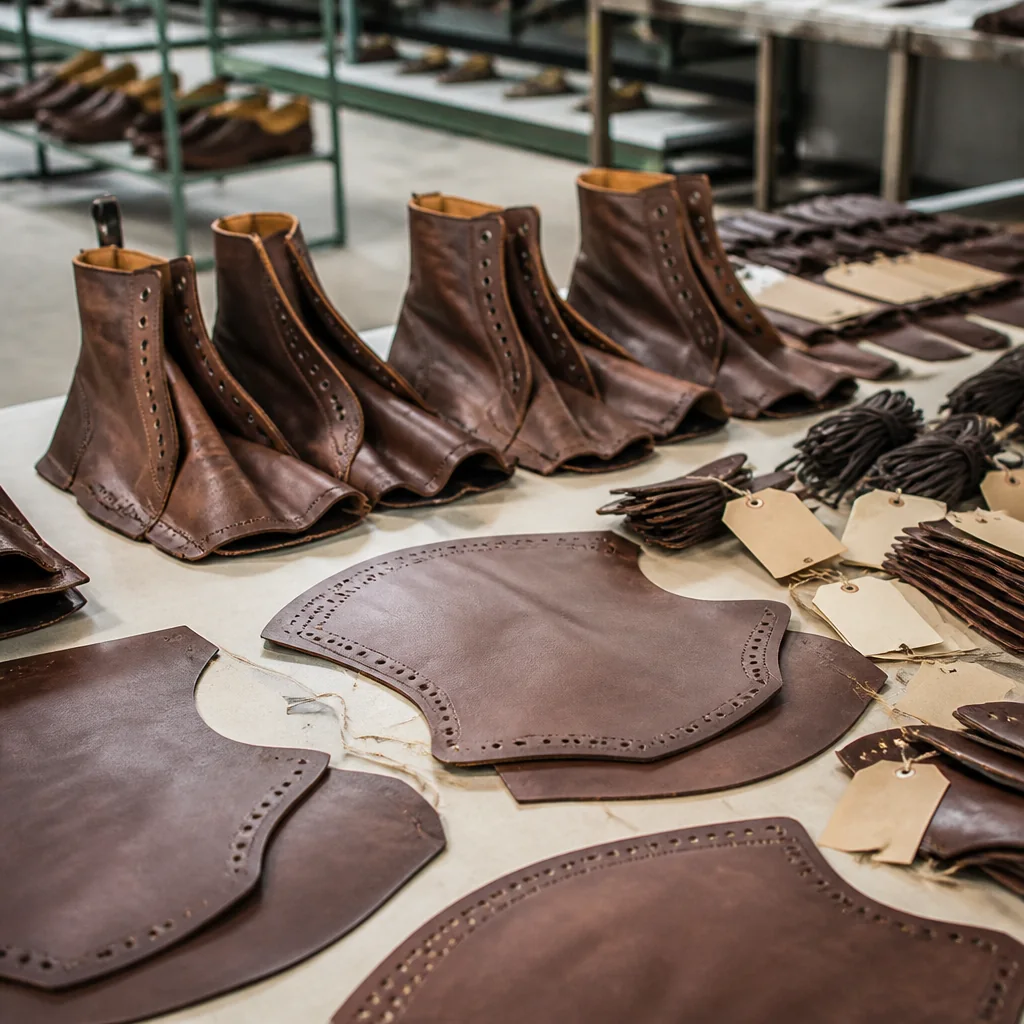
When a wholesale leather boots program reaches material approval, lot codes and appearance notes often look complete. Wholesale leather boots lot pairing is still a separate buyer decision: which hide lots and which component lots may share one order, colorway, or size run. Approving leather article language does not answer that combination question. If pairing stays unwritten, codes can sit on a register while cutting faces materials never told how to combine, and pair-to-pair or size-to-size inconsistency follows.
Leather boots wholesale material pairing belongs in the product definition before bulk is released. It is not lot-identity recording, and it is not the same task as defining natural variation versus defect. Those jobs matter. Neither one answers how hides and components are allowed to combine across the order.
Is lot pairing the same job as lot identity?
Three buyer jobs often collapse into one vague materials note. Keeping them separate is what makes each one usable at review time.
| Buyer job | What it answers | What it leaves open |
|---|---|---|
| Lot identity | Which hide, lining, outsole, hardware, packaging, or artwork lot arrived and under which code it is recorded | Whether those lots may be mixed across pairs, sizes, or colorways in the same order |
| Appearance range | What natural variation is acceptable, what becomes a defect, and how colors are approved | Which specific lots may be paired together once color is approved |
| Lot pairing | How hides or component lots are paired across the order so production knows what may share a run | Whether a lot merely exists and is labeled correctly on intake |
The materials overview for this manufacturer groups appearance-range questions that already include how colors are approved and how hides or component lots are paired across the order. That pairing question is the one this article owns. Identity logging and defect language remain adjacent decisions; they do not substitute for a written pairing rule.
If a brief only says “full grain, approved color, natural grain accepted,” article and appearance work has started. Production still does not know whether two hide lots of the same article may share one colorway, whether left and right of a pair must come from the same hide lot, or whether outsole and hardware lots must track the upper lot across the size run. To pair hides across leather boots order lines with any discipline, those answers have to be explicit.
When materials look approved but pairing is still open
The practical risk is quiet. Leather article, color, thickness, lining, outsoles, hardware, packaging, and artwork can all look approved. Lot identity can still be recorded. Without a pairing decision, the brand may still discover only later that multiple hide lots shared a colorway expected as a single pairing set, or that pair mates left different component lots while every item still matched the approved article name.
Documented incoming review can confirm controlled materials against article, color, thickness, lining, outsoles, hardware, packaging, artwork, and lot identity before mixed or unclear materials enter production. That confirmation does not invent a pairing policy the buyer never wrote. Lot codes prove what arrived; they do not prove what was allowed to share a boot pair or a size block.
Buyer-side guidance: freeze pairing before materials land, as part of the product definition that travels with the commercial frame, not as a verbal fix after cutters notice shade drift. Leaving the rule open after material approval is a buyer gap that identity fields do not close by themselves.
Fields buyers can write so pairing is checkable
The materials page asks how hides or component lots are paired across the order; it does not publish a factory default pairing procedure. The fields below are editorial buyer guidance for writing a rule production can read without inventing local policy. They are not a documented factory checklist or a proven “minimum” the plant will enforce on its own.
- What may be paired. State whether one colorway may draw from more than one hide lot of the same article, and under what limit (for example, same tannery shipment only, or a single hide lot per colorway).
- What must stay separate. Name any lots that cannot share an order, size block, or pair (for example, different dye lots of the same color name, or lining lots not released with the approved upper lot).
- How color approval interacts with hide lots. Say whether color approval is per lot, per shipment, or against a master standard that multiple lots must match before they may be paired.
- Which components follow the same rule. Extend the same pairing logic to lining, outsoles, hardware, packaging, and artwork when those components affect pair consistency or customer-facing match.
- Pair and size scope. State whether left and right of a pair must share the same hide lot, and whether a full size run must stay inside one pairing set or may change at a named size break.
If a field is still open, mark it open. Silence is easy to misread as “mix freely.” Write the answers you need; do not assume the factory owns the pairing decision for you.
Where incoming material control ends and buyer pairing begins
Incoming material control for wholesale boots, as described on the factory quality page, is the review of leather article, color, thickness, lining, outsoles, hardware, packaging, artwork, and lot identity before mixed or unclear materials enter production. That is the documented gate. It is not the same statement as “intake enforces the buyer’s pairing set.”
As a practical buyer step, use the written pairing fields as preparation for that gate, then use the intake records to judge whether arrivals fit the rule you wrote.
- Article and color first. Expect intake to confirm leather article and color against the controlled definition. Separately, decide in advance which arriving lots belong inside your pairing set for that colorway so you can compare records to your rule.
- Thickness and secondary materials. Confirm lining and other leather components against the same limits you set when those materials sit next to the upper in the finished boot.
- Outsoles, hardware, packaging, and artwork. Apply your component clause so non-leather lots are not left free to drift independently of the upper pairing set you named.
- Lot identity as evidence of arrival. Record lot identity so each release is traceable. Treat identity fields as proof of what arrived, not as a substitute for the pairing rule itself.
- Buyer action when a lot sits outside the rule. If a lot cannot be placed inside the written pairing set, hold production release until you reopen the rule or reject the lot. That stop depends on having written the rule before materials arrive; it is not described as automatic factory pairing enforcement in the source material.
Do not rely on “match the sample” alone. A sealed sample can still be cut from one lot while bulk arrives as several lots that were never authorized to share the order. Write the pairing set bulk must respect, then compare arrivals to that set using the controlled-material review the factory documents.
Product-commercial frame that carries the pairing rule
Pairing should not travel as a side email after pricing. The contact page describes a review of the product and commercial frame together: style, market, quantity, size range, materials, branding, packaging, and delivery need, rather than pricing isolated line items. Place the pairing rule inside that same frame so materials language and commercial scope stay aligned.
| Frame field | How pairing belongs with it |
|---|---|
| Style | Name which boot styles share one pairing set versus which need separate hide or component rules |
| Market | Note if a market expects tighter pair matching than another, so pairing limits stay market-specific |
| Quantity and size range | State whether large size runs may change pairing sets at a size break or must stay in one set for the full range |
| Materials | Attach the hide and component pairing rule next to article, color, and thickness language |
| Branding and packaging | Include packaging and artwork lots in the same pairing discipline when labels or boxes must match the leather lot story |
| Delivery need | If staggered deliveries force multiple hide lots, write how later lots may join or replace the first pairing set |
Keeping pairing inside one product-commercial package reduces the chance of a quote that prices “leather boots” while production later discovers the brand expected single-lot pairing that was never priced or scheduled. For materials language that sits beside pairing, see the factory leather materials overview; for the documented intake review of controlled materials, see factory quality.
What to submit when pairing is part of the definition
Close the gap with a single handoff rather than a second wave of materials notes. Share the current leather footwear definition for the wholesale boots program, with lot pairing written as buyer fields: what may be paired, what must stay separate, how color approval interacts with hide lots, which components follow the same rule, and the pair or size scope. Include style, market, quantity, size range, materials, branding, packaging, and delivery need in the same package so the frame is reviewed together.
Then ask which development, sampling, or quotation options may apply to that definition. That invitation is a buyer request for project-fit information, not a claim that every option is a fixed service menu. If pairing is still open on a live program, freeze the rule before the next material release so you have a concrete standard when comparing arrivals against controlled-material review.
When you are ready to hand off the current definition, use the contact path to share the product-commercial frame and the pairing decision in one submission.
Sources and verification
- Leather Shoe Materials | Full Grain, Suede, Lining & Outsoles First-party site source
- Leather Shoe Factory in China | Capability & Export QC First-party site source
- Request a Quote | Leather Shoe Manufacturer First-party site source
Share the current leather footwear definition and ask which development, sampling or quotation options may apply to the project.
Send your project brief