
Procurement Guides
Wholesale Leather Boot Quote Comparison Matrix
A buyer-side matrix for separating aligned quotation fields, conflicting definitions, unanswered questions, and quoted commercial terms.
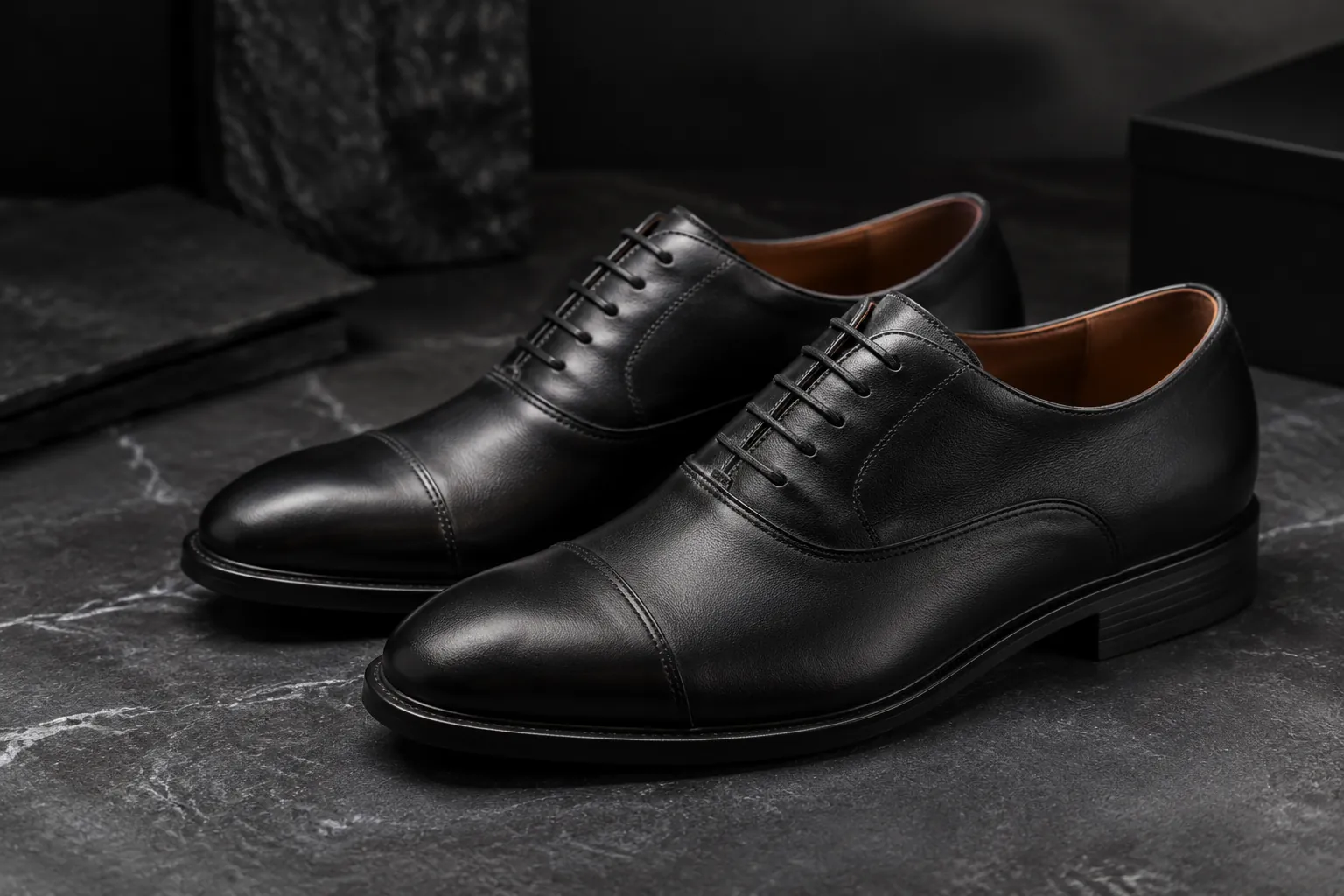
A wholesale leather boot quote comparison can place unlike scopes side by side. One response may follow the submitted materials definition while another proposes an alternative. Packaging may be addressed in one quotation and omitted from another. A delivery need may remain unanswered. Ranking the quoted amounts before recording those differences can obscure what each response actually covers.
The quote-request page states that style, market, quantity, size range, materials, branding, packaging, and delivery need are reviewed together rather than priced as isolated line items. Those eight fields provide a practical frame for comparing responses. The workflow, status labels, subrows, and tables below are editorial tools for buyers; they are not a published supplier quotation format or evidence that a particular option is available.
Put every response into one scope matrix
Start with the current buyer definition, then place each response against it without rewriting the supplier's language. The matrix should show whether a field matches, differs, remains unresolved, or was not addressed. This gives buyers a consistent way to compare leather boot supplier quotes while keeping alternatives and omissions visible.
Eight-field quotation scope matrix
| Scope field | Current buyer definition | Response wording | Status | Question or decision |
|---|---|---|---|---|
| Style | ||||
| Market | ||||
| Quantity | ||||
| Size range | ||||
| Materials | ||||
| Branding | ||||
| Packaging | ||||
| Delivery need |
Duplicate the response and status columns for each quotation under review. Keep the buyer definition fixed to one revision so that a changed requirement is not mistaken for a supplier difference.
- Aligned
- The response matches the buyer-defined scope being evaluated.
- Different
- The response contains an alternative, exclusion, or conflicting definition.
- Open
- The subject was addressed, but an answer or buyer decision is still pending.
- Not stated
- The response contains no usable answer for that field.
Hypothetical illustration: a response could be Aligned on style, Different on materials, Open on packaging, and Not stated on delivery need. These labels would describe that fictional response, not the supplier's general capability.
Read scope differences before quoted amounts
The matrix is not a scoring system. Its purpose is to prevent a stated alternative from being treated as a match and an omission from being treated as agreement. A Different response can remain under consideration, but it represents a separate scope for the affected field. An Open or Not stated cell identifies a question the buyer must evaluate before treating the quotations as equivalent.
Keep the quoted amount and its stated basis in a separate record. Quantity and delivery need stay in the eight-field matrix because the quote-request statement includes them in the product and commercial frame. The separate record captures how the quotation expresses its amount and any accompanying terms.
Buyer-created record of quoted price wording
| Record field | Response wording | Buyer review note |
|---|---|---|
| Quoted amount | Retain the amount exactly as stated | |
| Currency | Record the stated currency or mark Not stated | |
| Unit or total basis | Retain only the basis given in the response | |
| Stated inclusions | List expressly included items | |
| Stated exclusions | List expressly excluded items | |
| Other stated terms | Add buyer-defined subrows only for wording present in the quotation |
This record should reproduce the response rather than supply missing commercial terms. It does not indicate that any particular payment, sampling, tooling, quantity, timing, or delivery option is offered.
Expand a broad materials answer
A top-level Materials row may be too broad to show where two responses diverge. The factory-quality page describes an incoming review of leather article, color, thickness, lining, outsoles, hardware, packaging, artwork, and lot identity before mixed or unclear materials enter production.
For comparison purposes, buyers can use those incoming-review subjects as prompts for narrower subrows when they are relevant to the submitted definition:
- Leather article: retain the article named in the buyer definition and the response.
- Color: record the wording and any reference expressly identified.
- Thickness: enter a value or definition only when it appears in the buyer definition or response.
- Lining: distinguish a match, an alternative, an unresolved answer, and an omission.
- Outsole: preserve the proposed component wording without adding unstated properties.
- Hardware: record the named hardware or the absence of an answer.
- Lot identity: retain any project-specific statement without inferring a method that was not described.
Packaging remains one of the eight top-level quotation-review fields. Artwork appears in the cited incoming-review excerpt, but not in the quote-request excerpt's eight-field list. When artwork affects the project, place it in a supplemental row instead of using it to declare Branding or Packaging aligned.
The cited factory-quality excerpt addresses incoming review before production. It does not, by itself, establish that every named subject is defined, priced, approved, or included at the quotation stage. It also does not establish a finished-boot inspection, testing program, certification, compliance result, or numeric tolerance for the submitted project. Buyers should keep any such subject in the question column unless the response addresses it.
Record appearance topics as questions
The materials guidance asks what variation is natural, what becomes a defect, how colors are approved, and how hides or component lots are paired across the order. These are useful inquiry topics when quotations appear to rely on different material or appearance assumptions.
Appearance inquiry record
| Inquiry topic | Buyer definition | Response wording | Unresolved question |
|---|---|---|---|
| Natural variation | |||
| Defect boundary | |||
| Color approval | |||
| Hide or component lot pairing |
The cited materials excerpt presents these subjects as questions. It does not turn them into documented guarantees or acceptance rules. The excerpt also does not establish numeric limits, inspection methods, or approval procedures. Any answer used in the comparison should therefore come from the current buyer definition or the project response.
Keep incoming controls within their stage
The incoming-review statement and the quotation matrix serve different purposes. The source describes checking named material-related subjects before mixed or unclear materials enter production. It does not describe that review as a quotation-stage service.
For the buyer's comparison, this boundary changes how a blank cell should be handled. A missing answer can become a bounded question about the submitted project. It should not be filled with language from a general quality page, and it should not be treated as proof that a control will or will not apply. The resulting record remains tied to the response under review.
Do not transfer loafer controls to boots
The loafers page identifies L-01 as a tan men's penny loafer. For that repeatable core style, the page names saddle proportion, apron symmetry, vamp length, opening retention, heel hold, and flex as controls.
That product-specific example does not establish a control plan for leather boots. A buyer who needs boot-specific controls can place the topic in the question column and ask what, if anything, applies to the submitted definition. Any resulting answer belongs in the project record; the L-01 list should not be copied into a boot comparison.
Convert gaps into a bounded inquiry
Once the matrix is populated, use the following editorial sequence to complete the leather boot RFQ scope comparison:
- Keep one buyer definition. Record the revision being used across all responses.
- Retain response wording. Separate what was stated from the buyer's interpretation or follow-up question.
- Mark each top-level field. Use Aligned, Different, Open, or Not stated.
- Add materials subrows where needed. Expose partial matches without presenting buyer-created subrows as supplier procedures.
- Separate price wording from scope status. Record the amount and only the commercial basis expressly stated.
- Keep alternatives separate. A different material, packaging definition, or other scope element should remain visible as an alternative.
- Return focused questions. Ask about each unresolved field without presuming that an option, control, term, or service exists.
The related Wholesale Leather Boots RFQ Package covers the earlier task of assembling information for an inquiry. This matrix addresses the later task of normalizing the responses received.
Share the current leather footwear definition through the project inquiry page. Include the conflicting and unanswered matrix fields, then ask which development, sampling, or quotation options may apply to that definition. The inquiry can request applicable options without assuming availability, timing, quantity, or commercial terms.
Sources and verification
- Request a Quote | Leather Shoe Manufacturer First-party site source
- Leather Shoe Factory in China | Capability & Export QC First-party site source
- Leather Shoe Materials | Full Grain, Suede, Lining & Outsoles First-party site source
- Custom Loafers Manufacturer | OEM & Private Label Leather Loafers First-party site source
Share the current leather footwear definition and ask which development, sampling or quotation options may apply to the project.
Send your project brief