
Footwear Sourcing
Wholesale Genuine Leather Shoes: Build a Reorder Baseline
A buyer-focused framework for recording range-level, shared-component and shoe-specific approvals before wholesale leather footwear is reordered.
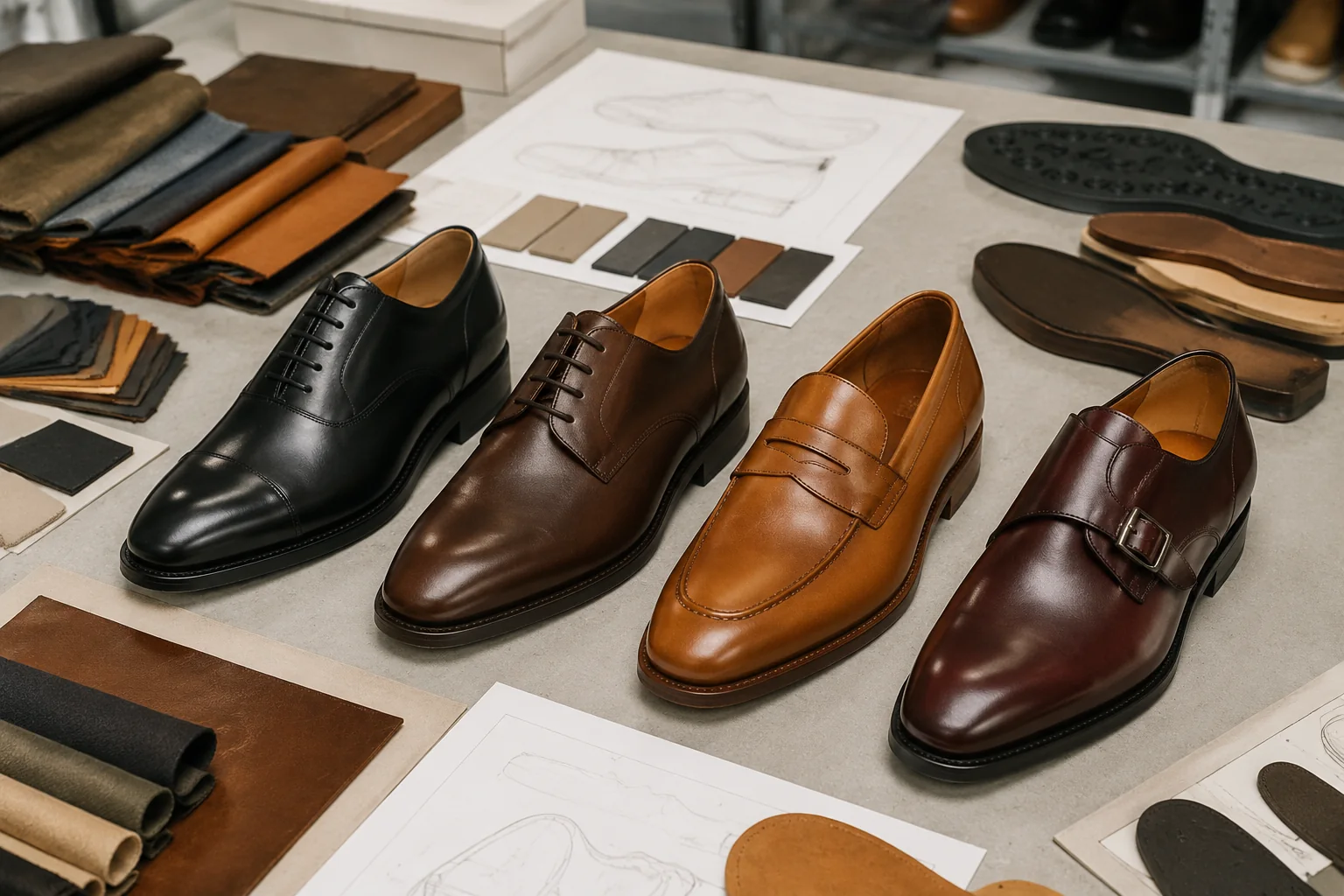
A sample can look ready while leaving important reorder decisions undefined. The approved pair may show the intended silhouette, color and visible finish, yet the buyer may still lack a controlled record of the fit reference, material article, construction, branding and packaging used for that version.
For buyers of wholesale genuine leather shoes, an editorially recommended response is to build a reorder baseline during development. This buyer-side record separates collection direction from components proposed for sharing and decisions that apply only to one shoe. It gives later discussions a defined reference without implying that a previous sample guarantees a particular production result.
The distinction is especially useful when a range includes Oxfords, derbies, loafers and monk straps. The manufacturer's men's leather shoes page identifies Oxford facing gap and heel hold, loafer opening retention and monk-shoe strap position among the points reviewed before bulk. Those differences make one generic fit approval inadequate as a buyer control for the whole assortment.
Divide the range by fit behavior
Classify each shoe by its pattern and fastening method before deciding which approvals might apply across the range. The following review structure is an editorial recommendation for buyers. It uses the documented style-specific approval points where available and treats the remaining entries as questions to resolve during development.
| Style | Buyer approval focus | Recommended control |
|---|---|---|
| Oxford | Facing gap and heel hold | Record the approved fit sample and pattern revision for the Oxford. |
| Derby | Fit reference for the open-lacing pattern | Keep a separate approval unless the project assessment confirms which references can be shared. |
| Loafer | Opening retention | Record the approved opening and fit reference for each relevant loafer pattern. |
| Monk strap | Strap position | Identify the approved pattern, hardware and strap position for that shoe. |
A buyer should also record the intended consumer, wearing occasion, size curve, width strategy and existing fit feedback where those details affect the product definition. These are recommended buyer controls rather than a published universal test procedure.
For a range containing lace-ups and wholesale leather loafers, the buyer should avoid using the lace-up approval as the only fit reference for the slip-on styles. The baseline should show which sample governs each pattern and which decisions remain open.
Record approvals at three levels
An undifferentiated specification sheet can make a collection-wide preference look like a shoe-specific approval. A three-level record gives each decision an explicit scope.
- 1. Range-level controls
As an editorial recommendation, record the target market, intended consumer, wearing occasions, price position, size strategy, collection color direction, branding system and packaging direction. Canada may be named when it is the buyer's target market. That entry should not be treated as evidence of Canadian labeling, chemical, customs or other market compliance.
- 2. Shared-component controls
After a component has been assessed as suitable for specified styles, identify the exact leather, lining, outsole or packaging reference and list the styles covered by that approval. Buyers should retain available article numbers, approved swatches, component references, color standards and sample revisions. The scope should be narrower than a general instruction such as “same leather for all.”
- 3. Shoe-specific controls
Maintain a separate record for the last and fit reference, pattern revision, fastening position, hardware, construction, edge and surface finishing, logo placement and applicable packaging configuration. Include the relevant documented review point, such as Oxford facing gap, loafer opening retention or monk-shoe strap position.
This hierarchy is an editorial buyer method. Whether a particular reference can be used in development, sampling or quotation remains a project-dependent question for the manufacturer.
Assess shared and dedicated elements
The men's leather shoes page defines the information used for this assessment. It asks the buyer to send at least one approved reference, the intended size curve, target market, expected pairs by style and color, and any existing fit feedback. After receiving those inputs, the manufacturer says it can separate elements that may share a last, outsole, lining, packaging or leather article from those requiring a dedicated pattern or component.
That published statement establishes an assessment route. It does not establish in advance that any element will be shared across a particular assortment. Buyers can use the following table to organize the questions submitted with the project.
| Element | Question for assessment | Recommended approval record |
|---|---|---|
| Last | Which named styles, if any, may be evaluated on the same last? | Approved last reference and the exact styles covered |
| Outsole | Which patterns and constructions can be assessed with one outsole? | Outsole reference, construction and applicable styles |
| Lining | Can one lining article be considered for selected shoes? | Article reference, color and approved scope |
| Leather article | Can the selected article be assessed across specified patterns? | Article and color reference linked to each approved style |
| Packaging | Which graphics or packing elements may remain common? | Approved artwork and the applicable box, insert and packing references |
| Pattern | Which shoes require dedicated patterns? | A controlled revision for each dedicated pattern |
| Hardware | Which buckle, bit, tassel or attachment details are style-specific? | Finish, position and attachment reference for the relevant shoe |
Published mixed-order terms must remain within their named programs. The dress-shoe page says a mixed formal range can share an order if each style meets the minimum. The loafer page separately says penny and tassel styles can share an order when each meets the per-style minimum. These statements do not document a combined dress-shoe and loafer order under one set of terms.
Keep commercial options within page scope
The dress-shoe page covers Oxfords, derbies, monk straps and dress loafers. It lists full-grain calf, Italian-style leather and patent as upper options for that program. Its listed sole options are cemented TPR, stitched rubber and Goodyear-welted leather.
The same page publishes EU 39-46 men's sizes and EU 35-42 women's sizes, with half sizes on development. It lists insole print, outsole logo, embossing, debossing and a box sleeve as branding methods.
For the documented dress-shoe program, the published minimum starts at 300 pairs per style and color. The stated sampling range is 10-15 days, and the stated bulk range is 35-50 days. These are page-level ranges rather than guaranteed dates or a published reorder schedule.
The dress-shoe page also says that a commercial invoice, packing list and certificate of origin are provided, with REACH testing arranged on request. The REACH statement is limited to arranging testing on request within that documented context; it does not establish general REACH compliance across every product.
The loafer page covers penny, tassel, bit, driving, Belgian and suede loafers. Its listed uppers are full-grain leather, corrected-grain leather, suede and mixed builds. Its listed soles are leather-look TPR, rubber driver studs and stitched leather soles.
The loafer page publishes EU 39-46 men's sizes and EU 35-42 women's sizes, with half sizes on development. It also lists insole print, outsole logo, embossing, debossing and a box sleeve as branding methods.
For the documented loafer program, the published minimum starts at 300 pairs per style and color. Samples are listed at 10-15 days and bulk at 35-50 days. The page says lower trial quantities can be discussed on a development order, so availability must be raised as a project question.
Buyers developing private label leather shoes should reference the relevant product page when asking about materials, sizes, timing or mixed-order terms. Similar options appearing on separate pages do not establish cross-category availability.
Submit a reorder-oriented inquiry
The contact page asks for a style photo or reference pair, target market and price point, quantity and size range, material preference, and logo and packaging needs. To support a reorder-baseline discussion, buyers should also identify the current approved references and the elements they want assessed for possible sharing.
- List every Oxford, derby, loafer or monk-strap style separately.
- State the target market, including Canada when applicable.
- Provide the proposed quantity by style and color and the intended size range or curve.
- Attach at least one approved reference and identify the relevant sample or specification revision.
- Include existing fit feedback.
- Describe material preferences and identify any existing leather, lining or outsole references.
- Specify logo applications and packaging needs.
- Mark the lasts, outsoles, linings, packaging or leather articles to be assessed for possible sharing.
- Identify patterns, hardware or other components that should remain style-specific.
- Ask which development, sampling, MOQ, packing and quotation information applies to the defined project.
The inquiry should make the scope of each approval visible. That gives the buyer and manufacturer a concrete basis for discussing which current references apply, which components require assessment and which options are available for the proposed project.
Sources and verification
- Men's Leather Shoes Manufacturer | Custom Oxfords & Loafers First-party site source
- Custom Leather Dress Shoes Manufacturer | OEM & Private Label First-party site source
- Custom Loafers Manufacturer | OEM & Private Label Leather Loafers First-party site source
- Request a Quote | Leather Shoe Manufacturer First-party site source
Share the current leather footwear definition and ask which development, sampling or quotation options may apply to the project.
Send your project brief