
OEM Sourcing
What Belongs in a Custom Leather Boots Commercial Frame
A custom leather boots commercial frame freezes market, price position, size range, quantity, delivery need, and factory proposal rights so development, sampling, or quotation can be chosen with intent.
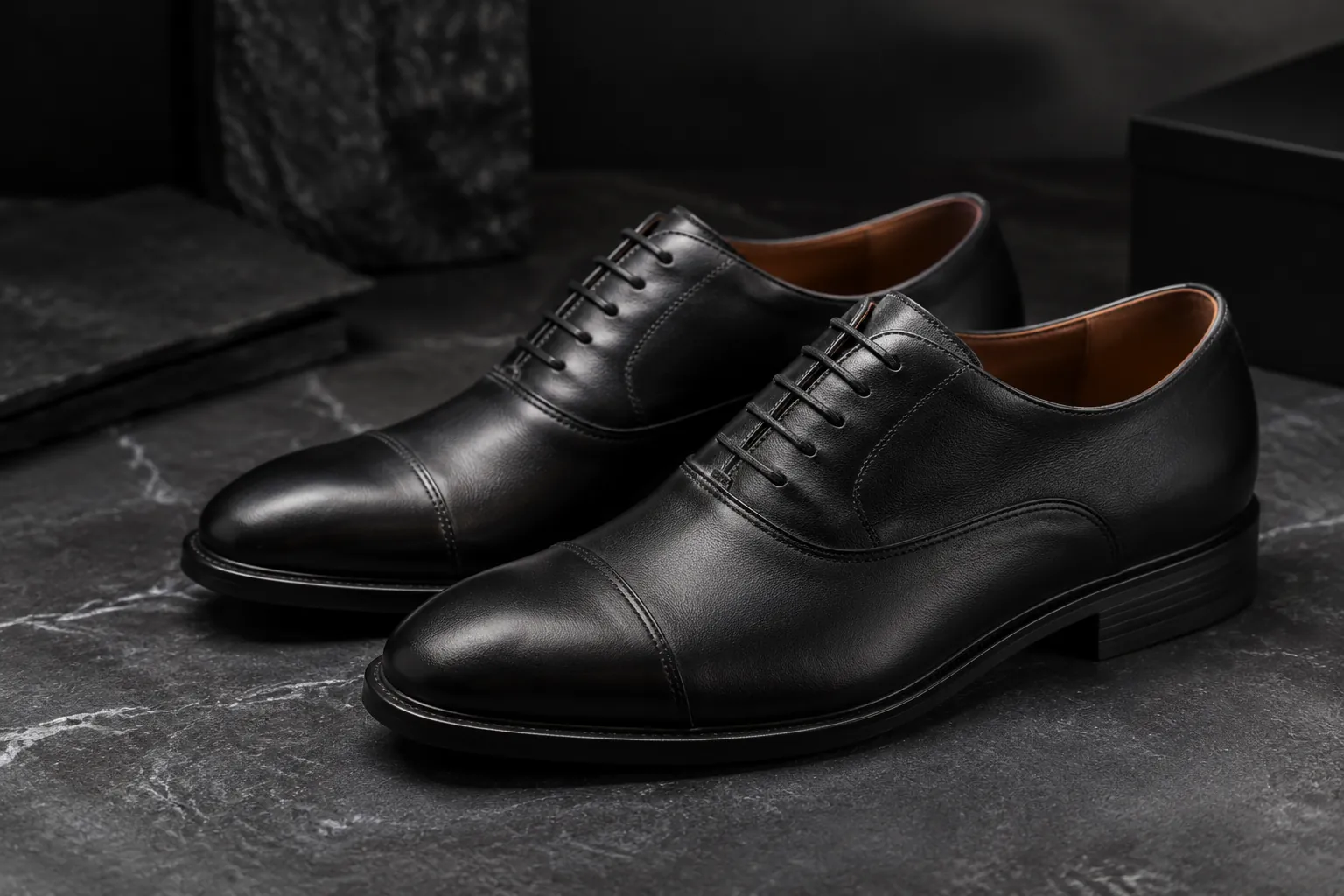
A custom leather boots commercial frame is the package a factory needs before it can route OEM work. Style photos and leather names help alignment, but they do not state market, target price position, size range, delivery need, or what the plant may propose. Until those fields close together, development, sampling, and quotation paths stay mixed. Completeness of the commercial frame—not the polish of a reference pack—is the gate that decides which path fits.
Why routing stalls without a commercial frame
Style references support silhouette, last direction, and finishing intent. They do not define who wears the boot, where it sells, how it should sit on price, how many pairs are expected, which sizes the run must cover, or when delivery matters. When those commercial fields stay open, factories receive over-described looks and under-specified programs.
The practical failure is familiar. Teams debate upper grain and hardware finish while target price position and size range never freeze. Construction tradeoffs, material grade, and tooling risk then have no commercial package to score against. Editorial recommendation for buyers: treat commercial completeness as the entry condition for any path discussion, and stop treating a photo pack as a brief. Guidance on how an OEM or ODM footwear brief freezes that frame starts from buyer-owned fields, not from isolated material names. That discipline is what a custom leather boots before sampling review actually requires.
Buyer-owned fields that close the frame
A complete custom leather boots OEM brief freezes one package of buyer-owned fields: customer, market, style family, target price position, expected quantity, size range, delivery need, and the decisions the factory may propose. Leave any field open and the rest of the brief loses routing power. Use the list as a completeness check, not as a form filled with invented values.
- Customer: who the program serves and how brand-side decisions will be owned.
- Market: where the boots will sell and which retail or wholesale expectations shape finish and packaging.
- Style family: boots category and the family the style belongs to, so construction choices stay inside a defined range.
- Target price position: the band or position the program must support, stated as direction rather than a guessed unit cost.
- Expected quantity: order scale the team anticipates, so tooling and process options can be weighed later.
- Size range: the run of sizes the collection must cover.
- Delivery need: when the program must land relative to season, launch, or replenishment.
- Factory proposal rights: which choices stay fixed and which the factory may suggest.
Close these as one set before expanding into materials storytelling or component catalogs. A partial commercial frame forces the factory to guess missing constraints, which is how development paths and quotation paths get mixed.
Review product and commercial inputs as one package
Path selection and quotation work poorly when style, market, quantity, size range, materials, branding, packaging, and delivery need are treated as isolated line items. On the manufacturer contact side, the product and commercial frame are read together rather than priced field by field. That joint reading is why the commercial frame must freeze before anyone asks for a route.
Boots programs make the coupling obvious. A heavier outsole that fits a work-leaning market can conflict with a dress-leaning price position. A wide size range changes lasting and grading work relative to a narrow fashion run. Branding hardware and packaging artwork affect both cost structure and incoming control, so they belong in the same package as market and delivery need. If those inputs arrive in separate emails or disconnected RFQ lines, the factory cannot hold a single definition of the program.
Editorial recommendation for buyers: assemble style family, commercial fields, materials intent, branding, packaging, and delivery need into one handoff before asking for a route. Joint review of that package is the documented starting point; it is not a promise of a fixed path until the frame is clear. When you are ready to share that package, use the quote and program review contact path so product and commercial inputs arrive together.
Write the decisions the factory may propose
Proposal permission is an explicit brief field, not an informal habit. State what the factory may recommend and what remains buyer-fixed. Without that line, a plant either oversteps into brand territory or stays silent on options that would still protect the commercial frame.
- List fixed decisions first: last direction if already locked, brand marks that cannot move, packaging formats already sold to retail, or construction rules the brand will not reopen.
- Name open decisions next: sole compound alternatives, lining grades within the target price position, hardware finishes that still meet market expectation, or construction details the factory may propose if they keep the size range and delivery need intact.
- Record who approves each open item so sampling or development work does not produce orphan options with no owner.
When proposal rights are written this way, the factory can respond with scoped alternatives instead of a free redesign. That boundary is what later lets a team choose development, sampling, or quotation without reopening the commercial package midstream.
Attach appearance rules only after the frame is set
Appearance questions belong inside an already frozen commercial frame. Natural leather variation, defect boundaries, color approval method, and how hides or component lots are paired across the order only make sense once market and target price position are known. A premium market may accept visible grain character that a uniform retail program would reject. A tight price position may limit how aggressively lots can be paired for color match.
Ask four appearance questions after the commercial fields close, not before:
- What variation is natural for the chosen leather article and market?
- What marks or irregularities become defects for this program?
- How will colors be approved, and against which standard or sample?
- How will hides or component lots be paired across the order so left-right and size-run consistency stay acceptable?
Those questions sit on materials and appearance guidance and should not float free of quantity, size range, or delivery need. Closing the commercial frame first keeps appearance acceptance from becoming a second, conflicting brief.
Name the incoming controls production should enforce
Once the commercial frame and appearance rules are set, map buyer expectations to the incoming gate production should enforce. The stated control list covers leather article, color, thickness, lining, outsoles, hardware, packaging, artwork, and lot identity before mixed or unclear materials enter production. Stay inside that list rather than inventing broader QC claims.
- Leather article and color against the approved reference.
- Thickness within the range the construction and price position support.
- Lining identity so comfort and brand claims stay consistent.
- Outsoles matched to the style family and delivery plan.
- Hardware checked for finish and function against the brief.
- Packaging and artwork verified before they reach the line.
- Lot identity held so paired components and hide lots remain traceable.
These controls are useful only when the commercial package already tells production which article, market, and size run they serve. For how that incoming review sits inside factory quality practice, see the factory quality and export QC overview. Editorial recommendation for buyers: treat the list as the ceiling of what to specify at the gate, then ask which sampling or production checks apply to the project rather than assuming a universal test suite.
Hand off one definition and ask which option applies
Close the brief with a single current definition of the program: customer and market, style family for the boots, target price position, expected quantity, size range, delivery need, materials and branding intent, packaging, appearance acceptance rules, incoming control expectations, and the decisions the factory may propose. One definition prevents parallel versions of the same style circulating with different commercial assumptions.
Hand that definition to the factory as an assessment request, not as an isolated price demand. Ask which custom leather boots development options, sampling depth, or quotation format may apply given the frozen frame. Those are questions about applicability, not documented service promises beyond joint review of the product and commercial frame.
That handoff ends commercial-frame work. Style photos and material names can sit inside the package, but they no longer carry the program alone. When the frame is complete and proposal rights are explicit, the factory can recommend a path that matches the boots program you intend to build.
Sources and verification
- OEM Shoes & ODM Leather Footwear | Custom Shoe Manufacturer First-party site source
- Request a Quote | Leather Shoe Manufacturer First-party site source
- Leather Shoe Materials | Full Grain, Suede, Lining & Outsoles First-party site source
- Leather Shoe Factory in China | Capability & Export QC First-party site source
Share the current leather footwear definition and ask which development, sampling or quotation options may apply to the project.
Send your project brief