
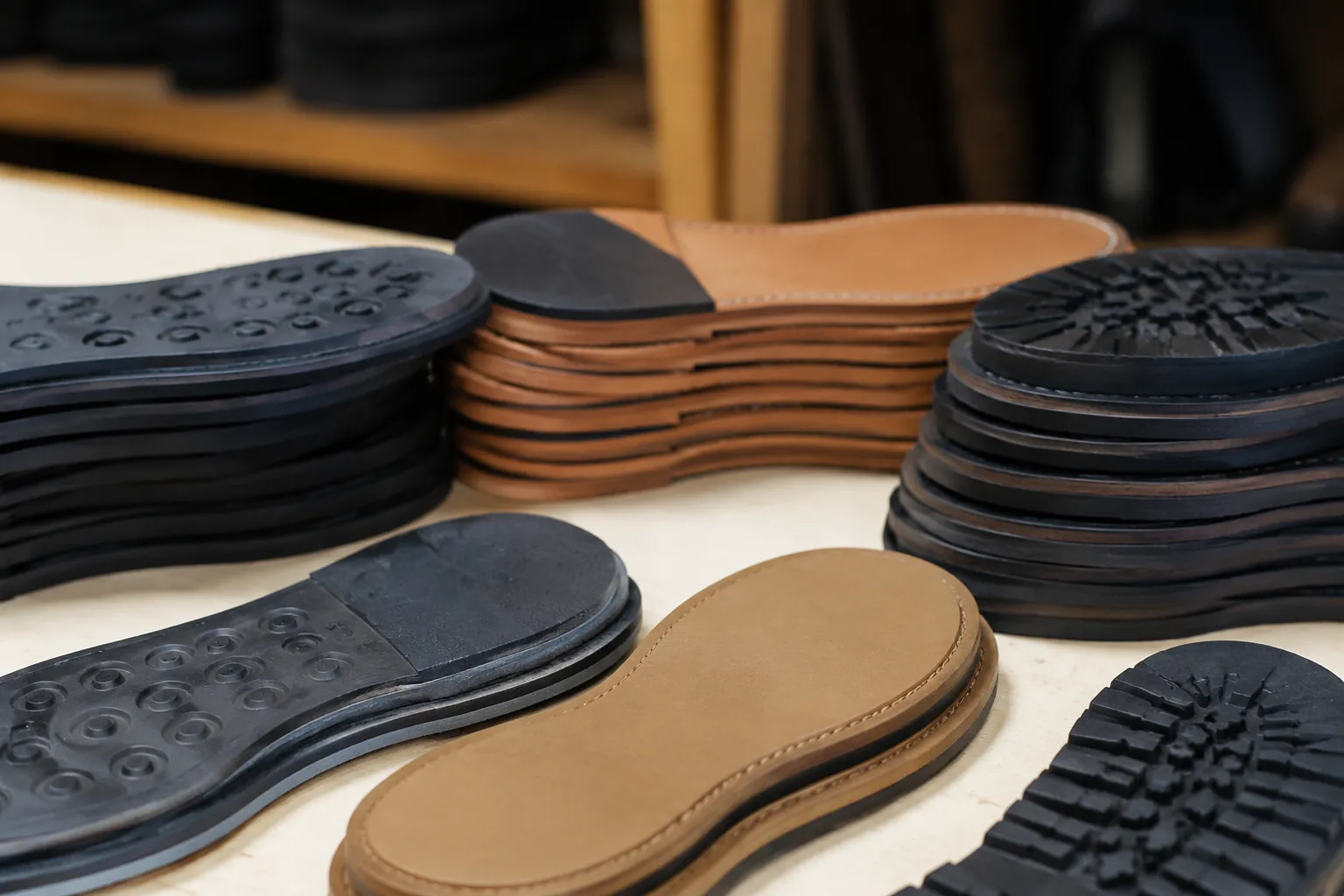
Direct answer
Select the outsole after defining category, construction, target appearance, expected use, market requirements, and price position. Ask the factory to confirm whether the option is stock, modified, or fully tooled, and verify the size set against the approved last before sampling.
Buyer terminology and search intent
Buyers often reach the same sourcing problem through different phrases. Use each term to build a controlled product brief rather than a broad supplier promise.
- shoe sole manufacturersThis guide uses the phrase as a practical buying topic and connects it to the specification, risk, and approval decisions behind shoe sole manufacturers and outsole sourcing guide.
- footwear sole manufacturersThis supplier-search phrase usually signals commercial intent. Buyers should still verify the actual factory, category capability, and order model.
- rubber sole loafersThis product phrase should be qualified by target customer, material, construction, fit, size range, outsole, and intended occasion.
- leather sole shoesThis product phrase should be qualified by target customer, material, construction, fit, size range, outsole, and intended occasion.
Related buyer searches
These SEMrush variants express closely related product research. They are grouped on this page because the sourcing answer depends on the same fit, material, construction, quality, and order controls.
- lug sole loafers
- leather soled shoes
- womens lug sole loafers
- leather shoe soles
- leather shoe sole
Specification points to confirm
Use these five controls to make quotations and samples comparable. Name the reference, method, tolerance, owner, and approval status for every point that can change cost or quality.
| Control point | What the buyer should define | Why it matters |
|---|---|---|
| Material and compound | Specify leather, rubber, TPR, TPU, EVA, or a combined construction, plus required color, density, hardness, and finish. | Similar-looking soles can differ substantially in weight, flexibility, abrasion, grip, and bonding behavior. |
| Construction interface | Confirm whether the shoe is cemented, stitched, welted, injected, or built with another attachment method. | The outsole design must support the intended lasting margin, stitching channel, welt, cavity, and bonding area. |
| Last compatibility | Check feather line, toe spring, waist, heel seat, pitch, and size matching with the production last. | An outsole that nearly fits can distort shape, create gaps, or require uncontrolled grinding. |
| Tooling and size set | Separate mold, pattern, knife, embossing, logo, and size-set charges, and identify who owns each item. | Tooling economics and missing edge sizes can change the real cost of a range. |
| Performance evidence | Agree which slip, flex, abrasion, bond, aging, or restricted-substance checks are relevant to the market and product. | Testing should reflect the actual compound, construction, and production batch rather than a generic material claim. |
A four-stage buyer workflow
Turn the research into a decision that the factory can quote, sample, manufacture, inspect, and repeat.
Write the performance brief
Define appearance, hand, thickness, structure, use conditions, care expectations, price position, and relevant tests. Apply this control: Specify leather, rubber, TPR, TPU, EVA, or a combined construction, plus required color, density, hardness, and finish. Similar-looking soles can differ substantially in weight, flexibility, abrasion, grip, and bonding behavior.
Compare representative options
Review supplier references and physical samples that show the expected production range, not only a perfect small swatch. Apply this control: Confirm whether the shoe is cemented, stitched, welted, injected, or built with another attachment method. The outsole design must support the intended lasting margin, stitching channel, welt, cavity, and bonding area.
Test inside the shoe
Evaluate cutting, stitching, lasting, bonding, flex, fit, finishing, and contact with adjacent materials in the intended construction. Apply this control: Check feather line, toe spring, waist, heel seat, pitch, and size matching with the production last. An outsole that nearly fits can distort shape, create gaps, or require uncontrolled grinding.
Approve and trace the article
Record supplier, article, color, physical standard, acceptable variation, replacement rule, and checks for incoming material. Apply this control: Separate mold, pattern, knife, embossing, logo, and size-set charges, and identify who owns each item. Tooling economics and missing edge sizes can change the real cost of a range.
Sourcing risks and practical controls
Raise the assumptions most likely to change fit, appearance, cost, quality, or delivery before final sample approval.
A stock outsole is assumed to be permanently available
Control: Record the supplier code, compound, color, size set, and an approved physical reference, then reconfirm before repeat orders.
The logo is added before fit is proven
Control: Approve outsole and last compatibility first so branding tooling is not committed to the wrong geometry.
Slip performance is discussed only by material name
Control: Define the intended use and test method because tread geometry and compound formulation matter as much as the material category.
RFQ checklist
Attach images, drawings, a reference pair, or a tech pack, then state the order, market, and approval assumptions the factory must confirm.
- Material and compound: Specify leather, rubber, TPR, TPU, EVA, or a combined construction, plus required color, density, hardness, and finish.
- Construction interface: Confirm whether the shoe is cemented, stitched, welted, injected, or built with another attachment method.
- Last compatibility: Check feather line, toe spring, waist, heel seat, pitch, and size matching with the production last.
- Tooling and size set: Separate mold, pattern, knife, embossing, logo, and size-set charges, and identify who owns each item.
- Performance evidence: Agree which slip, flex, abrasion, bond, aging, or restricted-substance checks are relevant to the market and product.
- Order architecture: Estimated pairs by style, color, material, and size, plus launch and reorder expectations.
- Market requirements: Destination, channel, labels, testing, packaging, trade term, and customer-specific standards.
- Approval path: Sample purpose, reviewers, comment format, physical references, inspection plan, and release authority.
Frequently asked questions
These answers frame the most common buying decisions for this topic.
When should a custom outsole be developed?
Use custom tooling when the shape, brand identity, performance, or size coverage cannot be achieved with a suitable available sole and the expected order program supports the investment.
Is a leather sole always more formal?
Leather soles communicate a traditional dress position, but finish, thickness, edge treatment, insert design, and construction also shape the result. Rubber can be designed for formal or casual products.
Can the same outsole be used across several upper styles?
Yes, if the last, construction, category, and fit intent are compatible. Shared outsoles can improve range efficiency, but every upper should still be sampled and reviewed.