
OEM Sourcing
Shoe Factory Proposal Scope Kitchener Buyers Should Freeze First
Kitchener footwear buyers often find factory language without a clear line between buyer-owned freezes and decisions a factory may propose. This guide maps that boundary for OEM and private-label leather programs.
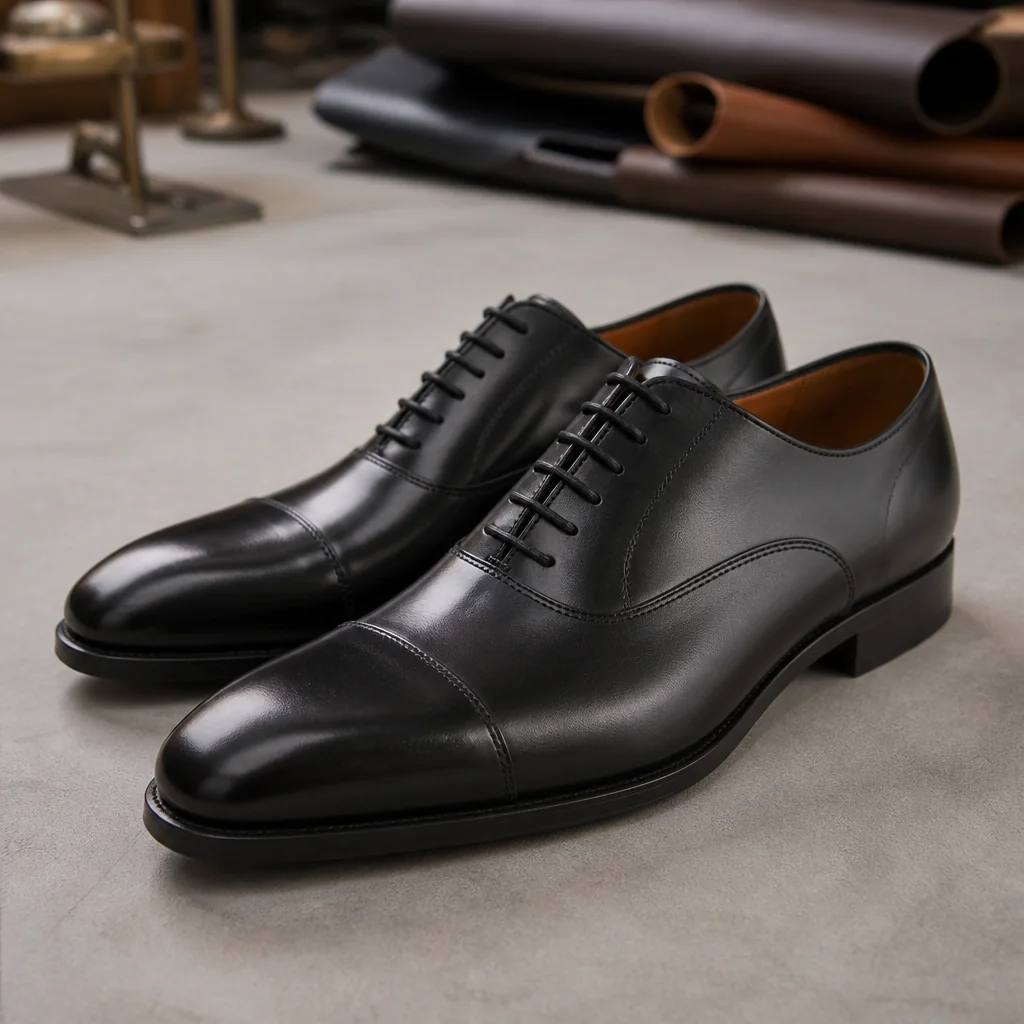
Kitchener-area brands, importers, and product teams often find factory language long before they know how to set shoe factory proposal scope kitchener leather programs actually need. The first problem is not only which supplier to email. It is which commercial decisions the buyer must freeze, and which remaining decisions the factory may propose inside that frame.
When the split is missing, first messages either over-lock the brief or leave every field open. Over-locking freezes construction details the brand has not tested. Leaving everything open invites line-item replies that ignore how style, quantity, and delivery sit together. For OEM and private-label dress shoes, loafers, and related leather programs, proposal scope is a procurement boundary—not a freestyle design invitation.
The proposal-scope gap a factory-shoe search still leaves
Factory-shoe search results can name OEM or private-label capability without telling a buyer which decisions stay buyer-owned.
A product team may already know it wants a formal Oxford or a casual leather sneaker line. It may still not know whether target price position, size range, or delivery need must be stated up front, or whether construction details can wait for a joint review. The useful distinction is simple: some fields bound the commercial frame; others can be labeled open so a manufacturer can propose options inside that frame. Without that split, inquiry traffic becomes either a locked technical dump or an unbounded request for prices on isolated parts. Neither path supports a clean product-and-commercial reading of the program.
Treat proposal scope as a deliberate list of freezes plus a short set of open decisions. The freezes protect brand, market, and commercial intent. The open set is what the factory may propose—not a blank check to invent formal geometry or packaging without reference to the frame.
Buyer-owned freezes that bound any factory proposal
On the manufacturer’s OEM and ODM brief path, the commercial frame is something the buyer freezes. The listed fields are customer, market, style family, target price position, expected quantity, size range, delivery need, and the decisions the factory may propose. Those items set the outer boundary. Proposal room sits inside them, not beside them.
Before you ask which development, sampling, or quotation path may apply, freeze the commercial wall with this buyer checklist:
- Customer: who will sell or wear the shoes, at brand or channel level.
- Market: the geography and channel context that shape last, upper, and packaging expectations.
- Style family: dress Oxford, loafer, leather sneaker, or another named family rather than a vague “men’s shoe.”
- Target price position: the commercial band the program must respect, even if unit economics are not yet quoted.
- Expected quantity: order scale the buyer can state as a planning figure for review, not as a guaranteed PO.
- Size range: the run the program must cover.
- Delivery need: timing pressure that belongs in the frame, not as a post-quote afterthought.
- Decisions the factory may propose: the explicit open set, written so it cannot be read as free rein on formal control points.
In practice, these are the oem shoe commercial frame freezes a buyer should own before any open language appears. When you draft a private label leather shoe factory brief, write each freeze as a short, stable statement rather than an open question. Once the frame is frozen, open decisions can be marked without collapsing the whole inquiry into line-item pricing.
Formal control points that stay documented, not open proposals
Proposal room does not extend to every visual detail on a formal shoe.
For black cap-toe dress programs, the manufacturer’s dress-shoe material treats facing gap, toe proportion, cap placement, polish, and pair symmetry as control points of a disciplined formal anchor. Those are buyer-documented standards, not fields to leave as free factory invention under “decisions the factory may propose.”
A separate men’s leather-shoe description of the same core formal direction notes that facing gap, toe shape, polish level, and pair symmetry need a documented approval standard. Keep those two statements separate. One page names toe proportion and cap placement among control points. The other names toe shape and polish level among items that require documented approval. Do not merge them into a single expanded factory promise. Use each set as a reminder that formal Oxford geometry and finish belong in written controls before any open proposal language is invited.
Editorial recommendation for buyers: treat dress shoe factory review fields for formal Oxfords as locked references or approval standards for geometry and finish. Reserve open proposal language for items that sit inside the commercial frame without rewriting the formal identity of the shoe—secondary material options within a stated family, packaging variants that still match brand rules, or construction alternatives that preserve the frozen control points. If a control point is still unsettled, document the question as a buyer decision to resolve, not as an invitation for unconstrained invention.
Why product and commercial fields are reviewed as one package
The contact-page review logic reads the product and commercial frame together. Style, market, quantity, size range, materials, branding, packaging, and delivery need are reviewed as one package rather than priced as isolated line items. That is the operational reason proposal scope must stay bounded.
When a buyer asks for a sole price, a box price, or a material swap without the rest of the frame, the reply cannot reflect how those choices move together. A lower-cost lining may change comfort claims and brand story. A tighter delivery need may change what quantity and size range are realistic to review. Branding and packaging sit with materials and style, not after a unit number is already treated as final.
| Review approach | What the buyer freezes or shares | What usually fails |
|---|---|---|
| Isolated line items | Single cost or part questions without market, quantity, or delivery context | Quotes that ignore brand, size run, or packaging fit |
| Joint product-commercial frame | Style, market, quantity, size range, materials, branding, packaging, and delivery need read together | Fewer false starts; open decisions stay inside a readable package |
Treat the joint review as editorial guidance for how you assemble the first contact package: share the frozen commercial fields, attach the documented formal control points where they apply, and list only the decisions you want the factory to propose. That structure matches how the manufacturer describes reading a brief—together, not as disconnected prices.
How to mark open decisions without inviting line-item quotes
The OEM brief language itself includes “the decisions the factory may propose” as something the buyer states. That is the correct place to mark openness. A practical labeling method keeps open items inside the frozen frame and keeps inquiry topics distinct from any claimed service menu.
- Write the seven commercial freezes as closed statements: customer, market, style family, target price position, expected quantity, size range, and delivery need.
- Add a short heading such as “Open for factory proposal” and list only decisions that do not rewrite formal control points or brand identity.
- For each open item, name the constraint that still applies (for example, material family, packaging brand rules, or a polish level already set as a control).
- Keep development, sampling, and quotation as questions about which path may apply to the project, not as a catalog the factory has already promised for your SKU set.
- Send the package for a joint product-and-commercial read rather than as a request for isolated part prices.
This method avoids two common failure modes. First, it stops the buyer from over-locking untested construction while still freezing the commercial outer wall. Second, it stops the factory from reading every blank field as permission to invent formal Oxford geometry. Open decisions stay visible, scoped, and reviewable.
As one hypothetical: a Kitchener private-label team freezes a business Oxford style family, North American market, and a mid-tier price position, then marks only secondary lining options and gift-box variants as open for proposal while keeping facing gap and pair symmetry documented. That is not a customer case and carries no quantity, MOQ, or lead-time figure.
Share the frame and ask which path fits the project
Once freezes, formal controls, and open decisions are marked, the contact step is a review request, not a shopping list of services.
Share the current leather footwear definition: style family, market, quantity planning figure, size range, materials direction, branding, packaging, and delivery need. Ask which development, sampling, or quotation options may apply to that frame. Those paths are inquiry topics a buyer may raise; they are not presented here as a fixed deliverable menu beyond the manufacturer’s stated review language.
For program context, the OEM and ODM brief path is where commercial freezes and proposal decisions are stated together. Formal Oxford control language appears on the custom leather dress shoes and men’s leather shoes pages. The contact review is where product and commercial fields are read as one package.
Buyers who close the proposal-scope gap early send clearer first packages. They freeze what must stay buyer-owned, document formal control points that should never be open invention, and leave only deliberate room for factory proposals inside that wall. That boundary is what turns a factory-shoe search into a usable OEM or private-label conversation.
Sources and verification
- OEM Shoes & ODM Leather Footwear | Custom Shoe Manufacturer First-party site source
- Custom Leather Dress Shoes Manufacturer | OEM & Private Label First-party site source
- Men's Leather Shoes Manufacturer | Custom Oxfords & Loafers First-party site source
- Request a Quote | Leather Shoe Manufacturer First-party site source
Share the current leather footwear definition and ask which development, sampling or quotation options may apply to the project.
Send your project brief