
Private Label Footwear Sourcing
The private label Oxford and penny loafer quality checklist
A buyer-side review structure for shared material references plus distinct cap-toe Oxford and penny loafer point lists.
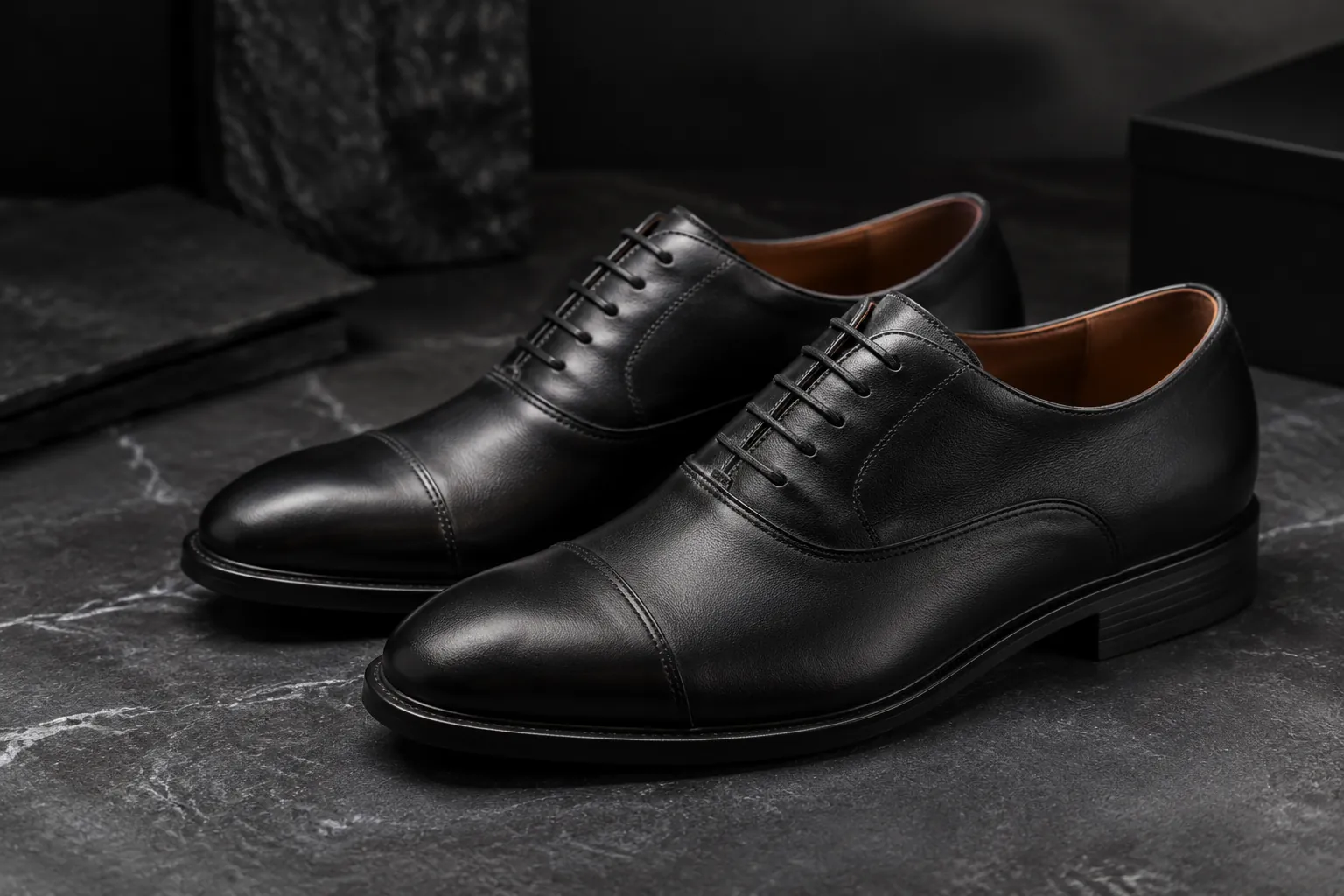
A private label Oxford and penny loafer quality checklist is easy to under-specify when a mixed dress-shoe range uses one generic review list for every style. Shared leather and presentation details matter, but they do not replace the distinct appearance and retention points named for a cap-toe Oxford and a penny loafer. The dress-shoes excerpt treats facing gap, toe proportion, cap placement, polish, and pair symmetry as control points. The loafers excerpt names saddle proportion, apron symmetry, vamp length, opening retention, heel hold, and flex for its men's core penny loafer.
This article treats the checklist as a buyer-side planning method only. The supporting evidence is narrow: an incoming-material review, two separate product point sets, and a contact-page description of a combined product and commercial review. No excerpt states a testing method, tolerance, certification, or final-product result. The goal is a clearer project definition and a more focused inquiry—not a claim that one template covers both shoes.
The buying problem: one generic list for two styles
When a private-label assortment includes both cap-toe Oxfords and penny loafers, a single undifferentiated checklist often collapses style-specific decisions into vague appearance notes. Facing gap and cap placement are Oxford terms. Opening retention and flex are loafer terms. If those points share one undifferentiated field, the buyer cannot later tell which reference governs which shoe, or which items remain open questions.
Editorial recommendation for the buyer: create three connected records before the first review conversation—one shared material-and-presentation record, one Oxford record, and one loafer record. Keep each list bound to the style that names it. Mark every entry as a current requirement, a supplied reference, or an open inquiry so the file stays legible when both styles travel in the same request.
- Shared range record
- Buyer-side record for the incoming-material and presentation details named in the factory-quality excerpt.
- Oxford record
- Buyer-side record for the cap-toe Oxford control points named on the dress-shoes page.
- Loafer record
- Buyer-side record for the penny loafer control points named on the loafers page.
What can be shared across the range
The factory-quality page describes an incoming stage that reviews leather article, color, thickness, lining, outsoles, hardware, packaging, artwork, and lot identity before mixed or unclear materials enter production. That is the documented scope for the shared layer of a buyer record—not a laboratory procedure, compliance standard, or final approval outcome.
Details from that incoming-material excerpt:
- Leather article, color, and thickness
- Lining and outsoles
- Hardware
- Packaging and artwork
- Lot identity
Editorial recommendation: list each item on its own line and keep the current reference next to it. A short status note can show whether the buyer has already selected the item, is supplying a reference for discussion, or still needs an answer. That format lets the range file carry material identity and presentation information without treating those entries as a substitute for style-specific review.
Use the incoming description only to set this record's boundary. Material confirmation before production is what the source describes; broader testing claims are outside the excerpt.
Cap-toe Oxford quality control points
The cap-toe Oxford product page treats facing gap, toe proportion, cap placement, polish, and pair symmetry as control points. Those are the exact cap-toe Oxford quality control points a buyer can copy into the Oxford section of a project file. Keep them separate from any loafer list so formal-shoe decisions stay attached to the formal-shoe style.
| Oxford control point | How to prepare the entry |
|---|---|
| Facing gap | Attach the preferred facing view and note whether it is fixed or open for discussion. |
| Toe proportion | File the selected toe-shape image or drawing with the Oxford record. |
| Cap placement | Mark the intended cap position on the governing visual reference. |
| Polish | Keep the desired appearance reference with the Oxford style file. |
| Pair symmetry | List pair symmetry as a point the buyer wants covered in the project conversation. |
The source supplies the names of these control points. The preparation notes are editorial recommendations for the buyer. They do not create a measurement rule, construction specification, inspection method, or acceptance result. A fixed visual reference and an open discussion point can sit in the same Oxford record when their status is clear.
Penny loafer specification checklist
The penny loafer product page identifies saddle proportion, apron symmetry, vamp length, opening retention, heel hold, and flex for its men's core penny loafer. Build a separate penny loafer specification checklist from those terms rather than adapting the Oxford table. The two styles share a materials layer; they do not share the same appearance and retention vocabulary.
| Loafer control point | What to capture before review |
|---|---|
| Saddle proportion | Keep the selected saddle reference with the penny-loafer style definition. |
| Apron symmetry | Identify the preferred apron appearance in the loafer record. |
| Vamp length | Attach the governing product reference for the desired vamp appearance. |
| Opening retention | Mark whether this is a buyer requirement or a question for the defined product. |
| Heel hold | Keep the buyer's expectation as a distinct inquiry item. |
| Flex | State the intended discussion point without assigning an unstated method or result. |
Opening retention, heel hold, and flex are named loafer control points in the supplied excerpt. No test procedure or outcome is stated for them. An editorial buyer record can preserve these terms, identify any current requirement, and leave unresolved matters open for project discussion.
Build private label leather shoe review criteria in two layers
Useful private label leather shoe review criteria for a mixed range separate a shared materials layer from a style layer. This is an editorial planning framework for the buyer, not a documented company checklist or service. Its purpose is to make the current range definition legible before a request covers both styles.
- Complete the shared layer. Enter the current leather article, color, thickness, lining, outsole, hardware, packaging, artwork, and lot-identity references where they apply.
- Complete the Oxford layer. Keep facing gap, toe proportion, cap placement, polish, and pair symmetry as distinct entries attached only to the cap-toe Oxford.
- Complete the loafer layer. Keep saddle proportion, apron symmetry, vamp length, opening retention, heel hold, and flex as distinct entries attached only to the penny loafer.
- Assign a status. Mark each item as a current buyer requirement, a reference supplied for discussion, or an open inquiry. Do not present an open inquiry as an agreed project outcome.
That split lets a buyer hold a selected leather article in the shared record while keeping a separate question about a penny-loafer point. The distinction describes the buyer's current project definition; it does not describe a confirmed factory action or result.
Editorial recommendation: attach one governing visual or sample reference per style when a point depends on proportion or placement, and leave any point without a buyer decision marked as open. Status fields matter more than long free-text notes when both styles later appear in the same inquiry.
Use the project review without treating questions as commitments
The contact page states that style, market, quantity, size range, materials, branding, packaging, and delivery need are reviewed together rather than priced as isolated line items. That frame is the documented context for an inquiry—not a fixed set of company requirements the buyer must already satisfy.
- Share the current range record and identify the Oxford and loafer records separately.
- State which entries are fixed buyer requirements and which entries remain open questions.
- Include the current project context relevant to style, market, quantity, size range, materials, branding, packaging, and delivery need.
Share the current leather-footwear definition through the project contact page and ask which development, sampling, or quotation options, if any, apply to the project. Keep the request aligned with the documented product and commercial review frame, and do not treat those options as confirmed offerings.
A shared record gives the range one material-reference base. Separate Oxford and loafer records preserve the point sets named for each style. That structure lets a buyer discuss a mixed dress-shoe range without losing the details that distinguish the two products.
Sources and verification
- Leather Shoe Factory in China | Capability & Export QC First-party site source
- Request a Quote | Leather Shoe Manufacturer First-party site source
- Custom Leather Dress Shoes Manufacturer | OEM & Private Label First-party site source
- Custom Loafers Manufacturer | OEM & Private Label Leather Loafers First-party site source
Share the current leather footwear definition and ask which development, sampling or quotation options may apply to the project.
Send your project brief