
Sourcing Guides
Using a private label mens dress shoe sample review checklist
Style-specific sample notes for cap-toe Oxford and penny loafer programs, with leather appearance questions kept beside—not inside—approval comments before you ask about development, sampling, or quotation options.
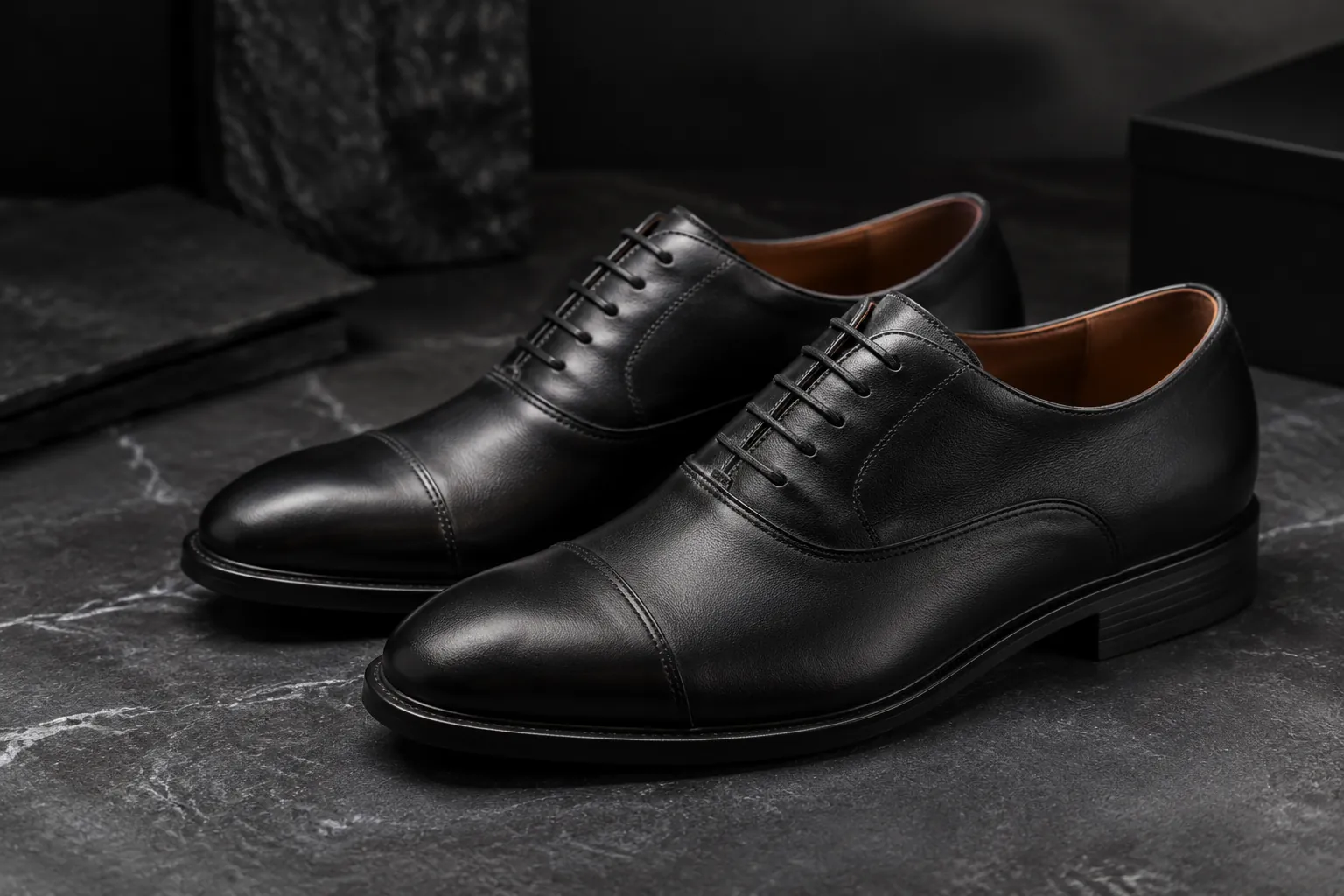
Early samples often get one vague verdict: approved, rejected, or "close." That collapses formal Oxford details, loafer fit cues, and leather appearance into a single mark. A private label mens dress shoe sample review checklist works better when each comment names a visible point, stays tied to the style under review, and leaves material questions in their own row.
The editorial recommendation for buyers comparing dress shoe programs, men's leather shoes, and loafers is to write notes the factory can answer: style name, marked photos where useful, style-specific points, and open appearance questions. Searches around wholesale mens dress shoes distributors still often land on a product-development step. The business context here is a China-based leather shoe manufacturer for OEM and private-label footwear programs, not a documented wholesale distributor with published inventory or exclusivity terms.
Decide what the sample must answer
Before drafting a long approval note, decide the decision the sample is meant to support. Formal character of a cap-toe Oxford, fit impression of a penny loafer, leather appearance range, or the facts needed for the next quotation discussion each produce different comments.
A short sample note can still be useful. Name the style, which visible details are acceptable, which need adjustment, and which appearance questions remain open. Order quantity, lead time, certifications, audit results, shipping terms, and distributor rights are not established by the style and material excerpts below; ask those directly rather than inferring them from sample pages.
Keep Oxford and loafer review lanes separate
The first-party pages do not support one universal visible-detail list. Cap-toe Oxford language and penny loafer language answer different questions, so they should not share one pass/fail grid.
The dress shoe page describes black cap-toe dress shoe D-01 as a core business cap-toe Oxford and treats facing gap, toe proportion, cap placement, polish, and pair symmetry as control points. The men's leather shoes page describes black cap-toe Oxford M-01 as a core formal direction and states that facing gap, toe shape, polish level, and pair symmetry need a documented approval standard. The loafer page uses different language for tan men's penny loafer L-01: saddle proportion, apron symmetry, vamp length, opening retention, heel hold, and flex for a repeatable core style.
| Sample under review | Source-backed review lane | Buyer action |
|---|---|---|
| Cap-toe Oxford D-01 direction | Facing gap, toe proportion, cap placement, polish, pair symmetry | Keep dress Oxford comments separate from loafer fit notes. |
| Cap-toe Oxford M-01 direction | Facing gap, toe shape, polish level, pair symmetry | Use these when a private label oxford shoe checklist needs clearer approval wording. |
| Penny loafer L-01 direction | Saddle proportion, apron symmetry, vamp length, opening retention, heel hold, flex | Write a separate loafer note; do not reuse Oxford cap or facing language. |
Treat the lists as source-backed review topics. Add brand-specific requirements as your own requirements for supplier confirmation. Do not merge them into one inspection standard or map a combined list to a single source.
Cap-toe Oxford sample points to document
Checking these points does not prove a factory-wide quality system. It builds a clearer sample comment for the current project. Keep D-01 and M-01 wording distinct where the sources differ.
- Facing gap
- Comment on the gap when the sample is laced. If the issue is the space between facing panels, name that issue directly. Both Oxford sources support this review topic.
- Toe proportion
- The dress shoe source supports toe proportion for the D-01 direction. Mark the reference photo if the toe looks longer, shorter, heavier, or lighter than the intended direction.
- Toe shape
- The men's leather shoes source refers to toe shape for the M-01 direction. Do not collapse toe shape and toe proportion into one approval item.
- Cap placement
- The dress shoe source supports cap placement for D-01. Mark where the cap line should sit relative to the toe and vamp if that is the concern.
- Polish and polish level
- The dress shoe source names polish. The men's leather shoes source names polish level as part of a documented approval standard. Describe the desired appearance without assuming a finishing method, and ask how polish-level approval should be recorded for the project.
- Pair symmetry
- Both Oxford sources support pair symmetry. Review left and right shoes together; some issues only appear at pair level.
A concise Oxford inquiry can stay narrow: "We are reviewing the cap-toe Oxford sample. Please see marked comments on facing gap, toe shape, polish level, and pair symmetry, and advise which development, sampling, or quotation options may apply to the current footwear definition." That wording supports mens dress shoe sample approval discussion without inventing commercial terms.
Penny loafer sample points to document
A mens loafer sample review should leave Oxford cap, facing, and polish language unless you have a separate reason to raise those topics. Available loafer evidence is about a penny loafer direction, so focus on the points named for that style.
- Saddle proportion — Record whether the saddle scale supports the intended design. Mark the photo if the saddle should read wider, narrower, higher, or lower.
- Apron symmetry — Review both shoes together. If the apron looks uneven, state whether the concern is left-to-right balance, stitch path, or visual placement.
- Vamp length — Note whether vamp length matches the intended pattern direction. This is a loafer-specific visual point, not an Oxford cap-toe comment.
- Opening retention — Ask how opening retention should be evaluated for the project before treating any method or tolerance as agreed.
- Heel hold — Keep heel hold separate from a broad comfort remark. If you only have a try-on observation, label it as a sample observation.
- Flex — Describe what you observe during handling or try-on. Do not turn that observation into a lab-tested performance claim unless testing is specified separately.
When one collection includes both an Oxford and a penny loafer, send two comment blocks. The Oxford block covers supported Oxford points; the loafer block covers supported penny loafer points. That habit reduces mixed instructions before the next supplier reply.
Material appearance questions belong beside the sample notes
The materials page frames appearance range as buyer questions: what variation is natural, what becomes a defect, how colors are approved, and how hides or component lots are paired across the order. It does not establish a leather grade, color tolerance, or finished inspection procedure.
| Appearance question | How to place it in the sample file | Buyer purpose |
|---|---|---|
| What variation is natural? | Keep this beside, not inside, the style approval note. | Define what should be accepted as normal appearance range. |
| What becomes a defect? | Ask which marks, surface conditions, or color differences cross the line for this project. | Move away from a vague objection to leather character. |
| How are colors approved? | Record color approval as its own question. | Prevent color sign-off from being confused with overall sample approval. |
| How are hides or component lots paired across the order? | Ask without treating the answer as a documented lot-control promise. | Discuss pair- and order-level consistency as an open inquiry topic. |
An Oxford polish note is not a color approval question. A loafer flex note is not a component-lot pairing question. Keeping categories apart gives the manufacturer a clearer current footwear definition to review.
Turn the checklist into a clearer factory inquiry
After review, assemble a short package: sample photos, marked comments, style-specific notes, material appearance questions, private-label requirements, and the decision needed next—development feedback, a revised sample discussion, or quotation options for the current leather footwear definition.
- State the style and sample under review (for example, cap-toe Oxford or penny loafer direction).
- List only the style-backed points that apply: for Oxford programs, facing gap, toe proportion or toe shape, cap placement where relevant, polish or polish level, and pair symmetry; for penny loafer programs, saddle proportion, apron symmetry, vamp length, opening retention, heel hold, and flex.
- Put appearance questions in a separate section so natural variation, defects, color approval, and hide or component-lot pairing stay visible.
- Ask which development, sampling, or quotation options may apply; do not assume unsupported commercial or compliance terms are already available.
Buyers preparing to contact Leather Shoe Manufacturer should make the file easy to answer. The editorial recommendation is a concise note with the style name, exact sample comments, open material questions, and the requested next step—share the current leather footwear definition and ask which options may apply to the project.
What the evidence does not settle
The available context does not document MOQ, production lead time, sample fees, price range, quotation validity period, production capacity, certifications, audit results, customer outcomes, inspection pass rates, tooling scope, packing terms, shipping terms, or distributor exclusivity. Those may be legitimate sourcing questions, but they are not proven by the style and material excerpts used here. The supported use of the evidence is narrower and still practical: separate Oxford sample comments, loafer sample comments, and leather appearance questions before the next development, sampling, or quotation conversation.
Sources and verification
- Custom Leather Dress Shoes Manufacturer | OEM & Private Label First-party site source
- Leather Shoe Materials | Full Grain, Suede, Lining & Outsoles First-party site source
- Custom Loafers Manufacturer | OEM & Private Label Leather Loafers First-party site source
- Men's Leather Shoes Manufacturer | Custom Oxfords & Loafers First-party site source
Share the current leather footwear definition and ask which development, sampling or quotation options may apply to the project.
Send your project brief