
Sourcing
Private Label Loafer Development Brief
A private label loafer development brief records commercial context, L-01 penny-loafer prompts, product references, and unresolved questions without treating open items as confirmed requirements.
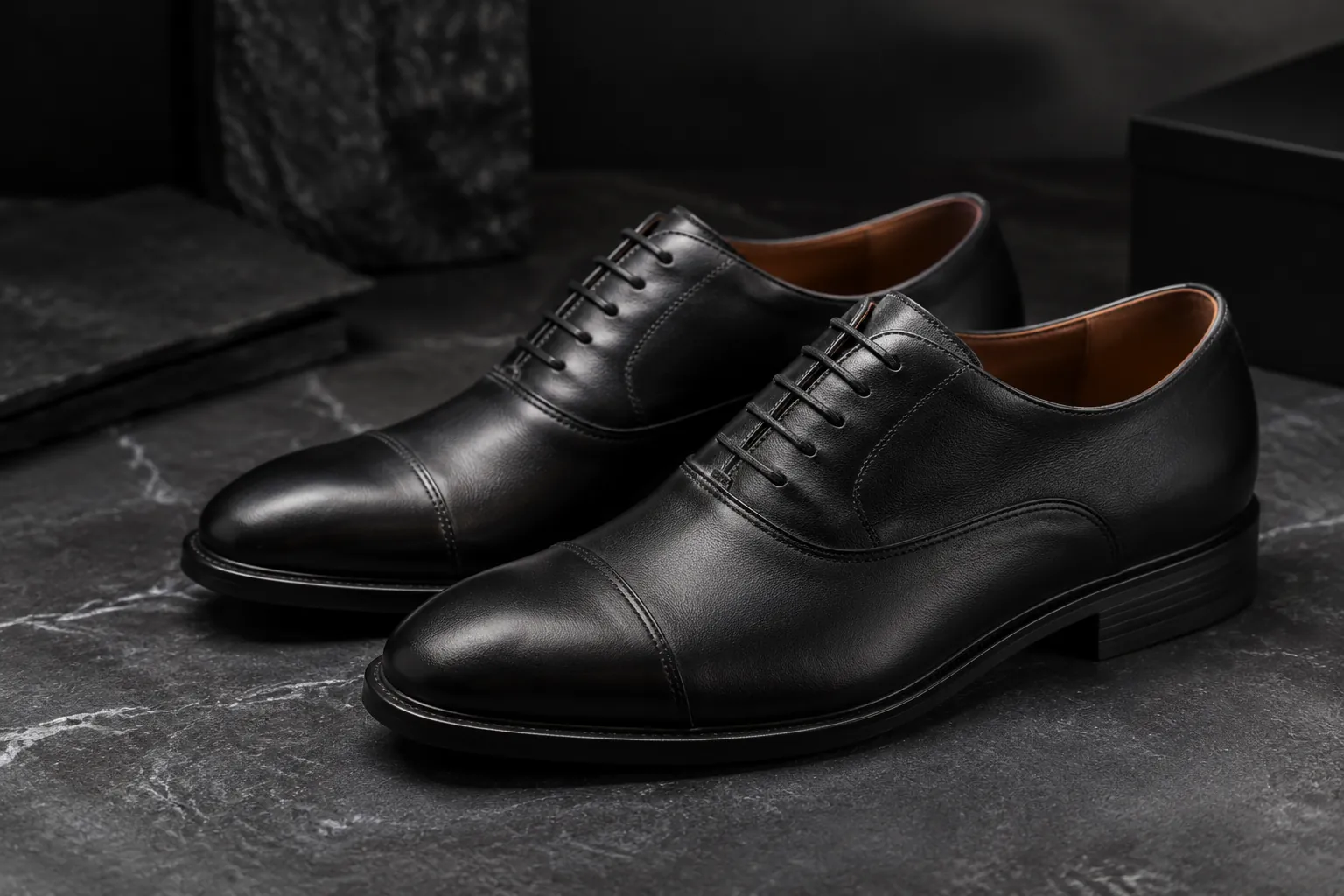
A loafer concept can begin with a silhouette reference, a material note, and a few commercial assumptions spread across separate files. A private label loafer development brief brings those inputs into one buyer-side record. It shows what has been defined for the current inquiry, what reference material exists, and what still needs discussion.
Editorial scope: The layout below is a recommendation for the buyer, not a published company form. The supplied site excerpts name commercial, product, contact-review, and incoming-material prompts. They do not publish a mandatory brief template, a development sequence, or an outcome for an inquiry.
Open With the Commercial Frame
The OEM and ODM page says to freeze the commercial frame. It names the customer, market, style family, target price position, expected quantity, size range, delivery need, and decisions the factory may propose. Put these fields at the front of the brief so the product reference is read in its stated commercial context.
Editorial recommendation: give each commercial field its own entry. Record the present answer where one exists. Where the buyer has not decided, write the question rather than supplying an assumed answer.
| OEM and ODM field | Editorial entry treatment |
|---|---|
| Customer | Record the customer context currently known for the inquiry. |
| Market | State the market named for the current concept. |
| Style family | Identify the style family used to describe the loafer. |
| Target price position | Record the stated position or leave a visible question. |
| Expected quantity | Record the current expectation or mark it for discussion. |
| Size range | State the range currently defined for the concept. |
| Delivery need | Record the delivery need as currently described. |
| Decisions the factory may propose | List these separately from decisions already described in the brief. |
A custom loafer development brief does not become clearer by treating every blank field as settled. A short, direct question is more useful than an unstated assumption, especially when the commercial context is still taking shape.
Use L-01 as a Style-Specific Reference
The loafers page identifies tan men's penny loafer L-01 as a men's core penny loafer. Its published line names saddle proportion, apron symmetry, vamp length, opening retention, heel hold, and flex as controls for a repeatable core style.
Those terms are useful prompts when the current brief refers to L-01. The excerpt does not provide measurements, construction details, test methods, fit results, or performance results for the six controls. It also does not establish them as requirements for every loafer.
Editorial prompts for an L-01-based brief:
| Published L-01 control | Buyer-side record |
|---|---|
| Saddle proportion | Record the chosen description, reference, or open question. |
| Apron symmetry | Record the chosen description, reference, or open question. |
| Vamp length | Record the chosen description, reference, or open question. |
| Opening retention | Record the chosen description, reference, or open question. |
| Heel hold | Record the chosen description, reference, or open question. |
| Flex | Record the chosen description, reference, or open question. |
Used only for that published reference, this table can serve as a penny loafer specification checklist. For another loafer silhouette, select only the controls that the buyer considers relevant to the current definition. That is editorial scoping, not a statement that L-01 terms apply across all private-label loafers.
Keep Reference Lists in Their Source Context
The factory-quality page describes an incoming step for controlled materials. It says to review leather article, color, thickness, lining, outsoles, hardware, packaging, artwork, and lot identity before mixed or unclear materials enter production.
Separately, the contact page says that style, market, quantity, size range, materials, branding, packaging, and delivery need are reviewed together rather than priced as isolated line items. These are different published lists. They should remain labeled by source instead of being merged into one claimed company checklist.
| Published source area | Categories stated in that excerpt | Editorial use in the brief |
|---|---|---|
| Incoming confirmation | Leather article, color, thickness, lining, outsoles, hardware, packaging, artwork, and lot identity | Keep each reference category in its own line with the material or artwork information currently available. |
| Contact review | Style, market, quantity, size range, materials, branding, packaging, and delivery need | Keep these contact-review fields visible when preparing the inquiry. |
The incoming-confirmation excerpt does not document a branding workflow. The contact-review wording does not expand materials into the incoming-confirmation categories. For the buyer, a reference can be attached to the brief without being represented as a confirmed production arrangement.
Give Unresolved Items One Clear Status
The OEM and ODM excerpt asks buyers to state the decisions the factory may propose. It does not identify which decisions will be proposed for a particular project. A separate question register prevents unresolved entries from being mistaken for finished requirements.
Editorial status system: these labels are for the buyer's working document and are not company terminology.
- Defined
- The brief contains the buyer's current description or reference for the item.
- Question for review
- The item needs discussion, clarification, or may be identified as a decision the factory may propose.
- Not relevant
- The item does not belong to the current loafer definition.
Put the question register after the product and reference sections. For each entry, name the item, state the question, and identify the document block it affects. This makes the private label loafer factory inquiry easier to scan without presenting an unanswered point as a commitment.
Arrange the Brief as One Review Record
The contact page describes product and commercial inputs being reviewed together. An editorial way to reflect that scope is to send one clearly headed document rather than disconnected notes. This organization is not a requirement published by the company; it is a practical format for keeping the buyer's inputs legible.
| Document block | Source anchor | What the buyer records |
|---|---|---|
| Commercial frame | OEM and ODM brief | The commercial fields named on the OEM and ODM page. |
| Loafer reference | Men's core penny loafer L-01 | Only the selected L-01 control descriptions or questions relevant to the current style. |
| Incoming reference record | Incoming confirmation | Available references for the categories named in the incoming-confirmation excerpt. |
| Contact-review fields | Contact review | The style, market, quantity, size range, materials, branding, packaging, and delivery need stated for the inquiry. |
| Question register | OEM and ODM brief | Unresolved items, including decisions the factory may propose. |
This arrangement preserves the source boundaries. L-01 controls remain product-specific. Incoming material categories remain distinct from contact-review fields. The question register remains distinct from the information the buyer has already defined.
Send the Current Definition
Before sharing the document, use an editorial check: confirm that defined entries are distinguishable from questions, that L-01 terms are used only where applicable, and that incoming-confirmation categories have not been relabeled as a branding or production process.
Then share the current leather-footwear definition through contact and ask which development, sampling, or quotation options may apply to the project. Those are inquiry topics, not outcomes assumed from the brief.
Sources and verification
- OEM Shoes & ODM Leather Footwear | Custom Shoe Manufacturer First-party site source
- Request a Quote | Leather Shoe Manufacturer First-party site source
- Custom Loafers Manufacturer | OEM & Private Label Leather Loafers First-party site source
- Leather Shoe Factory in China | Capability & Export QC First-party site source
Share the current leather footwear definition and ask which development, sampling or quotation options may apply to the project.
Send your project brief