
Product Development
Penny Loafer Manufacturer Sample Checklist
A buyer-owned framework for separating approved references, open criteria and project questions across six documented penny loafer control points.
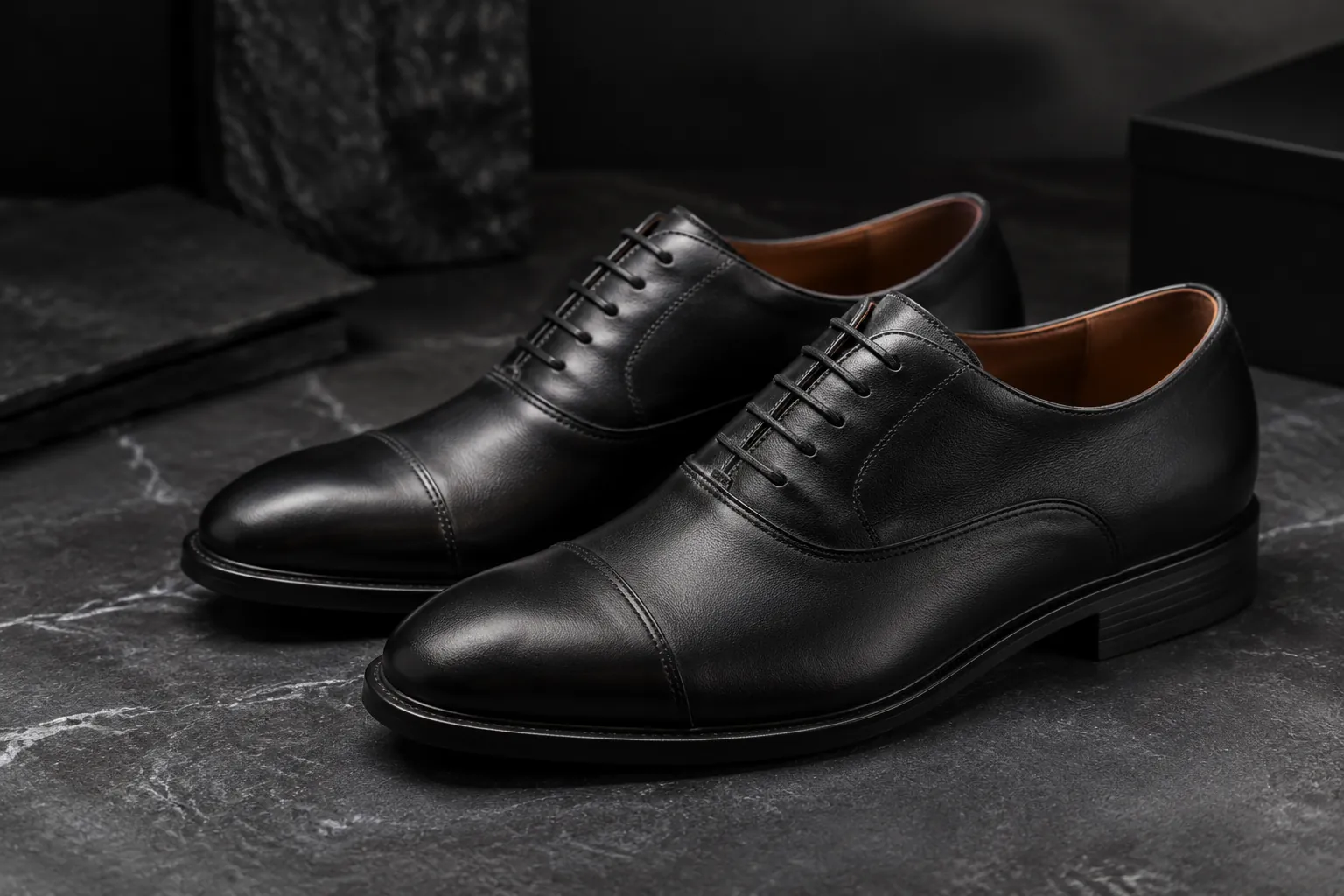
For a buyer-owned approval record, replace a note such as looks right with named decisions. The published L-01 men's penny loafer description identifies saddle proportion, apron symmetry, vamp length, opening retention, heel hold and flex as control points for a repeatable core style. A penny loafer manufacturer sample checklist can turn those labels into separate questions about what the buyer accepts, what remains open and what requires a proposal.
This article presents an editorial procurement framework for a private label loafer sample review. The six row labels come from the L-01 description. The review fields and questions are buyer-side recommendations, rather than a published company test form or approval procedure.
What is the buyer approving?
The L-01 excerpt places all six control points within its repeatable core-style objective, but naming a point does not define the buyer's acceptance rule. For example, the phrase vamp length does not identify the reference, endpoints or permitted variation for a particular project. The same evidence boundary applies to the other five points.
For the buyer's record, assign each point one of three practical states: currently defined, still open or submitted for a project-specific proposal. Record the reference behind any defined point. Where the buyer has not supplied a criterion, leave the decision open instead of treating the control-point name as an approval standard.
Six decisions in one matrix
Use the following matrix as editorial buyer guidance. Its purpose is to keep the current definition, unresolved details and inquiry question visible in the same record. The prompts do not represent documented factory methods.
Buyer-owned penny loafer sample decision matrix
| L-01 control point | Buyer's current definition | Details that may remain open | Question for the project inquiry |
|---|---|---|---|
| Saddle proportion | Identify the buyer-approved reference views and describe the intended relationship between the saddle and the rest of the loafer. | Reference landmarks, visual or measurement basis and buyer acceptance wording. | Which reference and, if relevant, which measurement locations should govern saddle proportion for this project? |
| Apron symmetry | State whether the buyer wants to compare areas within each shoe, across the pair or in both ways. | Comparison basis, viewing position and the wording used to accept or reject the result. | How should the buyer's intended apron symmetry be defined in the sample record? |
| Vamp length | Name the buyer-approved physical sample, image or buyer-defined endpoints that establish the intended length. | Measurement locations, relevant sizes and permitted variation. | What additional information is needed to make the buyer's vamp-length requirement unambiguous? |
| Opening retention | Describe the conditions under which the buyer wants the opening reviewed and the result the buyer would accept. | Evaluation approach, timing and acceptance language. | Should the buyer provide the review approach, or may a project-specific approach be proposed? |
| Heel hold | Record the buyer-selected fitting context and the decision language to be used during review. | Applicable sizes, wearer criteria, fit procedure and acceptance rule. | Which heel-hold criteria must the buyer define before this point can be evaluated? |
| Flex | Identify the area the buyer wants considered, the requested evaluation approach and the expected result. | Method, conditions, repetition and acceptance criteria. | How should flex be considered for this project without assuming an undocumented test? |
A completed matrix can use annotated photographs, a physical reference, buyer-defined measurements or written acceptance language. As an editorial recommendation, identify which reference governs if more than one is supplied. If no basis has been selected, mark the field as open and state whether the buyer will define it or is asking what may be proposed.
Precision the project still needs
The supplied L-01 excerpt names the six control points. It does not state measurement locations, tolerance bands, wear-test methods, fit protocols, pass-fail criteria or a sample approval procedure. Those details therefore need a project-specific buyer decision or an accepted proposal; they should not be attributed to the published description.
- Decision basis
- For each relevant point, the buyer should choose whether the decision will rely on a physical reference, an image, written criteria or buyer-defined measurements. Any requested measurement should identify its locations.
- Evaluation context
- For opening retention, heel hold and flex, the buyer should record the conditions under which an observation is expected. Where those conditions remain undecided, the inquiry can ask what approach may be proposed.
- Acceptance wording
- The buyer should replace broad adjectives with project-specific wording or label the criterion as unresolved. This avoids recording approval where no shared decision rule has been established.
- Record control
- As an editorial practice, identify the sample version, supporting reference and buyer-side decision owner. Keep revision requests attached to the version they address.
The control-point name identifies the subject under review. The buyer's reference, conditions and acceptance wording establish how that subject will be decided for the current project.
Commercial context around the sample
The company's contact page states that the following fields are reviewed together rather than priced as isolated line items:
- Style
- Market
- Quantity
- Size range
- Materials
- Branding
- Packaging
- Delivery need
The OEM and ODM brief separately asks the brief owner to state the following:
- Customer
- Market
- Style family
- Target price position
- Expected quantity
- Size range
- Delivery need
- Decisions the factory may propose
For the buyer, the editorial recommendation is to link the sample matrix to the applicable commercial brief while keeping their purposes distinct. The matrix records the current penny loafer definition and its unresolved criteria. The source-listed commercial fields describe the project context. They do not provide the missing measurement basis, evaluation conditions or acceptance rules for the sample.
Incoming review answers a different question
The published incoming checkpoint calls for review of leather article, color, thickness, lining, outsoles, hardware, packaging, artwork and lot identity before mixed or unclear materials enter production.
The L-01 description separately names saddle proportion, apron symmetry, vamp length, opening retention, heel hold and flex as its penny loafer control points.
Evidence scope for the two records
| Record | Published scope used here | Editorial recommendation for the buyer |
|---|---|---|
| Incoming checkpoint | Review of the listed items and lot identity before mixed or unclear materials enter production. | Use this record for the listed incoming scope. Do not cite it as proof that a penny loafer sample decision has been resolved. |
| Penny loafer sample record | The six control points named in the L-01 description. | Record the buyer's references, open criteria and questions for those points. Do not use this record as evidence that the incoming checkpoint has been completed. |
Keeping the records separate preserves the scope of each source. The incoming excerpt does not publish a finished-shoe approval protocol, while the L-01 excerpt does not document review of the incoming list.
Questions for the next decision
The following OEM penny loafer development questions keep the inquiry within the current evidence and leave availability to be confirmed for the project:
- Which of the six L-01 control points can the buyer define now with an approved reference?
- Which points still require a reference basis, evaluation context or acceptance wording?
- Which criteria will the buyer fix before the next review?
- Which decisions, if any, may the factory propose for this project?
- Which values can the buyer state now for style, market, quantity, size range, materials, branding, packaging and delivery need?
- Which development, sampling or quotation options may apply to the current definition?
Share the current definition through the contact page. Include the approved points, label unresolved criteria and identify the decisions for which a proposal is being requested.
Sources and verification
- Custom Loafers Manufacturer | OEM & Private Label Leather Loafers First-party site source
- Request a Quote | Leather Shoe Manufacturer First-party site source
- OEM Shoes & ODM Leather Footwear | Custom Shoe Manufacturer First-party site source
- Leather Shoe Factory in China | Capability & Export QC First-party site source
Share the current leather footwear definition and ask which development, sampling or quotation options may apply to the project.
Send your project brief