
Sourcing & Production
Mixed Materials Risk in Leather Shoe Production
Treat the factory’s published incoming controlled-materials fields as a buyer identity lock so mixed or unclear materials never reach cutting and lasting.
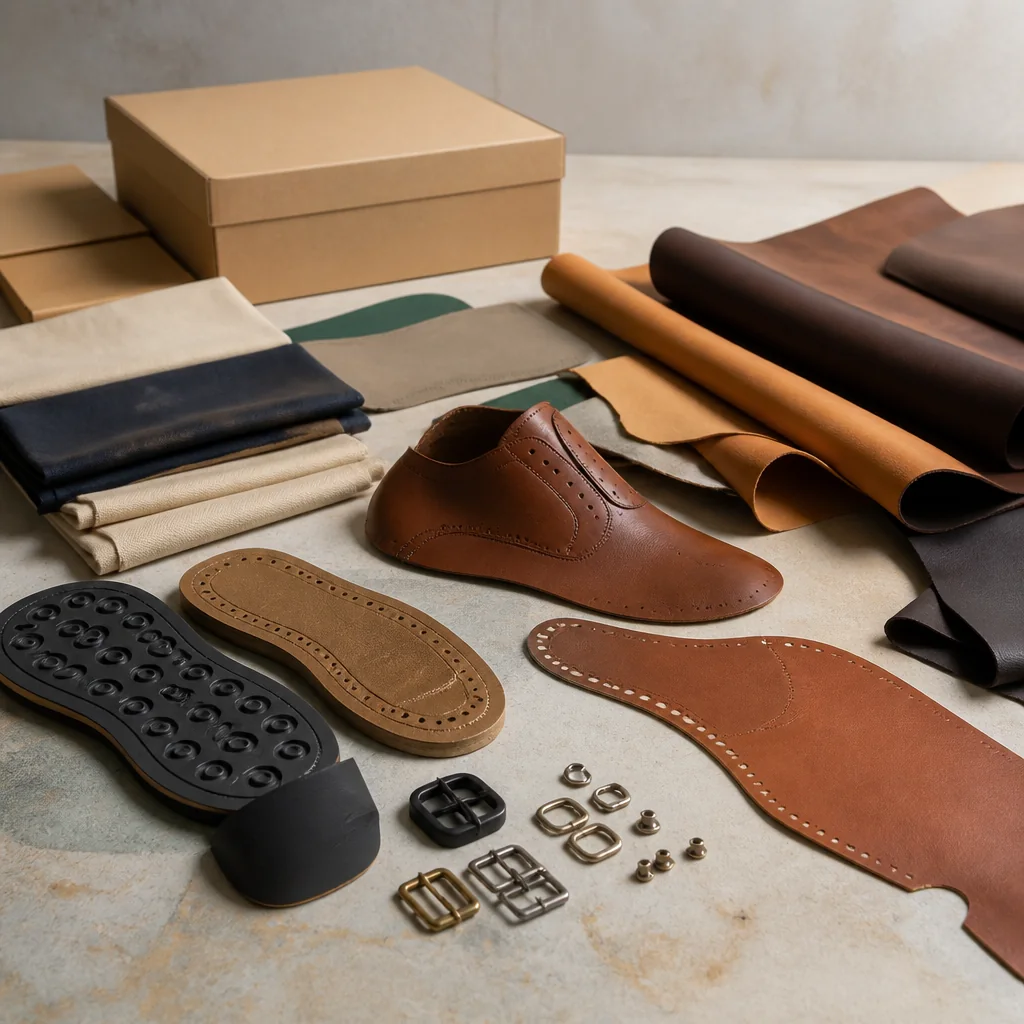
Mixed materials risk in leather shoe production is rarely a lasting defect. It begins when a style name and leather article are frozen while lining, outsoles, hardware, packaging, artwork, and lot identity stay open. Once mixed or unclear stock reaches the cutting room, construction and finishing cannot restore a clean lot identity. For OEM and private-label programs, the practical response is to treat the factory’s published incoming controlled-materials review as a buyer identity-lock brief—closed before production entry, not after pairs leave the line.
The production risk that starts before lasting
Construction controls only work on materials that actually enter the program. Similar shades, unlabeled lining substitutions, or hardware and packaging under a generic purchase label force the floor to resolve identity after cutting has already started.
That is a pre-entry definition gap, not a finishing problem. On the published factory quality path, the first named stage is incoming confirmation of controlled materials: review the named objects before mixed or unclear materials enter production. Brands and importers should treat those objects as commercial identity fields frozen with the style, not as late inspection surprises discovered after lasting.
Editorial recommendation for buyers: do not rely on a style code alone. Require every component that can mix across suppliers, colors, or reorders to carry a named identity the production team can match at goods receipt. If a field is still open, the program is not ready for production entry—even when a sample photograph looks acceptable.
Identity fields the published incoming gate already names
The factory quality page lists a fixed set of incoming review objects. Use that list as the buyer-side identity checklist for incoming controlled materials leather shoes. Do not expand it with unstated tests or invent acceptance numbers the page does not publish.
- Leather article
- Color
- Thickness
- Lining
- Outsoles
- Hardware
- Packaging
- Artwork
- Lot identity
Each item is an identity decision. Leather article, color, and thickness define the upper hide the cutter will see. Lining and outsoles define the interior and bottom that will pair with that upper. Hardware and packaging define metal finishes, boxes, tissue, and labels that must match the brand kit. Artwork covers printed or embossed marks that must match approved files.
Leather shoe production lot identity ties physical goods to the purchase and reorder trail so mixed lots do not silently combine on the line. When any field is missing or described only in marketing language, mixed materials risk rises. Full process language for that incoming stage sits on the factory quality overview; the buyer task is to lock the fields before that stage is asked to carry ambiguous stock.
Identity lock versus appearance approval
Material identity and style appearance answer different questions. Identity decides what may enter production. Appearance decides whether a constructed pair matches the approved visual and construction standard for that style branch.
Teams often collapse the two lanes: they approve a polished sample photo and assume materials are locked, or they lock a leather article and assume facing geometry is controlled. For formal dress programs, published Oxford language keeps appearance as its own control set—separate from the incoming materials list and not rewriteable as material SKUs.
| Decision lane | What the buyer freezes | When it must be closed |
|---|---|---|
| Material and component identity | Leather article, color, thickness, lining, outsoles, hardware, packaging, artwork, lot identity | Before mixed or unclear materials can enter production |
| Oxford appearance (dress shoes program page) | Facing gap, toe proportion, cap placement, polish, and pair symmetry as control points | As a documented style approval standard for that Oxford branch |
| Oxford appearance (men’s leather shoes page) | Facing gap, toe shape, polish level, and pair symmetry under a documented approval standard | As a separate visual and construction approval, not as goods-in material codes |
Keep the lanes separate in the brief. Identity fields travel with purchase orders and goods receipt. Appearance control points travel with sample approval and construction standards for styles such as those on the dress shoes and men’s leather shoes program pages. A pair can pass identity and still fail appearance, or look correct in a photo while carrying the wrong lining lot. Both failures are real; only one is mixed materials risk at production entry.
Why commercial-frame inputs belong on the same review pass
Identity gaps often open when packaging, branding, or delivery are priced or approved apart from materials. OEM footwear material identity review works best when those commercial inputs stay on one pass with the materials list.
The contact page states that the product and commercial frame are read together: style, market, quantity, size range, materials, branding, packaging, and delivery need are reviewed together rather than priced as isolated line items. That joint review is the commercial counterpart to the incoming materials gate.
| Commercial-frame input | Why it must stay joined to material identity |
|---|---|
| Style | Determines which construction and appearance lane applies beside the materials list |
| Market | Shapes labeling, compliance language, and packaging expectations that must match artwork and pack components |
| Quantity and size range | Drive lot planning; open size or quantity language invites mixed lots if lot identity is weak |
| Materials | Must map one-to-one to leather article, color, thickness, lining, outsoles, and hardware |
| Branding and packaging | Must match artwork, pack materials, and any hardware finishes that show on the finished pair |
| Delivery need | Affects when identity locks must be complete; late open fields increase substitution pressure |
Treat the commercial frame as a single pass. If packaging is still “standard box” while leather article and thickness are already named, artwork and lot identity will usually be the next fields to fail. If branding is approved on a mockup that does not name the hardware finish or lining color, goods-in receives conflicting signals. Closing style, market, quantity, size range, materials, branding, packaging, and delivery need together reduces the chance that mixed or unclear materials reach production under a partial brief.
Documented company scope versus open inquiry topics
The excerpts establish two concrete scopes. First, incoming confirmation covers review of leather article, color, thickness, lining, outsoles, hardware, packaging, artwork, and lot identity before mixed or unclear materials enter production. Second, commercial review covers reading style, market, quantity, size range, materials, branding, packaging, and delivery need together rather than as isolated line items. Those are the ceilings for company-specific claims in this article.
The excerpts do not publish acceptance thresholds, AQL figures, rejection rates, lab methods, lead times, MOQs, or a full list of production stages after incoming. They do not describe sampling procedures as a guaranteed service package. They do not state that appearance controls for Oxfords are part of the incoming materials list. Expanding any of those points into factory promises would overstate the evidence.
Project-specific questions remain open by design. A buyer may ask which sampling path, MOQ, packing detail, or quotation format applies to a given program. That invitation is a request to apply the commercial frame to one project. It is not, by itself, a documented universal service menu. Keep inquiry topics outside the documented scope until the factory answers them against the locked definition for that order.
One definition to share for factory review
Convert the identity lock and the commercial frame into one shareable definition before development, sampling, or quotation work advances. The factory should be able to read it without guessing which materials are allowed to enter production.
- Name the style branch and the market the pairs will serve.
- State quantity intent and size range as commercial inputs, without inventing fixed order volumes the factory has not confirmed.
- List materials using the incoming field names: leather article, color, thickness, lining, outsoles, hardware, packaging, artwork, and lot identity.
- Attach branding and packaging decisions to the same materials list so artwork and pack components cannot drift.
- Record delivery need as a timing constraint on when those locks must be closed.
- Keep Oxford or other appearance control points in a separate approval annex so identity and appearance stay distinct.
Share that definition for joint review rather than sending isolated material SKUs or a photo-only sample note. On the contact path, the published first step is reading the product and commercial frame together. Use that step to ask which development, sampling, or quotation options may apply after the identity fields are closed. Mixed materials risk shrinks when the same named objects the incoming gate will check are already locked in the brief the factory receives.
Sources and verification
- Leather Shoe Factory in China | Capability & Export QC First-party site source
- Request a Quote | Leather Shoe Manufacturer First-party site source
- Custom Leather Dress Shoes Manufacturer | OEM & Private Label First-party site source
- Men's Leather Shoes Manufacturer | Custom Oxfords & Loafers First-party site source
Share the current leather footwear definition and ask which development, sampling or quotation options may apply to the project.
Send your project brief