
Loafers
Search Scope: "Italian Leather Penny Loafer Wholesale Specification"
A buyer-focused control register for documenting a men's penny loafer reference, unresolved wear requirements, material fields, and inquiry context.
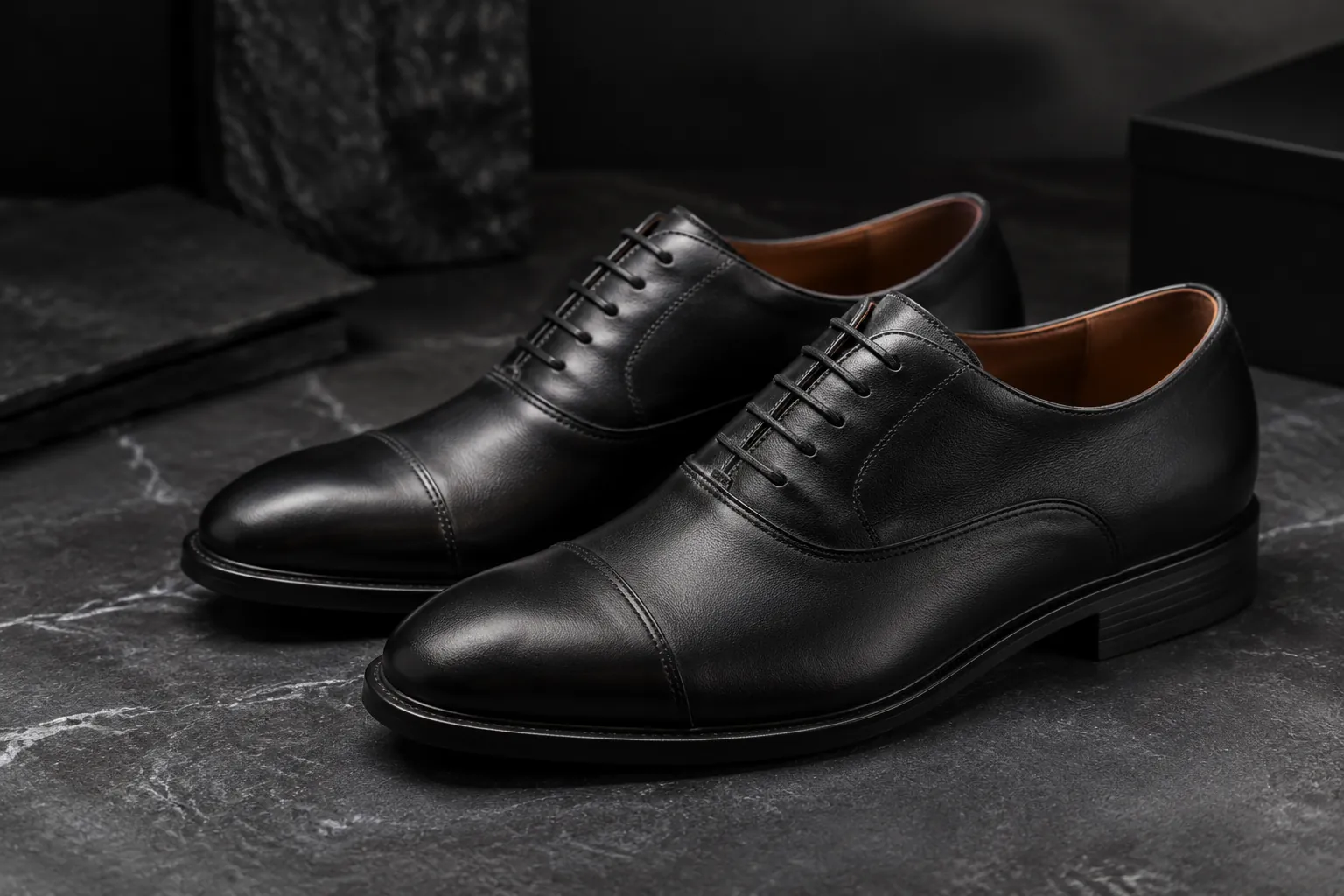
A reference image can establish the look a buyer wants from a men's penny loafer while leaving the actual instruction incomplete. Saddle proportion, apron symmetry, vamp length, opening retention, heel hold, and flex may all need separate treatment. The phrase italian leather penny loafer wholesale specification appears here only as buyer search terminology. It does not identify the origin of leather, manufacture, or sourcing. This article concerns the current definition of a men's core penny loafer.
The published description on the loafer page identifies those six points as controls for a repeatable men's core penny-loafer style. This article uses them as the basis of an editorial worksheet for buyers. Its visual-versus-wear grouping is not a classification published by the loafer page, and it does not turn the six controls into measurements, test methods, approved samples, or performance results.
The Image Is Not Yet the Brief
For the buyer, the editorial recommendation is to identify the governing reference first, then state which part of the shoe each instruction concerns. A front, side, or three-quarter view can be useful direction, but it should not silently decide every aspect of the upper or every intended wearing characteristic.
One short status system is enough to preserve that distinction throughout the definition:
- Fixed: a selected buyer decision that should remain unchanged unless the brief is revised.
- Directional: an intended visual approach that still needs a stated comparison or a question resolved.
- Open: a requirement the buyer has not defined well enough to treat as settled.
This is an editorial tool, not a factory classification. Its practical purpose is to prevent broad terms such as "classic," "refined," or "comfortable" from concealing the part of the loafer that needs a decision. Once these labels are assigned, later comments can address the actual control point instead of reopening the whole style.
Six Controls in One Worksheet
The first three entries below are visual decisions in this editorial worksheet. The remaining three are intended wear or movement requirements. The source supports the six-item control list; the way the buyer records each item is editorial guidance for building a clearer brief.
| Published control point | What the buyer records | Worksheet treatment |
|---|---|---|
| Saddle proportion | The governing view and the intended visual relationship of the saddle to the upper. | Visible upper decision. |
| Apron symmetry | The view used to judge balance in the apron area. | Visible upper decision. |
| Vamp length | The intended visual length against the selected reference. | Visible upper decision. |
| Opening retention | The intended requirement, or a clearly labeled question when it remains undefined. | Wear-related requirement. |
| Heel hold | The buyer's stated concern or intended requirement in plain language. | Wear-related requirement. |
| Flex | The desired movement or stiffness direction, without calling it an achieved result. | Wear-related requirement. |
A private label penny loafer specification becomes easier to review when each note has a single home. A comment about apron balance should not be read as a conclusion about heel hold. Likewise, a request concerning flex should not be mistaken for approval of the visible vamp shape.
Three Decisions on the Upper
Saddle proportion, apron symmetry, and vamp length need separate lines because they are different visual relationships. Combining them into a general direction for an "elegant upper" gives a reviewer no way to see which relationship is fixed and which is still under discussion.
Saddle proportion. Name the reference view that governs the saddle and state the relationship the buyer wants preserved. The entry can identify whether the saddle is a more pronounced or quieter part of the upper, but it should not add a dimension or tolerance without an established basis.
Apron symmetry. State the comparison view used to judge the apron. A buyer may choose a top view, a front view, or another identified image, provided the brief makes the chosen view visible to every reviewer. The point is to establish the comparison, not to assume that every angle answers the same design question.
Vamp length. Keep the instruction tied to the visual impression created by the selected reference. A more extended or more compact visual direction is still only a design call. It does not establish a last, pattern, finished fit, or an approved production outcome.
Hypothetical wording can remain simple: "Use reference image A for the saddle relationship, judge apron balance from the designated top view, and compare vamp appearance with the specified side view." This illustration identifies the type of instruction to give. It does not set dimensions, tolerances, or production criteria.
Wear Requirements Need Their Own Questions
Opening retention, heel hold, and flex should not be inferred from how a photographed loafer appears. For a buyer, the editorial recommendation is to write the intended concern directly and leave it open when the team cannot yet describe the requirement clearly enough for review.
- Opening retention: record the intended requirement and separate it from the appearance of the opening in the reference.
- Heel hold: state the issue the buyer wants considered in buyer language; mark it as unresolved when there is no settled requirement.
- Flex: identify the desired movement or stiffness direction without assigning an unconfirmed construction or result.
A clean image can support visual discussion, but it should not upgrade any of these entries to a completed wearing outcome. The benefit of an open question is that it remains visible in the record instead of being replaced by a positive but undefined label such as "secure" or "comfortable."
Material Fields Beside the Register
The factory-quality page describes an incoming-material review before mixed or unclear materials enter production. Its listed fields are leather article, color, thickness, lining, outsoles, hardware, packaging, artwork, and lot identity. That source describes the review scope; it does not establish a material certification, tannery identity, traceability result, test result, or origin for the loafer being defined.
For the current definition, the editorial recommendation is to keep applicable material information in separate fields beside the loafer controls. This prevents a visible surface treatment or a lifestyle image from becoming an unstated material instruction.
- Leather article
- Identify the applicable article as its own field rather than using color as a substitute for it.
- Color
- Record color separately so it remains distinguishable from the leather article.
- Thickness
- Keep any available thickness direction separate from the visual description of the upper.
- Lining
- Give lining an individual entry where it applies to the current definition.
- Outsoles
- Record outsole direction independently from the upper appearance.
- Hardware
- Mark hardware as applicable, fixed, directional, or open rather than assuming it from a reference image.
- Packaging and artwork
- List each item separately when relevant to the project.
- Lot identity
- Retain it as a named information field where relevant; its presence does not assert a traceability outcome.
Commercial Context, Kept Separate
The contact page states that style, market, quantity, size range, materials, branding, packaging, and delivery need are reviewed together rather than priced as isolated line items. Those are the documented commercial inputs. They are not evidence of a price, minimum order quantity, sample timeline, production capacity, or delivery commitment.
A men's penny loafer sourcing brief can place this commercial frame after the product-control register. Quantity remains a project input rather than an implied threshold. Delivery need remains a stated planning need rather than a promised date. Materials, branding, and packaging should remain distinct entries so a change in one area does not quietly alter an upper decision that was already fixed.
Definition Handoff
A concise handoff can preserve useful uncertainty. Before sharing the current definition, the buyer should be able to see what is selected, what is only directional, and which questions still need an answer.
- The identified reference or image set, including the governing views.
- Separate entries for saddle proportion, apron symmetry, and vamp length.
- Stated requirements or clearly marked questions for opening retention, heel hold, and flex.
- Applicable material fields recorded individually, without unsupported origin, certification, testing, or traceability claims.
- The commercial inputs of style, market, quantity, size range, materials, branding, packaging, and delivery need.
- A short, visible list of remaining questions.
Share the current definition through the contact page and ask which development, sampling, or quotation options may apply to the project. The handoff should make the chosen penny-loafer direction easy to distinguish from information that still needs definition.
Sources and verification
- Custom Loafers Manufacturer | OEM & Private Label Leather Loafers First-party site source
- Leather Shoe Factory in China | Capability & Export QC First-party site source
- Request a Quote | Leather Shoe Manufacturer First-party site source
Share the current leather footwear definition and ask which development, sampling or quotation options may apply to the project.
Send your project brief