
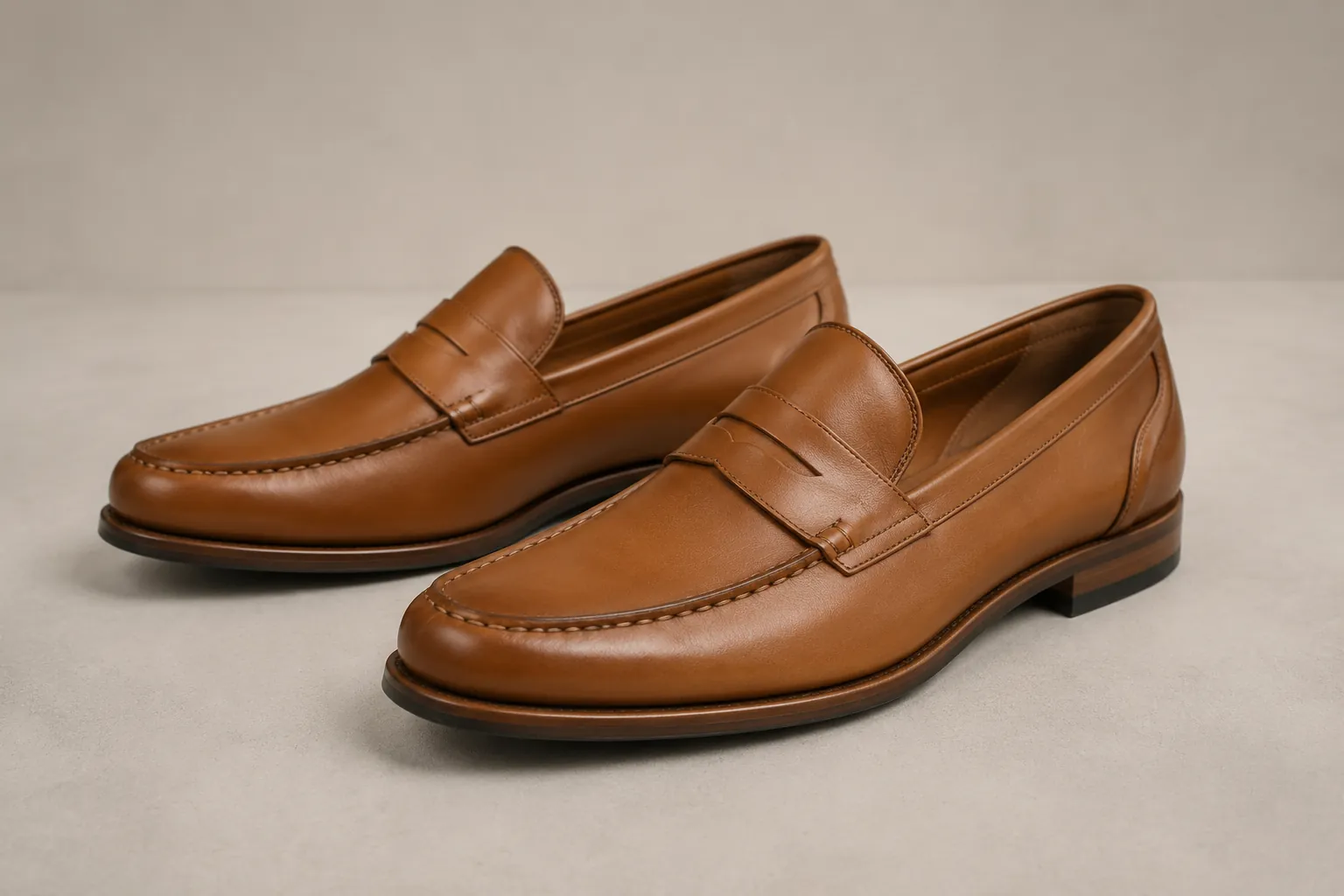
Direct answer
Start with consumer occasions, then assign a clear job to each SKU. Build core penny and dress-casual options first, add tassel or bit statements where the market supports them, and use suede, rubber soles, driving constructions, or seasonal colors to extend the range without duplicating it.
Buyer terminology and search intent
Buyers often reach the same sourcing problem through different phrases. Use each term to build a controlled product brief rather than a broad supplier promise.
- mens loafersThis guide uses the phrase as a practical buying topic and connects it to the specification, risk, and approval decisions behind men's loafer range planning for brands and retailers.
- types of loafers menThis research phrase signals a comparison or classification need. The useful answer is a decision framework rather than a one-line winner.
- mens leather loafersThis product phrase should be qualified by target customer, material, construction, fit, size range, outsole, and intended occasion.
- mens suede loafersThis product phrase should be qualified by target customer, material, construction, fit, size range, outsole, and intended occasion.
Related buyer searches
These SEMrush variants express closely related product research. They are grouped on this page because the sourcing answer depends on the same fit, material, construction, quality, and order controls.
- men's loafers
- men's loafers & slip-ons
- mens loafers casual
- black womens loafers
Specification points to confirm
Use these five controls to make quotations and samples comparable. Name the reference, method, tolerance, owner, and approval status for every point that can change cost or quality.
| Control point | What the buyer should define | Why it matters |
|---|---|---|
| Consumer occasions | Map business, formal, smart-casual, travel, resort, weekend, driving, and seasonal needs by target market. | A style earns its place when it solves a distinct wardrobe or use occasion. |
| Style families | Choose penny, tassel, bit, Venetian, apron, driver, slipper, or hybrid forms with clear visual separation. | Too many minor upper changes create inventory without expanding customer choice. |
| Fit platforms | Group styles by target width, instep, heel hold, toe shape, and wearing sock, then validate each upper on the shared last. | Shared lasts improve consistency only when the opening and material behavior are compatible. |
| Material and color | Balance smooth leather, suede, nubuck, grain, seasonal textures, core neutrals, and controlled statement colors. | Material can define range role more effectively than adding another pattern. |
| Outsole architecture | Assign leather, fine rubber, lug, driving, or lightweight sole families to price and occasion positions. | Shared bottom components can improve MOQ and reorder efficiency while preserving product distinction. |
A four-stage buyer workflow
Turn the research into a decision that the factory can quote, sample, manufacture, inspect, and repeat.
Give the style a range role
Define the consumer, occasion, price position, material story, color, channel, and the job this SKU performs. Apply this control: Map business, formal, smart-casual, travel, resort, weekend, driving, and seasonal needs by target market. A style earns its place when it solves a distinct wardrobe or use occasion.
Approve the fit platform
Set the last, opening, hold, toe allowance, flex, lining, insole, outsole, and wearing conditions before decoration. Apply this control: Choose penny, tassel, bit, Venetian, apron, driver, slipper, or hybrid forms with clear visual separation. Too many minor upper changes create inventory without expanding customer choice.
Engineer visible details
Control pattern geometry, seams, hardware, reinforcement, edge treatment, branding, grading, and component compatibility. Apply this control: Group styles by target width, instep, heel hold, toe shape, and wearing sock, then validate each upper on the shared last. Shared lasts improve consistency only when the opening and material behavior are compatible.
Turn the sample into QC
Convert approved fit and appearance into measurements, photos, workmanship points, tests, packing rules, and defect limits. Apply this control: Balance smooth leather, suede, nubuck, grain, seasonal textures, core neutrals, and controlled statement colors. Material can define range role more effectively than adding another pattern.
Sourcing risks and practical controls
Raise the assumptions most likely to change fit, appearance, cost, quality, or delivery before final sample approval.
Several SKUs differ only by decoration
Control: Compare consumer use, search demand, price, color, and outsole role before approving each style.
One loafer last is forced across every material
Control: Fit smooth leather, suede, unlined, and padded versions independently.
Seasonal colors fragment the order
Control: Use shared leathers or components and set a disciplined color architecture around core carryovers.
RFQ checklist
Attach images, drawings, a reference pair, or a tech pack, then state the order, market, and approval assumptions the factory must confirm.
- Consumer occasions: Map business, formal, smart-casual, travel, resort, weekend, driving, and seasonal needs by target market.
- Style families: Choose penny, tassel, bit, Venetian, apron, driver, slipper, or hybrid forms with clear visual separation.
- Fit platforms: Group styles by target width, instep, heel hold, toe shape, and wearing sock, then validate each upper on the shared last.
- Material and color: Balance smooth leather, suede, nubuck, grain, seasonal textures, core neutrals, and controlled statement colors.
- Outsole architecture: Assign leather, fine rubber, lug, driving, or lightweight sole families to price and occasion positions.
- Order architecture: Estimated pairs by style, color, material, and size, plus launch and reorder expectations.
- Market requirements: Destination, channel, labels, testing, packaging, trade term, and customer-specific standards.
- Approval path: Sample purpose, reviewers, comment format, physical references, inspection plan, and release authority.
Frequently asked questions
These answers frame the most common buying decisions for this topic.
Which men's loafers should a new brand launch first?
Choose the styles that fit the target customer and channel. A core penny loafer plus one clearly different dress or casual option can create a focused starting capsule.
Can penny and tassel loafers share a last?
Often yes, but vamp, throat, apron, decoration, reinforcement, and material affect fit. Approve each upper on the intended last.
How many colors should a loafer range include?
Use sales role and order economics rather than a fixed count. Core colors should carry volume, while seasonal colors need a clear demand case and workable material minimum.