
Sourcing
Mens Dress Shoes Wholesale Lot Pairing Before Confirmation
A sealed construction sample still leaves left-right look exposed when hide and component lot rules, color approval, and natural-versus-defect language sit outside the same brief as pair symmetry and polish.
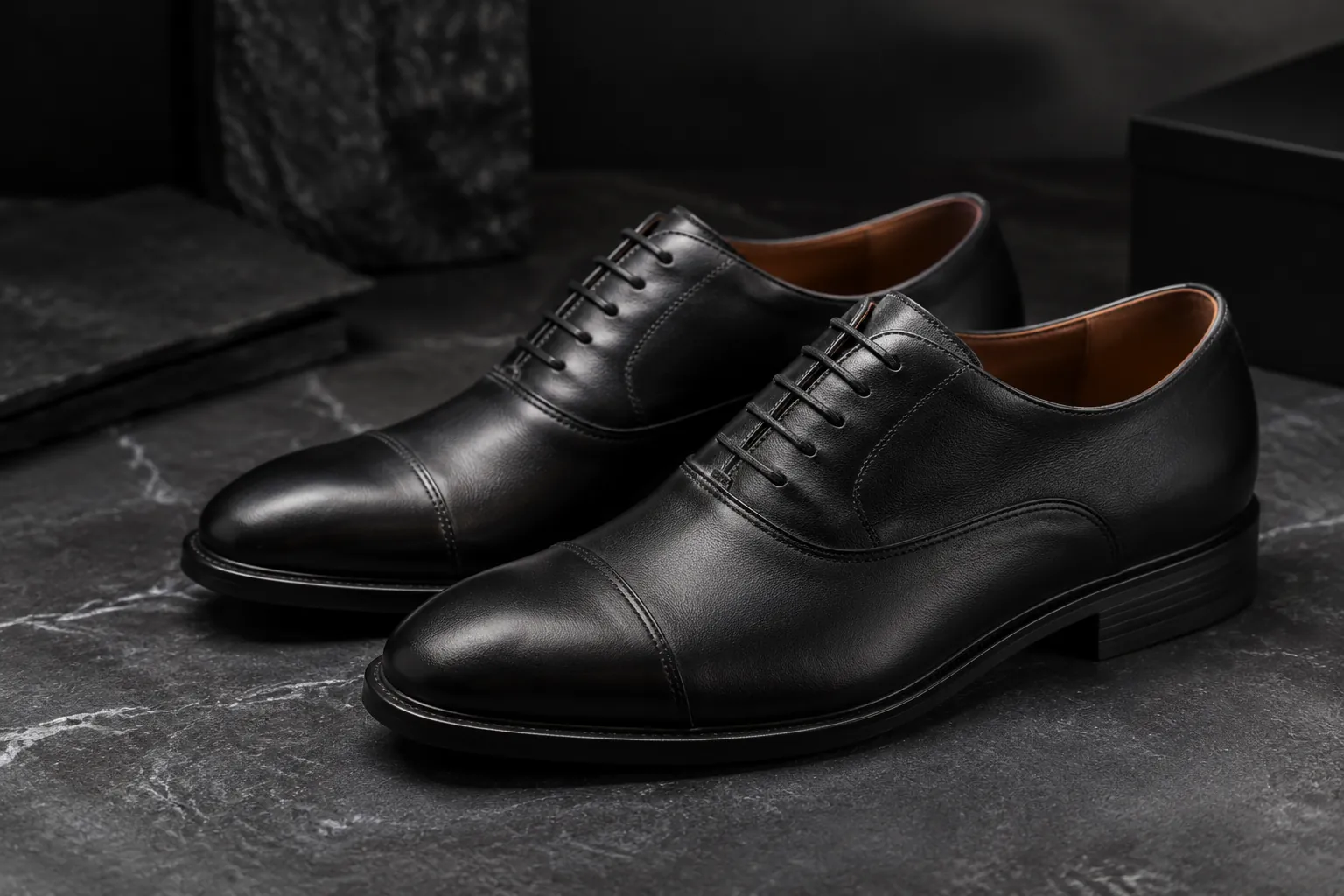
Retail light is unforgiving after a formal sample has already been sealed. Lasts, sole stacks, and stitch lines can all hold, while one mate still reads warmer than the other, polish depth shifts across the size curve, or a face panel shows more grain character than the reference. For buyers running mens dress shoes wholesale lot pairing, that gap usually opens because construction and a color name were locked without an order-scale rule for which hide and component lots may sit together inside a pair, inside a size, and across the assortment.
Lot pairing is that rule. Natural-versus-defect language, a color-approval method, and polish intent only stay enforceable when pairing is written early and kept with the formal visual controls that depend on it: pair symmetry, polish, and facing behavior. The dress-shoe page names formal control points. The men’s formal page states a need for documented approval standards. The materials page frames appearance-range questions. Keep those three statements separate in the file. They do different jobs for the same brief.
When construction is sealed but pairs still look mixed
Post-sample complaints often share one shape. The upper pattern matches. The sole stack matches. Yet left and right units do not read as one pair under retail light, or adjacent sizes look like mixed sub-lots. That is an appearance-lot problem, not a pattern redraw.
When natural-versus-defect language stays verbal, inspectors and production teams argue from memory. When color approval is only a shade name, dye lots can still drift. When hide or component lot pairing is left for packing, pair symmetry and polish become unit-level judgment calls. Editorial recommendation for the buyer: freeze appearance gates with construction, before cartons are labeled, so the run has one shared ceiling rather than a late debate over photos.
The site pages do not convert those gates into a certified service package. They supply control vocabulary on the formal pages and a short set of appearance-range questions on materials. Your written answers become the standard you can enforce.
Cap-toe control points named on the dress-shoe page
On the dress shoes page, a black cap-toe Oxford is described as the disciplined anchor of a formal program, with facing gap, toe proportion, cap placement, polish, and pair symmetry treated as control points. That is a named control set for that formal anchor. The excerpt does not publish numeric factory tolerances and does not expand into a multi-style catalog.
- Facing gap as a controlled formal cue
- Toe proportion as a controlled last-and-pattern outcome
- Cap placement as a controlled design and cutting outcome
- Polish as a controlled finish outcome
- Pair symmetry as a controlled left-right outcome
If polish and pair symmetry are control points, the wholesale brief still needs an objective pairing basis. Control language without lot identity leaves teams grading one unit at a time. That is why wholesale mens dress shoes pair symmetry work collapses when the file only says “match the sample.”
Documented approval standards on the men's formal page
The men’s leather shoes page states a related but distinct requirement. For a disciplined business and uniform cap-toe Oxford direction, facing gap, toe shape, polish level, and pair symmetry need a documented approval standard. The page claim is about the need for documentation. It does not state that a specific tolerance table, audit regime, or sample kit already exists there.
Keep this statement separate from the dress-shoe control list. One source names control points. The other states that selected formal cues need a documented approval standard. In procurement practice they meet when the buyer writes both into one brief: which cues are controlled, and which artifacts will stand as the standard for the order. Editorial recommendation for the buyer: choose sealed pairs, finish boards, photo sets under agreed light, or written limits your team will actually use, and name those artifacts in the same file as construction.
A verbal “match the sample” note rarely covers polish level or left-right balance once multiple hide lots enter cutting. Documentation is the difference between a shared reference and a dispute after shipment. That reading is buyer judgment, not a factory procedure published on the page.
Appearance-range questions that decide grain versus defect
The materials page frames appearance range as questions to ask: what variation is natural, what becomes a defect, how colors are approved, and how hides or component lots are paired across the order. Those are brief questions. They are not completed manufacturer guarantees.
- What grain, pore, or panel character counts as natural variation for this leather family?
- What mark, scar, color break, or surface irregularity becomes a defect for this program?
- How are colors approved for production (physical standard, light condition, dye-lot method)?
- How are hides or component lots paired across the order so mates and size runs stay coherent?
Mens dress shoes hide pairing sits in the last question. Pairing is a rule for which lots may combine inside a pair, inside a size, and across the wholesale assortment so polish and color read as one program. Cap toe oxford polish approval sits next to color approval: polish depth and sheen intent are hard to defend if dye-lot and finish-lot identity are undefined.
Write answers as acceptance language your own team can enforce. If the brand will accept limited natural character, say so. If retail lighting is unforgiving, tighten the defect line and state how left-right panels will be matched. The materials questions define the gate; your answers become the standard.
How lot pairing makes pair symmetry and polish enforceable
At order scale, pair symmetry and polish remain checkable only when the material lot story is explicit. The materials questions ask how hides or component lots are paired across the order. The dress-shoe control set treats polish and pair symmetry as control points. The men’s formal language requires a documented approval standard for polish level and pair symmetry. Read those three statements separately. Do not merge them into one invented capability.
Editorial recommendation for the buyer: use the following decision order when building the file. This is buyer process design, not a factory checklist claimed by the site.
- Name the style family and the formal cues that must stay stable: pair look, polish intent, facing intent.
- Answer the appearance-range questions in writing: natural variation, defect line, color-approval method, and hide or component lot pairing across the order.
- Attach the approval artifacts that will stand for polish level and left-right balance so “match sample” is not the only instruction.
- State how lots may move through sizes so a wholesale size curve does not silently mix incompatible panels or finish lots.
- Agree how visual exceptions are raised before packing, using the same language as the brief rather than ad hoc photos late in the run.
Any numeric band for sheen, facing gap, or panel match is buyer-side guidance unless your own technical file supplies it. Do not import millimetres or gloss units as if they were page facts. What the sources support is the control vocabulary, the need for a documented approval standard, and the appearance-range questions that make lot pairing a real gate.
Hypothetical example: a black cap-toe program ships with a sealed pair but no rule for combining dye lots across the size run. Inspectors may accept each unit as close enough while the carton set still looks mixed under retail light. Construction can remain correct while the brand still owns a visual rejection.
Brief fields to freeze before wholesale confirmation
Before confirming volume, freeze a short field set that covers the stage between construction lock and appearance-lot control. The table below is buyer brief design. It is not a commercial-terms package and not a multi-style control catalog.
| Brief field | What to state | Why it matters at order scale |
|---|---|---|
| Style family reference | Cap-toe Oxford or other named formal family and any sealed sample ID you already hold | Keeps construction talk and appearance talk tied to one reference set |
| Pair-symmetry expectation | How left and right must read together under agreed light | Makes left-right match checkable rather than conversational |
| Polish intent | Target depth or level language plus how polish will be approved | Supports polish approval without inventing gloss numbers |
| Facing-gap intent | Desired formal cue relative to the sealed reference | Links a dress-shoe control point to a documented standard |
| Natural-versus-defect rule | What grain or mark is allowed versus rejected | Answers the materials appearance-range questions in buyer language |
| Color-approval method | Physical standard, viewing condition, and lot-release method | Prevents a color name from standing alone as the only control |
| Hide or component lot pairing | How lots may be paired inside pairs, sizes, and the order | Makes hide pairing an order rule rather than a packing afterthought |
If any field is still open, treat confirmation as early for appearance risk even when construction looks finished. The expensive failure mode is not missing a style name. It is shipping a construction-correct run that cannot defend pair match.
Development, sampling, or quotation questions to send
When the fields above are drafted, share the current leather footwear definition and ask which development, sampling, or quotation options may apply to the project. That path is inquiry only. It does not claim that specific sampling packages, MOQs, packing programs, or lead times are documented in the sources used here.
- Style family and any sealed sample or photo set already in hand
- Pair-symmetry and polish intent in plain language
- Facing-gap intent relative to the reference
- Natural-versus-defect rule and color-approval method
- Hide or component lot pairing rules you want held across the order
- Open questions on which development, sampling, packing, or quotation information applies to this definition
Send those inputs through contact so the conversation starts from one definition rather than from a color name and a construction sketch alone. The aim is a wholesale program that can still defend left-right look after lots move, with fewer disputes after cartons arrive.
Sources and verification
- Custom Leather Dress Shoes Manufacturer | OEM & Private Label First-party site source
- Men's Leather Shoes Manufacturer | Custom Oxfords & Loafers First-party site source
- Leather Shoe Materials | Full Grain, Suede, Lining & Outsoles First-party site source
Share the current leather footwear definition and ask which development, sampling or quotation options may apply to the project.
Send your project brief