
Material Approval
Men's Designer Dress Shoe Leather Variation Approval
A buyer-side framework for documenting acceptable leather appearance variation before a dress shoe project is assessed.
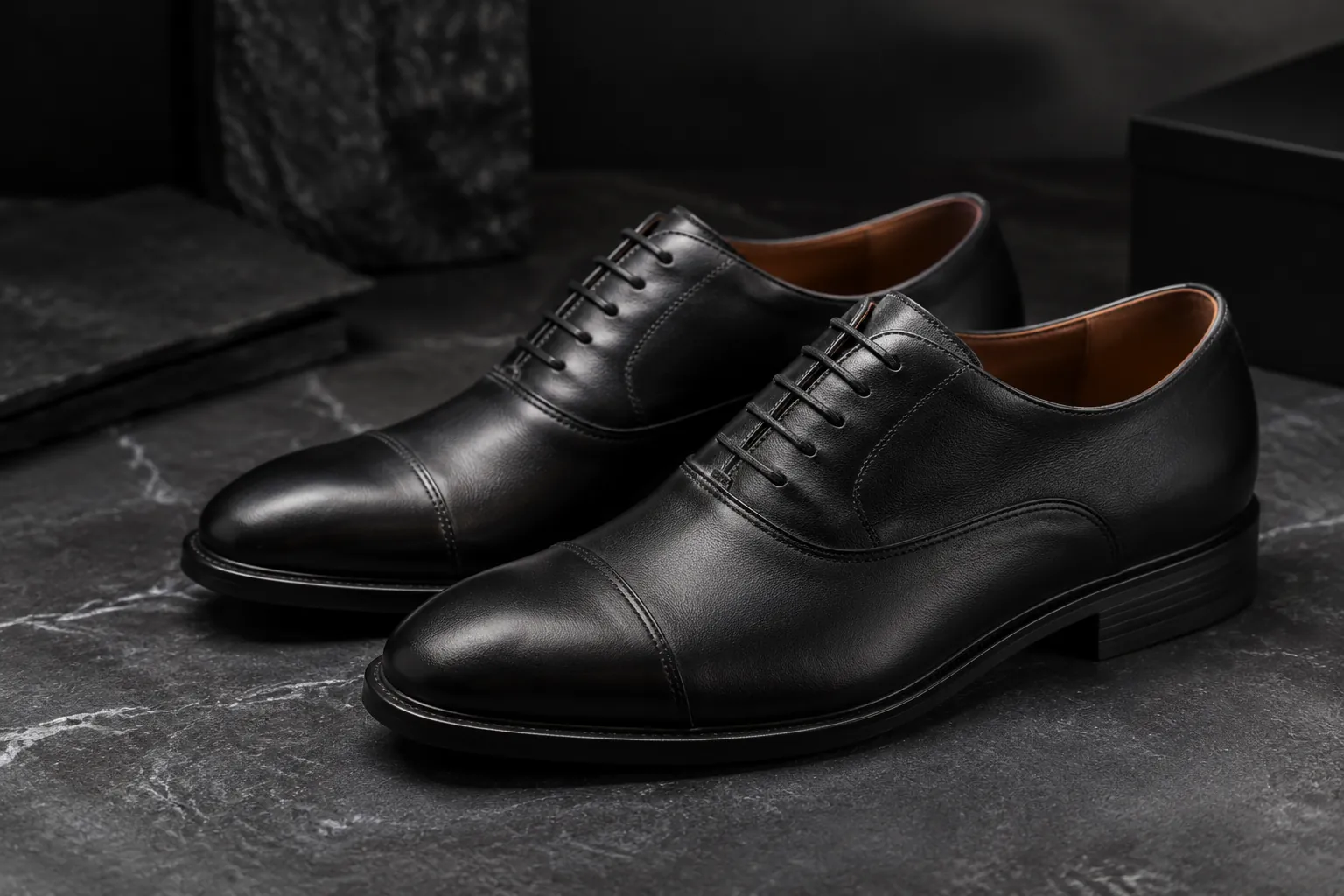
A dress-shoe reference can be attractive without being precise. In men's designer dress shoe leather variation approval, the buyer is not only naming a leather or approving a good-looking sample; the buyer is deciding what visible range can represent the product. A material name, color label, product photo, swatch, or reference shoe may help point the discussion in the right direction, but each can leave color movement, surface character, finish effect, and pair presentation open to interpretation.
The useful approval record is therefore narrower than a full sourcing brief and more exact than a mood-board note. It should state what the buyer accepts, what needs review, what the buyer rejects for this product definition, and which reference governs when materials are compared. The site's materials guidance frames the relevant appearance-range questions as: what variation is natural, what becomes a defect, how colors are approved, and how hides or component lots are paired across the order. Those are project questions to raise, not universal tolerances or documented commitments for every order.
Define The Authority Of Each Reference
Leather descriptions matter, but they do not settle the whole appearance decision. A buyer file may include a design render, a swatch, a physical shoe, a factory discussion note, and a studio image. As an editorial recommendation for the buyer, the file should say which reference has authority for which decision. Otherwise, a later review can turn into a dispute about whether the swatch, the shoe, or the image was meant to control the result.
For private label dress shoe material approval, keep the role of each reference explicit. A physical shoe might be used for overall formal presentation. A swatch might be used for a color question. A photograph might describe direction but not govern final appearance. The buyer should make that hierarchy deliberate instead of allowing every visual item to carry equal weight.
- Reference identity
- Record the style name or internal code, the reference date, and the object or file being reviewed.
- Reference authority
- State whether the item controls color, surface character, finish, pair presentation, or only general design direction.
- Review location
- Name the visible shoe areas that matter most to the intended presentation, such as toe, vamp, quarters, heel, or cap.
- Decision status
- Mark each point as approved, rejected, open for buyer decision, or requiring a project-specific manufacturer response.
Keep Natural Variation Separate From Defect Decisions
The materials page places two questions beside each other: what variation is natural, and what becomes a defect. A buyer should keep those questions separate. A visible feature can belong to natural leather appearance and still be unsuitable for a particular dress-shoe presentation. Another feature may need review because of where it appears on the shoe, not because the buyer has made a general rule about the material.
Describe the observation before recording the decision. That keeps the note from pretending to be a technical tolerance when it is really a buyer-owned appearance boundary.
- Observed feature: Describe the visible color shift, surface mark, grain character, gloss difference, or finish effect.
- Visible area: Identify whether the point appears on a high-visibility area, a less prominent part, or across the overall shoe.
- Buyer disposition: State whether the brand accepts it, rejects it for this product definition, or needs a further internal decision.
- Comparison scope: Clarify whether the issue concerns one shoe, the left and right shoe together, visible components, or a broader project question.
This is buyer-side editorial guidance. The buyer is defining the appearance boundary it wants assessed, while any manufacturer response remains specific to the submitted project definition.
Approve Appearance As Linked Decisions
Dress shoe leather color approval is easier to read when it sits beside the other appearance decisions. Color can appear different when surface character, polish, lighting, or the comparison reference changes. The buyer should avoid approving color as a detached label if the finished shoe depends on several visual elements working together.
| Decision area | Question to settle | Buyer-side record |
|---|---|---|
| Color | Which reference establishes the intended color, and when does it govern? | Name the reference, version, and approval owner for the color decision. |
| Surface character | Which visible variation belongs inside the intended look, and which does not? | Describe the characteristic, the visible area, and the buyer's disposition. |
| Finish | Is polish, gloss, or another surface effect part of the approved appearance? | State whether finish is a required decision point or supporting context. |
| Comparison scope | What must be compared when reviewing pair presentation or lot-related questions? | Record whether the question concerns a pair, visible components, or an order-level inquiry. |
This table is an editorial structure for the buyer's own file. It does not assert that any leather article, finish, color, or component combination is available for a project.
Use Formal-Shoe Details To Focus Review
On the site's Cap-toe Oxford program page, facing gap, toe proportion, cap placement, polish, and pair symmetry are identified as control points. That source identifies visible formal-shoe details for the style. It does not document an inspection outcome, approval procedure, or project result.
Those visible points help the buyer decide where leather appearance questions should be concentrated. Surface character near a toe can read differently from the same feature in a less prominent area. A finish concern may matter more when it affects the polish expected on a formal cap-toe shoe. A color difference may need to be discussed as a pair presentation issue if it affects left-right symmetry.
As an editorial recommendation, annotate the reference at the relevant control points and connect each note to a specific appearance question: color, surface character, finish, or pair relationship. The review then stays tied to the dress shoe being sourced instead of drifting into an abstract leather description.
Ask The Lot Question Without Assuming The Answer
The materials page asks how hides or component lots are paired across the order. That wording gives the buyer a question to raise. It does not establish a documented pairing method, a leather lot consistency for wholesale shoes guarantee, or a confirmed process for any proposed order.
A precise inquiry should identify what needs a project response:
- Identify the color reference and say whether it is a swatch, physical shoe, image, or another defined item.
- State whether the appearance question concerns the two shoes in a pair, visible components on one shoe, or a broader order-level comparison.
- Ask how color approval may be handled for the submitted project definition.
- Ask how the question of pairing hides or component lots across the order may be addressed for the project, including what information is needed before an answer can be given.
The buyer should retain the actual response with its conditions and unresolved points. A conditional project answer should not later be rewritten as a general company commitment.
Connect Material Identity To The Product Record
The site's factory quality page describes incoming controlled-material review. The excerpt states that leather article, color, thickness, lining, outsoles, hardware, packaging, artwork, and lot identity are reviewed before mixed or unclear materials enter production. Read that source at its exact scope; it does not prove a specific traceability system, inspection result, certification, or buyer-order outcome.
For the buyer's own record, the excerpt is useful because it shows why appearance approval should not float apart from the rest of the product definition.
| Documented field | Editorial recommendation for the buyer |
|---|---|
| Leather article, color, and thickness | Connect the approved appearance reference to the material description used in the project file. |
| Lining, outsoles, hardware, packaging, and artwork | Keep related product fields versioned so the appearance decision is not detached from the wider product definition. |
| Lot identity | Retain the lot-related question or identifier used in the project conversation, together with the actual response received. |
The buyer record can stay simple: current reference, version date, approval owner, appearance decisions, and open questions. The point is to keep the approved leather appearance tied to the product definition the manufacturer is being asked to assess.
Send A Clear Appearance Inquiry
Share the current leather footwear definition through the contact page and ask what project-specific assessment, development, sampling, or quotation information can be provided. This is a neutral project inquiry. It does not make any option, material, process, quantity, or commercial term confirmed.
Documented Product Details
- Style reference and the specific visual reference being used for appearance review.
- Current material description, limited to what is already known or proposed by the buyer.
- Color name or internal code, with the shoe areas where appearance matters most.
- Known component details that affect how the leather appearance should be read.
Buyer-Owned Appearance Requirements
- Accepted, review-required, and rejected visual characteristics for the intended product presentation.
- The authority of each reference when a physical item, image, or swatch differs.
- The comparison scope for pair presentation and any order-level appearance question.
- The internal person or team authorized to make the final brand decision.
Open Questions For A Project Response
- How color approval may be handled for the submitted project definition.
- How the question of pairing hides or component lots across the order may be addressed.
- What project-specific assessment, development, sampling, or quotation information can be provided after the current definition is reviewed.
The buyer is defining the visual range it intends to accept on a dress shoe. Once that range is written down, the project question becomes more exact: whether the submitted appearance boundary can be assessed for the specific footwear program.
Sources and verification
- Leather Shoe Materials | Full Grain, Suede, Lining & Outsoles First-party site source
- Custom Leather Dress Shoes Manufacturer | OEM & Private Label First-party site source
- Leather Shoe Factory in China | Capability & Export QC First-party site source
Share the current leather footwear definition and ask which development, sampling or quotation options may apply to the project.
Send your project brief