
Footwear Sourcing
Material Checklist for Wholesale Genuine Leather Shoes
A buyer-side method for recording incoming component identities, separating style controls, and presenting unresolved material questions before production.
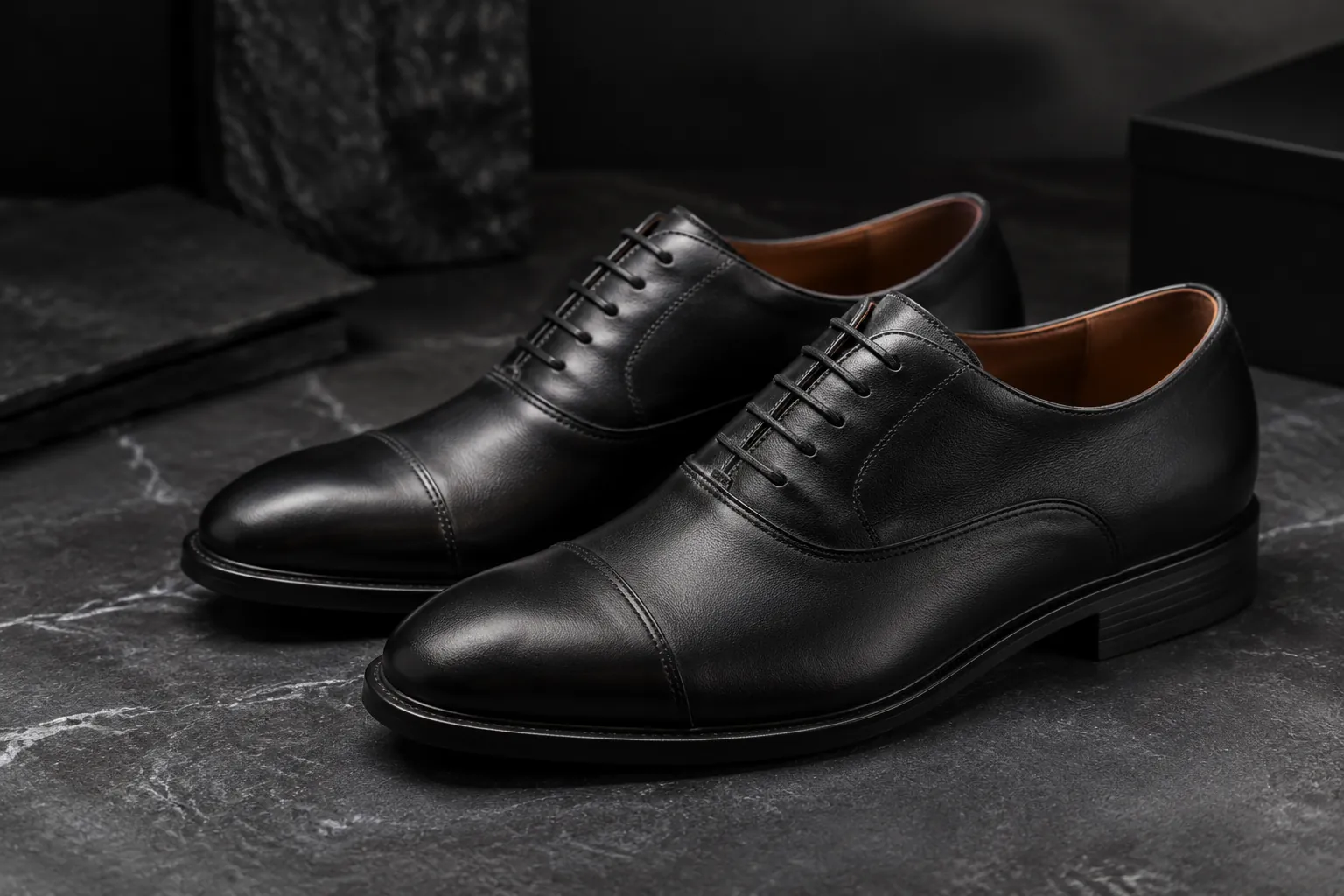
For a buyer, a material checklist for wholesale genuine leather shoes should assign one current identity to every incoming input named for the project. A broad upper description does not fill the entries for color, thickness, lining, outsoles, hardware, packaging, artwork, or lot identity. Each of those items needs its own place in the handoff.
The company's factory quality page says it reviews leather article, color, thickness, lining, outsoles, hardware, packaging, artwork, and lot identity before mixed or unclear materials enter production. This statement defines the documented incoming-review scope; it does not establish a test protocol, approval authority, substitution policy, corrective action, retention period, or downstream traceability practice.
The tables and status labels below are editorial recommendations for buyers. They provide a way to present the current definition and expose unanswered entries, but they are not described in the sources as company forms or required procedures.
The Record Begins With Nine Inputs
A buyer-side material identity checklist can use one row per incoming input. Beside the identity, record the source or version currently being used and a short question wherever the project documents do not point to a single answer.
Three buyer-created status labels are enough for this working record:
- Recorded
- One current identity is entered for the item.
- Open
- The current project materials do not yet provide an identity.
- Conflict
- Two or more project references identify the item differently.
| Incoming input | Suggested buyer entry | Reference to note | Question to resolve |
|---|---|---|---|
| Leather article | Current article name, code, or buyer reference | Current material record or physical reference | Do the available records identify the same leather article? |
| Color | Current color name, code, or other project identifier | Current color document or physical reference | Is there one identifiable color reference? |
| Thickness | Project value and unit, or an Open status | Current material document | Are both the value and unit stated? |
| Lining | Current lining identity and intended shoe area | Current component record | Are the material and intended placement both identified? |
| Outsoles | Current outsole component identity | Current drawing, image, or component record | Which outsole version belongs to the project? |
| Hardware | Current hardware identity and finish reference | Current component image or file | Do the written and visual references identify the same item? |
| Packaging | Current identity or version for each included item | Current packaging file or component record | Which packaging items and versions are current? |
| Artwork | Current file name or version | Buyer-held file record | Can the current artwork be distinguished from earlier files? |
| Lot identity | Identity information presented for incoming review | Current project record | What lot-identity information applies at the incoming review stage? |
The source names the incoming inputs but does not specify which documents or identifiers a buyer must use. The suggested entries therefore remain buyer-side choices. Where no single reference exists, an Open or Conflict status keeps the uncertainty visible instead of filling the row with an assumption.
Commercial Context Sits Beside the Material Record
The component table is only one part of a private label footwear material handoff. As an editorial procurement method, keep the material identities in one record and the broader product and commercial context in a companion note. This preserves the distinction between identifying an outsole or artwork file and describing the project in which it will be used.
The company's contact page says style, market, quantity, size range, materials, branding, packaging, and delivery need are reviewed together rather than priced as isolated line items.
- Incoming material record
- The current identity, reference, buyer-created status, and open question for each named incoming input.
- Product and commercial frame
- The style, market, quantity, size range, materials, branding, packaging, and delivery need supplied with the inquiry.
- Unresolved entries
- A short list of missing or conflicting references that still require a project-specific answer.
Packaging and materials may appear in both records because the two records answer different questions. The material record identifies the current item or version. The product and commercial frame presents that item within the wider inquiry.
Where Component Identity Stops
Recording a material or component does not define every control point associated with a shoe style. The buyer should place style-specific controls in a separate attachment so they are not mistaken for material identities.
| Style | Documented control points | Editorial placement recommendation |
|---|---|---|
| Cap-toe Oxford | The dress shoe page treats facing gap, toe proportion, cap placement, polish, and pair symmetry as control points. | Keep these points with the Oxford style definition rather than combining them with the leather, lining, outsole, or packaging rows. |
| Penny loafer | The loafer page identifies saddle proportion, apron symmetry, vamp length, opening retention, heel hold, and flex for the style. | Keep these points with the loafer style definition rather than deriving them from the component record. |
These are separate examples from two product pages. Neither list is presented here as a complete specification, universal requirement, or test method. For the buyer, they mark the boundary between a leather shoe component identity checklist and the controls attached to the selected style.
Defined, Reviewed, or Still Open?
A responsibility view can prevent buyer-created fields from being confused with documented company review. Use three categories and describe each one narrowly.
| Category | What belongs there | How to treat it |
|---|---|---|
| Buyer's current definition | The identities, source versions, status labels, style attachment, and known conflicts assembled by the buyer. | Treat these as the buyer's current project records, not as evidence of factory approval. |
| Company's documented review scope | The factory quality page names the incoming inputs listed above. Separately, the contact page says the product and commercial elements listed above are reviewed together rather than priced as isolated line items. | Keep each statement within the scope of its source. |
| Project-specific questions | Missing identifiers, conflicting component descriptions, uncertain file versions, and the handling of entries that remain open. | Ask for an answer in the inquiry rather than treating an assumed answer as a documented procedure. |
The supplied sources do not assign final approval authority or say how substitutions, rejections, remedies, or unresolved entries are handled. Those subjects belong in the project-specific question category unless they are separately confirmed.
Questions for Unclear Entries
Turn each Open or Conflict status into a direct inquiry topic. The questions below are buyer prompts, not company services, procedures, or promises.
- Which identifier should be used when the current specification, image, and component file describe an item differently?
- Which leather article or color reference is current when the available records do not align?
- What lot-identity information should be presented for this project's incoming review?
- Which packaging or artwork version should remain in the current record?
- Who should provide a missing component identity or resolve a conflicting instruction?
- How should an unresolved material entry be represented before production?
- Which style-specific control points should accompany the material record for the selected shoe?
Do not add assumed tolerances, testing criteria, rejection rules, replacement terms, or response times merely to complete the table. The buyer record should show the unanswered item as an unanswered item.
The Package for Project Review
Before submitting an inquiry, the buyer can assemble the handoff in four parts:
- Complete the nine incoming-input rows with the current identities and buyer-created statuses.
- Add a separate style attachment containing the relevant product controls.
- Provide the product and commercial frame: style, market, quantity, size range, materials, branding, packaging, and delivery need.
- List the Open and Conflict entries as direct project questions.
Share the current footwear definition through the project inquiry. Include what is already defined without implying that unresolved entries have been approved. Ask which development, sampling, or quotation options may apply after the project is reviewed; the answer will depend on that review, and no particular option should be assumed in advance.
Sources and verification
- Leather Shoe Factory in China | Capability & Export QC First-party site source
- Request a Quote | Leather Shoe Manufacturer First-party site source
- Custom Leather Dress Shoes Manufacturer | OEM & Private Label First-party site source
- Custom Loafers Manufacturer | OEM & Private Label Leather Loafers First-party site source
Share the current leather footwear definition and ask which development, sampling or quotation options may apply to the project.
Send your project brief