
Quality Control
Leather Shoes Wholesale UK Quality Control Plan
UK wholesale leather footwear programs often freeze style and price while material identity stays open. Attach published incoming fields to Oxford and loafer control points before commercial review hardens.
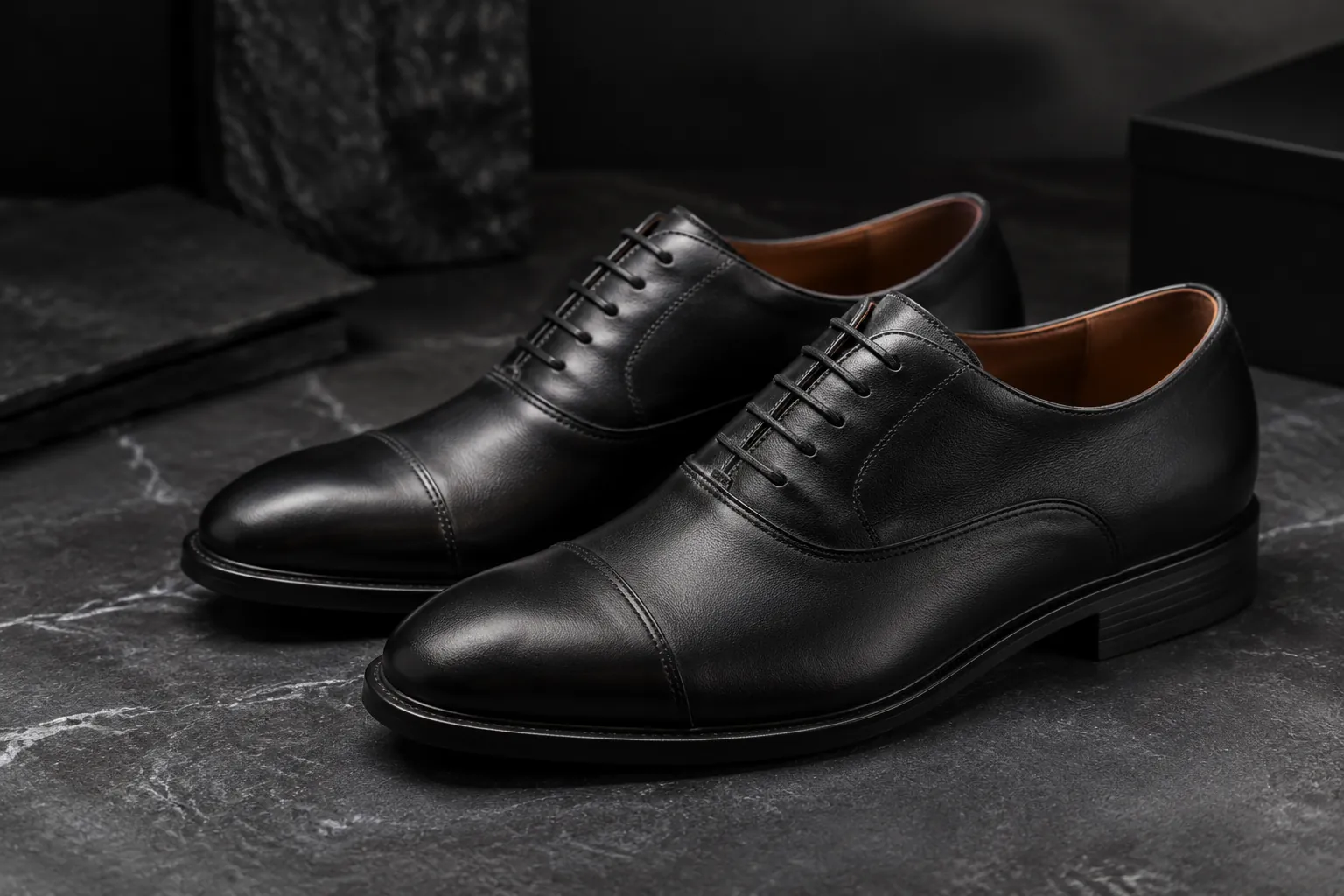
UK wholesale leather footwear programs often freeze a style name and a target price first. Leather article, color, thickness, lining, outsoles, hardware, packaging, artwork, and lot identity stay open longer. When those fields remain vague, mixed or unclear inputs can reach the line before anyone can challenge them. For leather shoes wholesale UK quality control, the practical work is pre-production: name material and lot identity on the brief while rejection is still possible, not after finished-pair sorting begins.
Where UK wholesale programs lose control before production starts
The failure mode is sequence. Style boards and price targets travel early. Material identity travels later, if it travels at all. By the time a finished pair is inspected, the chance to reject an unapproved article, an off-shade lot, or an unlabeled hardware set has already narrowed.
Style names alone do not protect facing geometry, saddle proportion, polish response, or flex behavior when leather thickness, lining, and outsoles remain undefined. Waiting for end-of-line appearance checks means inspecting outcomes after identity was never locked. Incoming control exists to stop that slide before mixed or unclear materials enter production.
Incoming fields that must sit on the wholesale brief
Factory incoming material review confirms controlled materials before mixed or unclear inputs enter production. The published list covers leather article, color, thickness, lining, outsoles, hardware, packaging, artwork, and lot identity. For wholesale leather shoes material control, each field is a buyer decision that belongs on the brief before cutting starts.
- Leather article: name the hide type and finish family the program intends to buy, so substitutes cannot slip in under a style code alone.
- Color: state a color target or approved reference so shade drift is visible at intake, not only on finished pairs.
- Thickness: set a usable band for the upper (and related components where relevant) so cutting and lasting assumptions stay stable.
- Lining: specify lining type and intended use areas. As an editorial recommendation for the buyer, treat a lining swap as a definition change under the same style name, not as a free substitution.
- Outsoles: define construction and material intent early so weight, flex, and heel geometry sit inside the product definition rather than arriving as a late photo detail.
- Hardware: list eyelets, hooks, buckles, or decorative pieces by finish and function so mixed lots do not appear mid-run.
- Packaging and artwork: lock box, tissue, labels, and print files with the same seriousness as the upper, because wholesale programs ship identity as well as footwear.
- Lot identity: require lot labeling intent so material provenance remains traceable across reorders and partial shipments.
Leaving any of these fields blank is an editorial choice by the buyer. It is not a neutral default. Fill the blanks against a named Oxford or loafer before commercial review, not when a carton is opened in the UK.
Style controls that depend on locked materials
Material identity does not replace style work. Cap-toe Oxfords and penny loafers are separate families with separate documented control points. OEM leather shoes incoming inspection covers the material list above. Style control points live on the dress-shoe and loafer program pages. Connect both layers on the brief rather than hoping late visual checks repair an unlocked material set.
| Program | Documented control points | Buyer guidance when materials stay open |
|---|---|---|
| Cap-toe Oxford | Facing gap, toe proportion, cap placement, polish, pair symmetry | As buyer guidance, these points are harder to hold across a wholesale run if article or thickness drifts under the same style name. |
| Penny loafer | Saddle proportion, apron symmetry, vamp length, opening retention, heel hold, flex | As buyer guidance, saddle and apron reading, opening retention, heel hold, and flex are harder to hold if lining, outsole, or upper choices stay undefined. |
Do not treat the two families as interchangeable. Lock materials first. Then treat facing gap, cap placement, saddle proportion, and flex as style work against a named article set, not as late visual luck.
Review materials with the commercial frame, not after it
Published commercial review reads the product and commercial frame together. Style, market, quantity, size range, materials, branding, packaging, and delivery need are reviewed as one package rather than priced as isolated line items. That co-review is the place to surface open material fields. It is not a later step after a unit price has already hardened in the buyer’s mind.
As an editorial recommendation for UK wholesalers, importers, and private-label teams, refuse false precision. A quote comparison while leather article, thickness, lining, or hardware remain TBD does not yet describe one product. Put the incoming field set in the same pass as market, size range, branding, packaging, and delivery need so leather dress shoes quality checks UK programs can defend the definition later.
Confirmed material record versus open factory questions
A clean split reduces noise. Record what the program already owns. Keep development path, sampling sequence, and quotation scope as questions the buyer may ask. Do not treat those topics as services this brief invents or promises.
| Buyer-owned record (state now) | Open factory questions (ask, do not assume) |
|---|---|
| Leather article and color target | Which development path may fit this definition |
| Thickness band for the upper and related components | What sampling sequence may suit the project risk |
| Lining type and coverage intent | What quotation scope may cover materials, branding, and packaging together |
| Outsole construction and material intent | How lot identity may be carried on cartons and internal labels for this program |
| Hardware set and finish | Whether packaging artwork may need a separate proof cycle before production |
| Packaging, artwork files, and lot labeling intent | Any other project-specific constraints needed before assessment |
Nothing in the published pages fixes MOQs, unit prices, lead times, AQL schemes, or third-party lab methods. Those topics remain outside this brief. What the pages support is incoming material confirmation and joint commercial-frame review. Keep that ceiling intact when drafting the program file.
Share a material-locked definition for assessment
The practical next step is not a generic RFQ template. Share a current style-plus-material definition so the factory can review which development, sampling, or quotation options may apply to the project.
- Name the style family and core control points (for example, cap-toe Oxford facing gap and pair symmetry, or penny loafer saddle proportion and opening retention).
- Attach the incoming field set: leather article, color, thickness, lining, outsoles, hardware, packaging, artwork, and lot identity.
- State market, quantity intent, size range, branding, packaging, and delivery need in the same package so the commercial frame stays whole.
- List open questions only after the material record is written, so the factory is not asked to invent identity while quoting.
- Use the contact path to share that definition and ask which development, sampling, or quotation options may apply.
Inquiry topics stay distinct from documented services. Quality control stays upstream of production, which is where mixed materials can still be stopped cleanly.
Evidence boundaries for this brief
First-party pages support three claims useful to buyers. Incoming review covers leather article, color, thickness, lining, outsoles, hardware, packaging, artwork, and lot identity before mixed materials enter production. Commercial review covers style, market, quantity, size range, materials, branding, packaging, and delivery need together rather than as isolated line-item pricing. Style pages document control points for cap-toe Oxfords and penny loafers as listed above. They do not establish UK import law, VAT or duty rules, REACH or labeling regimes, AQL schemes, third-party lab protocols, final-inspection pass rates, named customer outcomes, or guaranteed development and sampling packages.
Treat any broader compliance plan, lab matrix, or capacity claim as outside this article. For leather shoes wholesale UK quality control, the decision value sits in locking material and lot identity against style control points before commercial review hardens around an incomplete product definition.
Sources and verification
- Leather Shoe Factory in China | Capability & Export QC First-party site source
- Request a Quote | Leather Shoe Manufacturer First-party site source
- Custom Leather Dress Shoes Manufacturer | OEM & Private Label First-party site source
- Custom Loafers Manufacturer | OEM & Private Label Leather Loafers First-party site source
Share the current leather footwear definition and ask which development, sampling or quotation options may apply to the project.
Send your project brief