
Footwear Sourcing
The Incoming-Material Handoff in Leather Shoes Wholesale
An approved shoe is easier to use as a production reference when its materials, artwork, components and style-sensitive details are recorded separately. This guide sets out a buyer-held record and the questions that remain open at the incoming-material stage.
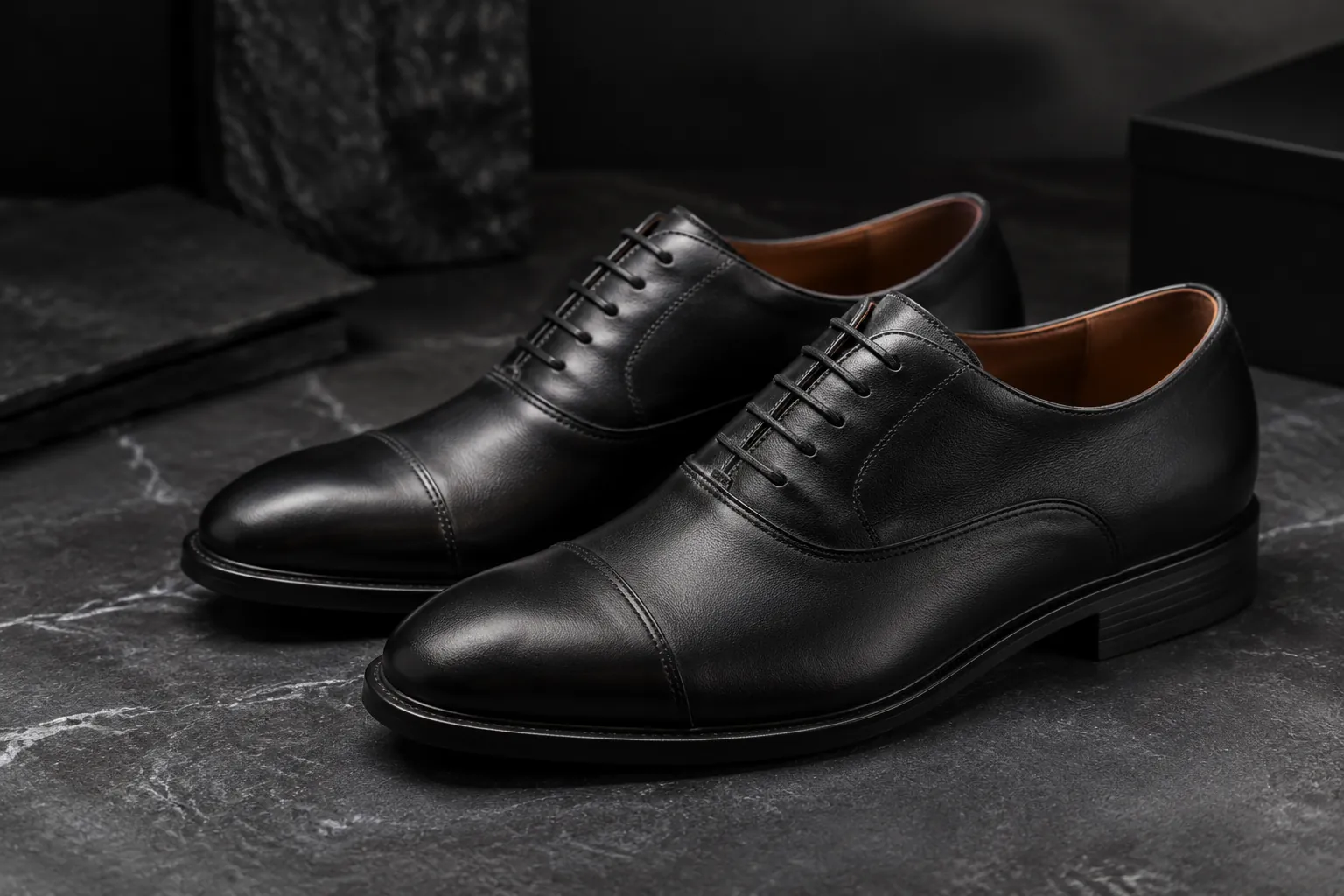
Consider a hypothetical handoff: the approved shoe is ready, but two leather references carry similar descriptions and the artwork folder still contains an earlier logo file. The shoe shows the intended result, yet it does not identify which supporting references should accompany that approval.
For a leather shoes wholesale project, the buyer now has a document-control decision. The physical sample can remain the central reference, while a separate record identifies the leather, components, packaging, artwork and construction details associated with it. Any unresolved field can be marked as open instead of being completed with an assumed code, measurement or tolerance.
The manufacturer documents a specific incoming review on its factory quality page: leather article, color, thickness, lining, outsoles, hardware, packaging, artwork and lot identity are reviewed before mixed or unclear materials enter production. This article uses that list as the basis for an editorially recommended buyer-held record. The supplied sources do not document a manufacturer-issued approval form, laboratory testing, end-to-end traceability or a formal change-control workflow.
What the approved shoe may not identify
A sample presents the assembled shoe. A buyer may still need separate references for details that cannot be identified reliably from the finished pair alone, such as the current artwork file or the name used for a selected leather article. The editorial recommendation is to record only the definition that has actually been reviewed and to distinguish it from proposals or unfinished decisions.
This distinction matters when several documents refer to the same shoe. A current sample, an earlier specification sheet and a revised packaging file should not be treated as one unqualified approval set. The buyer's record can identify which reference is current for each field and show where confirmation is still required.
A buyer-held record for the current approval
The following structure follows the categories in the documented incoming review. The entries in the second and third columns are recommendations for the buyer; they are not presented as a manufacturer form or service.
| Incoming-review category | Recommended approval entry | Open point to identify |
|---|---|---|
| Leather article | Record the article name, swatch reference or other project reference used during approval. | Whether the available reference clearly distinguishes the selected article. |
| Leather color | Identify the approved swatch, sample area, image or other available color reference. | Which reference should govern if the available references differ. |
| Leather thickness | Enter only the value or reference already reviewed for the project, if one exists. | Whether a thickness definition has been reviewed. |
| Lining | Record the material and color references available for each applicable area. | Whether separate shoe areas require separate references. |
| Outsoles | Identify the reviewed outsole reference and any approved color or visible finish. | How the selected outsole is distinguished from similar options. |
| Hardware | Give each applicable item its own entry and record the reviewed visible finish. | Whether an item reference exists for the reviewed version. |
| Packaging | List the box, tissue, labels or other packaging references currently included in the definition. | Which packaging decisions remain unresolved. |
| Artwork | Record the available file name, revision and application location used during approval. | Which file is current when multiple versions remain available. |
| Lot identity | Reserve a field for the lot identity presented during incoming review. | What information can be compared with the buyer's approved reference. |
Broad labels such as “upper leather” or “logo” may leave the comparison basis unclear. As an editorial recommendation, the buyer should use the most specific reference already available for the project. Where no reference has been agreed, the field should remain visibly open.
How the record meets the incoming gate
The documented factory scope is an incoming review of the listed materials, components and identifiers before mixed or unclear materials enter production. It does not state that every category receives an item code, nor does it explain how records are exchanged with a buyer.
- Give each category its own entry. This is an editorial record-design choice that keeps a proposed artwork change separate from a leather or outsole decision.
- Name the approval reference. The entry can point to the sample, swatch, component reference, file or image that the buyer actually used.
- Show its current status. The buyer can label a field approved, open or proposed for change. These labels are recommendations, not documented factory terminology.
- Ask how the incoming item will be identified. The answer may be different for leather, packaging, artwork and other categories, so the buyer should request project-specific information.
- Present conflicts as unresolved questions. An outdated file, unclear reference or proposed alternative should not silently replace the recorded approval.
This record gives the buyer a basis for discussing wholesale shoe quality control. It does not determine how the manufacturer will classify, record or resolve a difference.
Construction-specific approval points
The incoming categories do not replace controls associated with a particular shoe construction. Those controls should remain attached to the product for which the manufacturer names them.
Cap-toe Oxford
For the cap-toe Oxford presented in the dress shoe range, the manufacturer identifies facing gap, toe proportion, cap placement, polish and pair symmetry as control points. A buyer working with that product can add identified views of the approved Oxford and note where those points are visible.
Penny loafer
For the penny loafer presented in the loafer range, the manufacturer identifies saddle proportion, apron symmetry, vamp length, opening retention, heel hold and flex as control points. A buyer working with that product can keep its sample reference and relevant review notes together.
These are separate product definitions. The Oxford list should not be assigned to the loafer, and the loafer list should not be expanded into a universal footwear checklist. For another construction, the editorial recommendation is to ask which features define the current approval.
Where documented review stops
The incoming-review excerpt identifies what is reviewed and when. It does not provide answers about substitution authority, escalation, deviation reporting, buyer approval or the format of a project record. Those subjects remain inquiry topics.
| Documented scope | Recommended project question |
|---|---|
| Leather article, color and thickness are included in incoming review. | How can a proposed difference from the approved leather reference be raised? |
| Lining, outsoles and hardware are included in incoming review. | Who should be asked to review a proposed component substitution? |
| Packaging and artwork are included in incoming review. | Which project files and packaging references will be used for comparison? |
| Lot identity is included in incoming review. | What information may be available when the identity of an applicable lot is unclear? |
| The review occurs before mixed or unclear materials enter production. | What decision path may apply when the review identifies a difference? |
The questions in the right-hand column are not descriptions of company services or promises. They are recommended subjects for the buyer to clarify for the current project.
The commercial review must use the same definition
The manufacturer's contact page states that style, market, quantity, size range, materials, branding, packaging and delivery need are reviewed together rather than priced as isolated line items. It does not promise a particular quotation format or commercial result.
For private label shoe production, the buyer can compare the submitted project information with the current leather shoe approval sample and its supporting record:
- Identify the style and the applicable approved sample reference.
- State the intended market without assuming an unlisted testing or compliance scope.
- Provide the project quantity and size range for review.
- Use the current leather, lining, outsole and hardware references.
- Identify the current branding files and their application locations.
- Describe the packaging requirement and mark unfinished decisions.
- Present the delivery need for review rather than as a confirmed schedule.
- Separate proposed changes from fields that reflect the current approval.
If a material, artwork or packaging field has changed, the editorial recommendation is to identify that difference directly. The buyer can then ask whether further development, sampling or quotation review may apply.
A focused inquiry for the handoff
Send the current footwear definition through the project contact page, together with the approved references that are available. Identify open fields and ask which development, sampling or quotation options may apply after the project is reviewed.
The inquiry can also ask how the incoming review will use the current references, what information may identify applicable items or lots, and how proposed differences can be raised. Framing these as questions allows the manufacturer to explain the options relevant to the project without assuming that a particular record format, substitution process or approval workflow is available.
Sources and verification
- Leather Shoe Factory in China | Capability & Export QC First-party site source
- Request a Quote | Leather Shoe Manufacturer First-party site source
- Custom Leather Dress Shoes Manufacturer | OEM & Private Label First-party site source
- Custom Loafers Manufacturer | OEM & Private Label Leather Loafers First-party site source
Share the current leather footwear definition and ask which development, sampling or quotation options may apply to the project.
Send your project brief