
Footwear Sourcing
Leather Shoe Material Approval Checklist
A component-level record helps buyers distinguish current material decisions from the details that still need a project discussion.
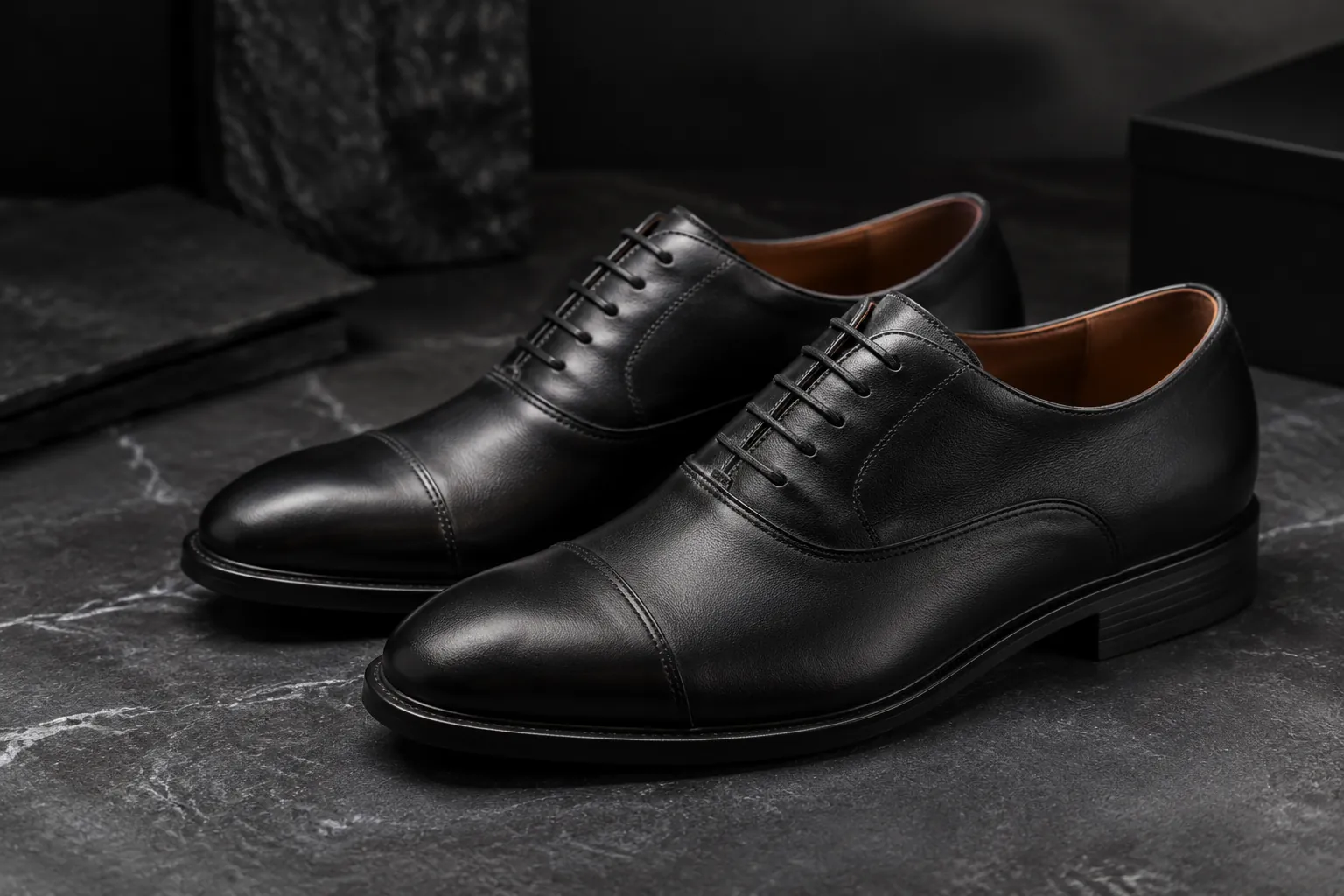
An early footwear brief may contain a phrase such as "premium leather" or "Italian-style." For a buyer, that phrase is a starting point for design direction, not a completed material definition. It does not replace separate entries for the upper, lining, outsole, visible trim, packaging, or artwork.
A leather shoe material approval checklist can make that distinction visible before a project inquiry. In this article, approval means the buyer's own record of what is currently defined, what reference identifies it, and what remains open. It is not a claim that the manufacturer provides a buyer approval, traceability, testing, or substitution-control service.
The gap between a leather label and a usable record
The factory-quality page names leather article, color, thickness, lining, outsoles, hardware, packaging, artwork, and lot identity in its incoming-material review step. It states that these materials are reviewed before mixed or unclear materials enter production.
For a buyer, those documented category names are useful worksheet headings. Treat a broad collection label as a design note until the component record gives it more specific meaning. This is an editorial recommendation for organizing private label shoe material specifications; it does not turn a mood board, a product name, or a general leather description into a confirmed material selection.
The practical question is not whether every line is final at the first inquiry. It is whether each line is either defined or clearly marked as unresolved. A blank entry is more useful than an invented one because it shows where the product discussion still needs to begin.
A component map for the current brief
Buyer recommendation: create one row for each incoming-material category named on the factory-quality page. Give every row a current description, the reference already held by the buyer, its status, and the person responsible for the next decision. A status such as defined, open, or under review is enough. It should describe the buyer's current brief, rather than imply a factory decision.
- Leather article
- Record the upper-material description currently intended for the style and identify the shoe areas it covers. Where the brief includes a finish or appearance reference, keep that reference with the relevant material entry rather than relying on the collection name.
- Color
- Give color its own field. A buyer may have a color reference for one component while another component remains undecided, so do not let a single color direction stand for the entire shoe.
- Thickness
- Record a thickness reference only when the buyer has one. When it remains undecided, mark it open instead of presenting an assumed value as part of the specification.
- Lining
- Keep lining separate from the upper. The buyer's record can state the current lining description, color reference, and the locations to which the entry is intended to apply.
- Outsoles
- State the current outsole description and any visual reference available for the project. Questions still under discussion should remain questions, not implied material options.
- Hardware
- List visible hardware or trim individually, with its location and finish reference where known. A general shoe color note does not need to decide the appearance of every visible item.
- Packaging
- Record the current packaging requirement separately from the footwear components. Leave presentation details open when the brief has not fixed them.
- Artwork
- Name the artwork file or revision held by the buyer and the intended application area. Packaging and artwork are separate categories in the documented incoming review list, so they should remain distinct in the buyer record as well.
- Lot identity
- Note the material identifier or reference the buyer wants to discuss, or mark the field open. The source identifies lot identity as an incoming-review category; it does not specify a buyer-facing identification format.
This leather shoe component checklist is deliberately plain. Its value is that each component can carry its own reference and status. An upper material can be defined while packaging artwork is still under review, without making the entire product look more settled than it is.
Oxford and loafer records need different prompts
A component map should be read against the selected style. The dress-shoes page identifies facing gap, toe proportion, cap placement, polish, and pair symmetry as control points for its cap-toe Oxford. The loafers page separately identifies saddle proportion, apron symmetry, vamp length, opening retention, heel hold, and flex for its penny loafer.
Those lists do not make the styles interchangeable. Buyer recommendation: use the relevant list to decide where a general material entry needs a more precise question in the brief.
| Style | Control points named on the source page | Buyer prompts for the material record |
|---|---|---|
| Cap-toe Oxford | Facing gap, toe proportion, cap placement, polish, and pair symmetry. | Does the upper-material entry identify the areas it covers, including the toe-cap area? Is the polish appearance recorded as its own reference? Are any cap-area material distinctions still open? |
| Penny loafer | Saddle proportion, apron symmetry, vamp length, opening retention, heel hold, and flex. | Does the upper-material entry also apply to the saddle and apron? Which visible material boundaries need their own reference? Which questions remain unresolved in the current brief? |
The prompts are editorial questions for the buyer. They do not predict fit, durability, or commercial performance. Their purpose is narrower: prevent one generic material line from being presumed across areas that the current definition has not actually covered.
What is set, and what still needs a project question
Buyer recommendation: split the record into a current-definition column and an inquiry-question column before sending it out. That separation prevents preferences and unresolved topics from being presented as completed specification.
| Current buyer record | Question to carry into the inquiry |
|---|---|
| An upper-material description and color reference already held by the buyer. | Which remaining material details need discussion for this selected style? |
| A lining, outsole, hardware, packaging, or artwork field marked open. | What project information should accompany this open component? |
| An artwork revision or material reference available for the current brief. | Which references should be included so the current definition can be discussed clearly? |
| A lot-identity expectation recorded by the buyer, or left open. | What information is needed before material identity can be discussed for this project? |
Write the defined column as a record of the present state: color reference supplied, lining not selected, artwork revision under review. In the question column, ask only about this project. The distinction keeps a buyer's internal choices separate from topics that may need further discussion.
Material details inside the commercial frame
The contact page states that style, market, quantity, size range, materials, branding, packaging, and delivery need are reviewed together rather than priced as isolated line items.
Buyer recommendation: send the component map with the broader product and commercial frame. Attach the current style description, intended market, quantity, size range, branding direction, packaging definition, and delivery need. Where a component is unresolved, state that directly rather than guessing to complete a form.
That approach gives wholesale shoe material requirements a useful context. A material reference remains one part of the brief, while the style and commercial inputs explain what the buyer is currently trying to define.
Start the inquiry with the current definition
A concise project handoff can include the style, the component map, the references already available, and a short list of unresolved decisions. For an Oxford or a penny loafer, include the questions raised by the relevant source-page control points without applying the other style's list by default.
- State the current style and commercial frame.
- Attach the component-level material record.
- Identify the references currently available to the buyer.
- List the material and presentation decisions that remain open.
Share the current footwear definition through the project inquiry form and ask which development, sampling, or quotation options may apply to the project. That keeps the first exchange focused on the actual brief and its open questions.
Sources and verification
- Leather Shoe Factory in China | Capability & Export QC First-party site source
- Request a Quote | Leather Shoe Manufacturer First-party site source
- Custom Leather Dress Shoes Manufacturer | OEM & Private Label First-party site source
- Custom Loafers Manufacturer | OEM & Private Label Leather Loafers First-party site source
Share the current leather footwear definition and ask which development, sampling or quotation options may apply to the project.
Send your project brief