
Footwear Materials
Leather Boots Appearance Acceptance Brief
A leather name is not an appearance rule. Freeze natural-versus-defect language, a color approval method, and lot-pairing scope before materials move toward production.
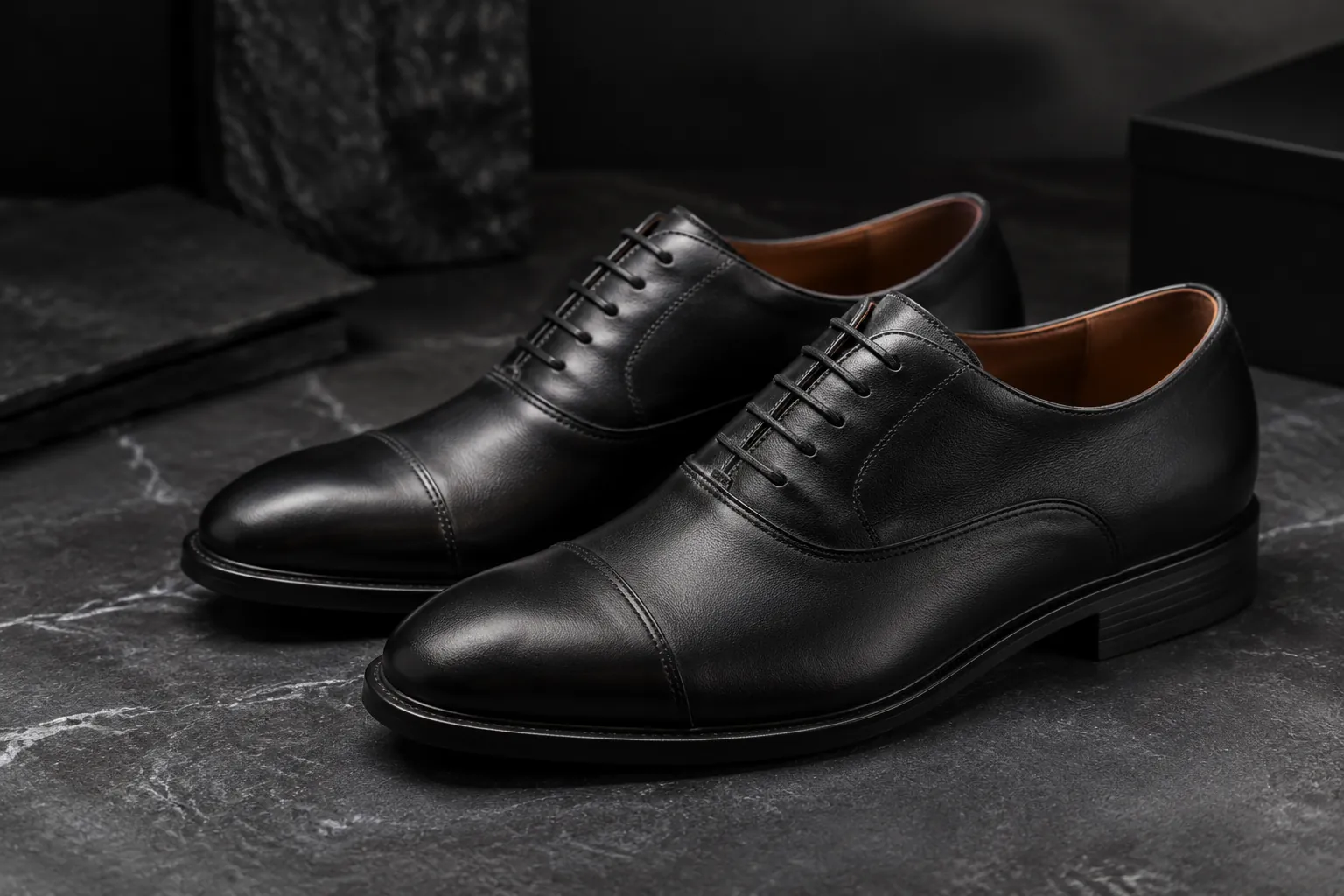
Approving leather by article name alone leaves the boot program without an appearance rule. The name can point to the intended material and still leave open which visible variation is acceptable, which condition is a defect, how color is approved, and whether hides or components must share a lot relationship. Those gaps usually become urgent only after materials are already being considered for production entry, when an informal visual preference is hard to apply the same way twice.
A leather boots appearance acceptance brief is the buyer-owned control layer beside the style name and commercial frame. On the materials page, appearance range is framed as four questions: what variation is natural, what becomes a defect, how colors are approved, and how hides or component lots are paired across the order. Separately, the factory-quality page describes incoming review of named material and order fields before mixed or unclear materials enter production. Those pages name questions and review fields; they do not write the buyer's acceptance policy. The brief should.
Editorial note for buyers: the guidance below is a recommended way to freeze appearance decisions. It is not a factory QC procedure, certification, or outcome guarantee.
What counts as character versus defect?
For leather boots natural variation criteria, answer the natural-versus-defect question in observable buyer language. Skip grades, percentages, and laboratory thresholds the program has not adopted. Labels such as "premium" or "consistent" do not replace a boundary.
| Decision in the brief | What buyer language should establish | What to avoid |
|---|---|---|
| Permitted variation | The visible features accepted as natural material character for the named leather application. | Assuming the article name settles the question. |
| Defect boundary | The visual conditions treated as unacceptable on the defined boot surfaces and components. | Using a general quality label instead of an acceptance boundary. |
| Scope | Which style, color, leather application, and named component the decision covers. | Letting one broad statement apply to every material by implication. |
| Interpretation owner | Who on the buyer side decides when a visual condition falls between the two categories. | Leaving the owner unstated until material is already in question. |
The goal is not to erase natural hide variation. It is to declare the intended boundary before that variation must be judged. Keep the wording tied to this program, and revise it when the design changes the leather application or adds a visually relevant component.
Color approval is a method, not a label
A color name states intent. It does not state the approval route. Record leather color approval for boots as a buyer method with a clear material scope, so an unnamed file, image, or prior conversation is not treated as a complete acceptance path.
Identify the material the decision covers. Separate upper leather from any named lining, outsole, or hardware that needs its own color decision.
Name the buyer-selected approval reference and the person or team authorized to approve against it. State whether that reference is final for the specified material or only an input to a further buyer decision.
State whether approval applies across the order or only to a defined material or component scope. Do not assume upper-leather acceptance covers another component.
Record how an unresolved visual difference returns to the buyer. Silence is not an approval method.
As a definition aid only, one brief line can name the material, the approval reference, the authorized approver, and the component scope. That line is a drafting template, not evidence of a factory process or material result.
Lot pairing as an order-level rule
The same materials questions ask how hides or component lots are paired across an order. A leather boots lot pairing specification makes that choice explicit. Pairing is not automatic for every material, and the published language does not promise continuity or availability beyond the scope the buyer defines. Decide which materials need a shared visual relationship and where that relationship stops.
Define the pairing unit: a boot pair, a named style and color, or another buyer-defined part of the order.
List the material scope: upper leather and each specific component that must follow a lot-pairing rule, not an open phrase such as "matching trim."
Set the boundary of application: only the current production definition, or another scope the buyer expressly names.
Keep the decision path visible: when lot identity raises an appearance question, record which condition requires buyer instruction.
Color approval and lot pairing answer different questions. Color sets the intended appearance reference. Lot pairing sets how hide or component identity is considered relative to the order.
Incoming fields as a completeness check
Incoming review on the factory-quality page names leather article, color, thickness, lining, outsoles, hardware, packaging, artwork, and lot identity, reviewed before mixed or unclear materials enter production. Use those field names to test whether the appearance brief left a subject undefined. That review description does not mean the factory adopts the buyer's criteria, certifies finished boots, or guarantees a retail outcome.
| Buyer brief subject | Incoming field named on the factory-quality page | Buyer cross-check |
|---|---|---|
| Leather identity and visual boundary | Leather article | Confirm the named article is tied to the natural-variation and defect boundary. |
| Color decision | Color | Confirm the approval route and material scope are stated. |
| Material specification | Thickness | Confirm whether thickness needs a separate buyer definition for this program. |
| Component scope | Lining, outsoles, and hardware | Confirm which named components need their own appearance or pairing rule. |
| Order association | Lot identity | Confirm lot-pairing scope is explicit rather than assumed. |
| Presentation elements | Packaging and artwork | Confirm whether either item belongs in the current appearance definition or sits outside it. |
Which terms stay buyer-fixed?
The OEM briefing guidance asks buyers to freeze the commercial frame: customer, market, style family, target price position, expected quantity, size range, delivery need, and the decisions the factory may propose. It does not say which decisions will be proposed on a given project. Separate retained appearance authority from any topic the buyer explicitly opens for a proposal.
| Status | How to record it |
|---|---|
| Buyer-fixed | Natural-versus-defect boundary, color approval route, lot-pairing scope, and any other acceptance term the buyer will not delegate. |
| Open for proposal | Only a decision the buyer names as open, with enough context to judge a proposal against the commercial frame. |
| Unassigned | A decision that remains with the buyer until it is explicitly assigned or frozen. |
"May propose" is not blanket authority. A supplier proposal can be useful, but it should not silently replace a buyer-owned appearance rule.
Product and commercial frame as one package
The contact page states that style, market, quantity, size range, materials, branding, packaging, and delivery need are reviewed together as a product and commercial frame rather than priced as isolated line items. Send the appearance acceptance brief with that frame so the visual definition stays attached to the style and market decision it serves.
Include the current style reference, market, expected quantity, size range, materials, branding, packaging, and delivery need.
Attach the buyer-owned appearance boundary for natural variation, defect treatment, color approval, and lot pairing.
Mark any unresolved point as a pending buyer decision, not as already accepted.
In the inquiry, ask which development, sampling, or quotation options may apply to the project.
That handoff keeps the commercial frame intact and surfaces appearance decisions early enough to treat them as definitions, not as reconstructions after mixed materials or incomplete recollection.
Sources and verification
- Leather Shoe Materials | Full Grain, Suede, Lining & Outsoles First-party site source
- Leather Shoe Factory in China | Capability & Export QC First-party site source
- OEM Shoes & ODM Leather Footwear | Custom Shoe Manufacturer First-party site source
- Request a Quote | Leather Shoe Manufacturer First-party site source
Share the current leather footwear definition and ask which development, sampling or quotation options may apply to the project.
Send your project brief