
Direct answer
Choose Goodyear welt for a structured, traditional build with a visible welt; Blake for a close-cut stitched profile and early flexibility; or cemented construction for broad design freedom, lighter profiles, and efficient production. Judge the factory by how well it controls the chosen method.
Buyer terminology and search intent
Buyers often reach the same sourcing problem through different phrases. Use each term to build a controlled product brief rather than a broad supplier promise.
- goodyear welted loafersThis guide uses the phrase as a practical buying topic and connects it to the specification, risk, and approval decisions behind goodyear welt vs blake vs cemented shoe construction.
- goodyear welt loafersThis product phrase should be qualified by target customer, material, construction, fit, size range, outsole, and intended occasion.
- hand made leather shoesThis product phrase should be qualified by target customer, material, construction, fit, size range, outsole, and intended occasion.
- leather sole shoesThis product phrase should be qualified by target customer, material, construction, fit, size range, outsole, and intended occasion.
Specification points to confirm
Use these five controls to make quotations and samples comparable. Name the reference, method, tolerance, owner, and approval status for every point that can change cost or quality.
| Control point | What the buyer should define | Why it matters |
|---|---|---|
| Structural pathway | Map how the upper, insole, welt or midsole, filler, and outsole are connected in section view. | Construction names can hide variations that change thickness, stiffness, and repair options. |
| Last and pattern needs | Confirm lasting allowance, feather line, toe spring, waist, heel seat, and upper pattern adjustments for the selected build. | A style cannot simply switch construction without affecting shape and engineering. |
| Outsole profile | Define edge distance, stitching channel, welt width, waist treatment, thickness, heel build, and finish. | The visible bottom work is central to both appearance and workmanship inspection. |
| Flex and break-in | Review flex location, initial stiffness, insole structure, filler, outsole, and target consumer expectation. | Break-in behavior comes from the complete system, not one construction label. |
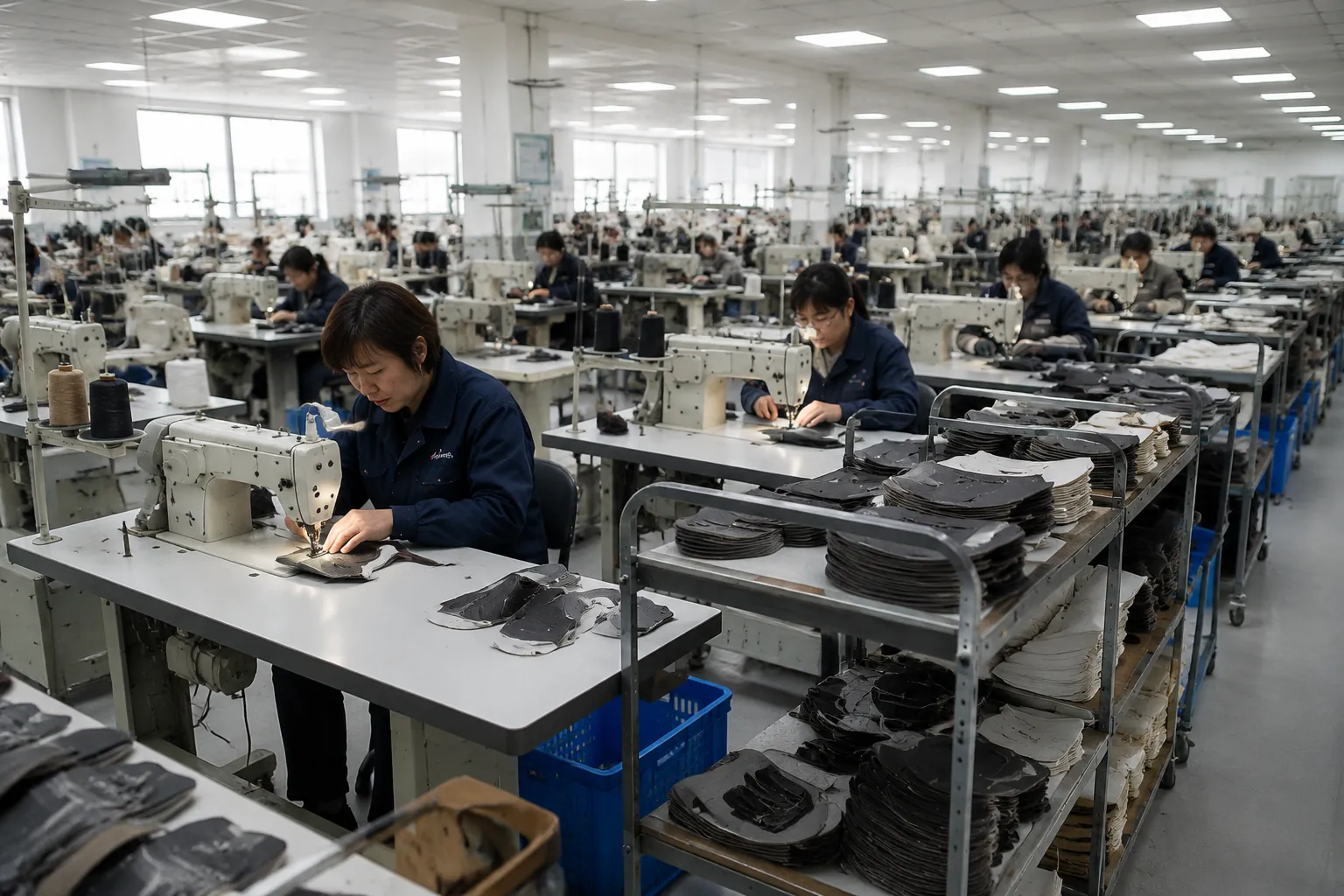
| Production control | Set checks for inseaming or stitching, adhesive process, channel closure, welt joints, edge finishing, bond, and pair symmetry. | Each method has different critical defects and process evidence. |
A four-stage buyer workflow
Turn the research into a decision that the factory can quote, sample, manufacture, inspect, and repeat.
Normalize the baseline
Compare options against the same consumer, specification, quantity, quality level, trade term, and approval scope. Apply this control: Map how the upper, insole, welt or midsole, filler, and outsole are connected in section view. Construction names can hide variations that change thickness, stiffness, and repair options.
Separate real tradeoffs
List the effects on fit, appearance, performance, tooling, minimums, unit cost, landed cost, and reorder risk. Apply this control: Confirm lasting allowance, feather line, toe spring, waist, heel seat, and upper pattern adjustments for the selected build. A style cannot simply switch construction without affecting shape and engineering.
Validate with evidence
Use samples, sections, measurements, test results, factory records, and qualified professional advice where required. Apply this control: Define edge distance, stitching channel, welt width, waist treatment, thickness, heel build, and finish. The visible bottom work is central to both appearance and workmanship inspection.
Record the decision
Document why the selected option fits the range and which assumptions must be reconfirmed before bulk or reorder. Apply this control: Review flex location, initial stiffness, insole structure, filler, outsole, and target consumer expectation. Break-in behavior comes from the complete system, not one construction label.
Sourcing risks and practical controls
Raise the assumptions most likely to change fit, appearance, cost, quality, or delivery before final sample approval.
A construction is chosen for marketing before sampling
Control: Prototype the intended last, materials, thicknesses, and outsole to confirm weight, flex, profile, and cost.
The quoted construction differs from the sample section
Control: Approve a cut section or detailed construction sheet that names every layer and attachment.
Repairability is promised without market support
Control: Describe construction accurately and consider whether suitable repair services and replacement components exist in the target market.
RFQ checklist
Attach images, drawings, a reference pair, or a tech pack, then state the order, market, and approval assumptions the factory must confirm.
- Structural pathway: Map how the upper, insole, welt or midsole, filler, and outsole are connected in section view.
- Last and pattern needs: Confirm lasting allowance, feather line, toe spring, waist, heel seat, and upper pattern adjustments for the selected build.
- Outsole profile: Define edge distance, stitching channel, welt width, waist treatment, thickness, heel build, and finish.
- Flex and break-in: Review flex location, initial stiffness, insole structure, filler, outsole, and target consumer expectation.
- Production control: Set checks for inseaming or stitching, adhesive process, channel closure, welt joints, edge finishing, bond, and pair symmetry.
- Order architecture: Estimated pairs by style, color, material, and size, plus launch and reorder expectations.
- Market requirements: Destination, channel, labels, testing, packaging, trade term, and customer-specific standards.
- Approval path: Sample purpose, reviewers, comment format, physical references, inspection plan, and release authority.
Frequently asked questions
These answers frame the most common buying decisions for this topic.
Is Goodyear welt construction always more durable?
It can support robust structure and resoling, but durability still depends on materials, stitch execution, welt, insole, outsole, use, care, and quality control.
Is Blake construction waterproof?
No stitched construction should be called waterproof without a tested system. Stitch paths, seams, materials, lining, and finishing all influence water resistance.
Can cemented shoes be premium?
Yes. Premium cemented footwear can use refined lasts, high-grade materials, carefully engineered bonding, clean finishing, and strict quality control. Construction method is one part of product value.