
Sourcing Guides
Genuine Leather Shoes Wholesale Material Confirmation at Intake
Upper leather language alone still leaves lining, outsoles, hardware, packaging, and lot identity open after the PO path starts. Close every incoming field on one commercial brief before materials are staged.
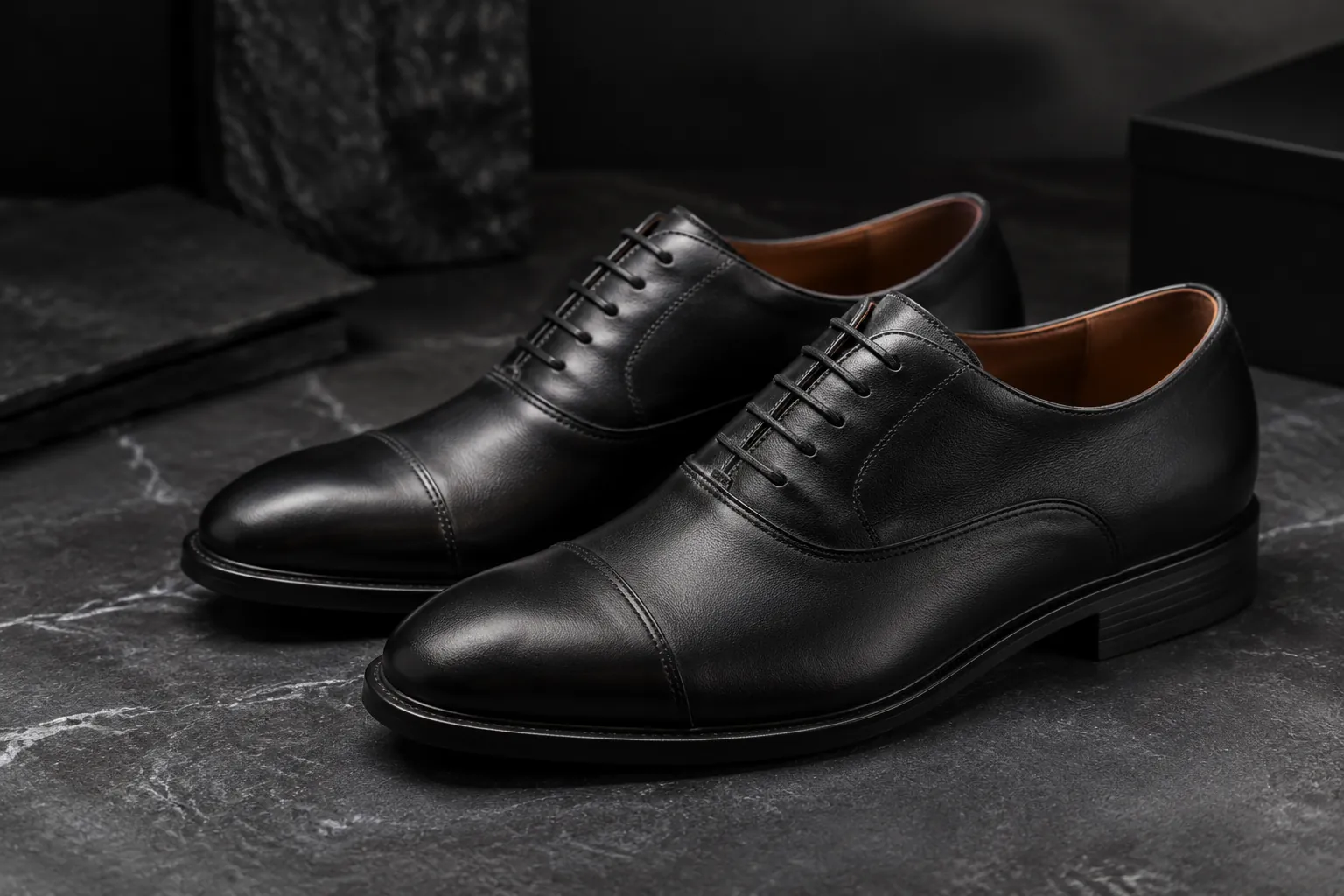
The purchase order already names genuine leather for the upper. Delivery windows sit on the calendar. Intake then receives two lining articles, mismatched outsole molds, and hardware finishes that never appeared on the brief. Pair consistency is compromised before lasting starts. Genuine leather shoes wholesale material confirmation is the buyer work of closing every field the factory reviews at the incoming gate, before that gate is the first place anyone notices the gaps.
Upper leather language can look finished on a catalog line while lining, outsoles, hardware, and carton identity remain open. Those open fields turn into production choices under scheduling pressure, when substitutions are costly to reverse. Build the brief so intake only verifies decisions you already made.
What still mixes after the upper leather is approved?
Wholesale briefs often stop at “genuine leather” plus a color note. That may satisfy a sales sheet. It does not control lining hand feel, outsole flex and edge, hardware finish, carton identity, or artwork placement.
When those stay vague, mixed or unclear inputs can still reach the line even though the upper label felt complete. On the factory quality process, controlled materials are reviewed before mixed or unclear materials enter production. The gate checks what the brief claimed to control. It does not invent missing buyer decisions. If only the upper leather was named, the remaining fields surface after materials are already moving, when leverage is weakest.
For importers and brand operators the damage is commercial as well as technical. Inconsistent linings, hardware, or packaging across one wholesale lot are hard to challenge if they never entered the definition production was expected to follow. Closing the upper article is necessary. It is not enough for pair consistency across the order.
One commercial frame, not isolated line items
Component locks fail when they are priced or approved as disconnected fragments. A lining that looks fine alone can conflict with outsole flex, hardware finish, packaging print, or the market and size range you intend to serve.
The contact process describes reading the product and commercial frame together. Style, market, quantity, size range, materials, branding, packaging, and delivery need are reviewed as one set rather than priced as isolated line items.
- Place style and market first. Dress shoe, loafer, or another silhouette, and the market the program will sell into, shape which material and packaging choices matter commercially.
- State quantity and size range with materials. Volume and sizes affect how tightly article, color, and lot identity must hold if pairs are to remain comparable across the full run.
- Bind materials to branding and packaging. Hardware, artwork, and packaging belong in the same frame as leather article and lining so brand identity is not approved separately from the shoe body.
- Include delivery need without inventing a calendar. State the delivery expectation you need assessed, then let the manufacturer respond inside that full frame rather than against a partial materials list.
Inside that frame, a change to outsoles or hardware is no longer a free-standing edit. It revises the same commercial object that carries style, market, quantity, and packaging. Confirm lining outsole hardware wholesale shoes only works as procurement when those choices ride with the frame from the start.
Incoming confirmation fields for the wholesale brief
The incoming review covers leather article, color, thickness, lining, outsoles, hardware, packaging, artwork, and lot identity. Treat each field as a buyer decision that travels with the wholesale brief, not a factory-floor note invented at intake.
- Leather article: the specific type or article reference for the upper program, so the same article is expected across the order rather than a generic “genuine leather” label alone.
- Color: the agreed color standard for that article, including any range language you will accept so shade drift is not left to informal judgment.
- Thickness: the thickness expectation for the leather used, written so cutting and lasting do not silently switch between incompatible stocks.
- Lining: lining material and finish. Lining changes alter hand feel, moisture behavior, and visual contrast at the collar and tongue even when the upper looks correct.
- Outsoles: outsole construction and material, which affect flex, wear face, weight, and the visual edge of the shoe.
- Hardware: metal color, finish, and component type for eyelets, hooks, or decorative pieces so hardware does not introduce a second uncontrolled finish set.
- Packaging: box, tissue, bag, or insert materials that will ship with the shoes, locked early enough that carton and unboxing do not become a second product definition.
- Artwork: logos, hangtags, labels, and print placements tied to the packaging and product identity you intend to sell under.
- Lot identity: how material lots will be identified and kept comparable across pairs and any later replenishment discussion.
Leaving a field blank does not preserve useful optionality. It moves the decision into production intake. A wholesale genuine leather component checklist earns its place only when every field above sits in the same document the commercial team will submit for review.
Why lot identity is a commercial decision
Lot identity is easy to dismiss as warehouse language. For wholesale buyers it is how materials stay controlled and comparable across pairs. Without it on the material record, two pairs that both “match the leather label” can still come from different material histories. Small differences in color depth, grain character, or finish response show when shoes sit side by side on a retail shelf or in a replenishment shipment.
Lot identity is already among the controlled-material fields reviewed before production. That does not mean the factory invents a commercial lot policy for you. If the brief never states how lots should be identified, tracked, or kept consistent for the program, a commercial comparison rule stays unwritten while pair consistency is still expected later.
Editorial recommendation for buyers who care about reorders: attach lot identity to the same material record that carries article, color, thickness, lining, outsoles, hardware, packaging, and artwork. State what “same lot” or “documented lot change” means for your acceptance, and keep that statement with the wholesale definition rather than adding it after materials are staged. Leather shoe lot identity wholesale then becomes a written commercial rule, not a post-shipment argument.
Can Oxford and loafer controls hold without locked components?
Style geometry is not independent of materials. While lining, outsole, hardware, and packaging still float, the control points that make an Oxford or loafer look intentional become harder to enforce because the structure and finish stack underneath those points is unstable. The following is editorial buyer reasoning about dependency, not a factory process claim.
On the dress shoes program language, a cap-toe Oxford treats facing gap, toe proportion, cap placement, polish, and pair symmetry as control points. Those points assume a consistent upper article, color, thickness, lining response, outsole edge behavior, and hardware set. If thickness or lining changes mid-run, facing gap and cap placement can still be measured, yet polish response and pair symmetry may no longer read as the same product. If hardware finish drifts, the formal program no longer presents as one controlled set even when the leather label is unchanged.
On the loafers side, a penny loafer program calls out saddle proportion, apron symmetry, vamp length, opening retention, heel hold, and flex as the repeatable core. Opening retention, heel hold, and flex depend heavily on lining, outsole construction, and how the shoe flexes under load. Saddle proportion and apron symmetry still need a stable leather article and thickness so left and right pairs do not diverge. Packaging and artwork do not reshape the last, but they complete the commercial identity those geometry controls are meant to protect.
Style control lists are not a second checklist to start before materials are locked. They are the reason materials must be locked first. An Oxford facing gap or loafer saddle proportion remains a reliable control only when the component set behind it is already closed on the wholesale brief.
Closed component record versus open assessment questions
A useful wholesale definition separates what the buyer has already locked from questions the manufacturer still needs to assess. Closed fields are your component record. Open questions invite review of the submitted frame. They are not pre-claimed service packages.
| Buyer-owned closed record | Still open for manufacturer assessment |
|---|---|
| Leather article, color, and thickness for the program | Confirmation that controlled materials (leather article, color, thickness, lining, outsoles, hardware, packaging, artwork, and lot identity) are written clearly enough for intake review before production |
| Lining, outsoles, and hardware choices written as controlled materials | Review of those materials inside the same product and commercial frame rather than as isolated line items |
| Packaging and artwork identity tied to the product | Whether branding and packaging as written fit the commercial frame you submitted |
| Lot identity rule for material comparison across pairs | Whether lot identity is stated with the other controlled-material fields on the brief |
| Style, market, quantity, size range, branding, packaging, and delivery need in one frame | Which development, sampling, or quotation options may apply after that full frame is read together |
The right-hand column is the natural result of sending a complete left-hand record, not missing paperwork the factory should invent. If the left-hand record is incomplete, assessment cannot distinguish intentional options from accidental gaps, and mixed materials remain possible at intake.
Share one component-locked footwear definition
Send a single definition that already includes the locked component set and the commercial frame around it. Name leather article, color, thickness, lining, outsoles, hardware, packaging, artwork, and lot identity together with style, market, quantity, size range, branding, packaging, and delivery need. That package allows review of the product and commercial frame as one object rather than as isolated line items.
Then ask which development, sampling, or quotation options may apply to the project. Those topics are assessment questions for the definition you submit, not promises invented ahead of the frame. If you are ready to put a component-locked wholesale brief in front of a manufacturer, share the current footwear definition and the open assessment questions that still matter for your program.
Sources and verification
- Leather Shoe Factory in China | Capability & Export QC First-party site source
- Request a Quote | Leather Shoe Manufacturer First-party site source
- Custom Leather Dress Shoes Manufacturer | OEM & Private Label First-party site source
- Custom Loafers Manufacturer | OEM & Private Label Leather Loafers First-party site source
Share the current leather footwear definition and ask which development, sampling or quotation options may apply to the project.
Send your project brief