
OEM Sourcing
Freeze the OEM leather footwear commercial frame
Treat the commercial frame as a buyer-side readiness gate that sorts a leather footwear OEM project into definition, development or sampling, or quotation review—not as optional background for a bare price ask.
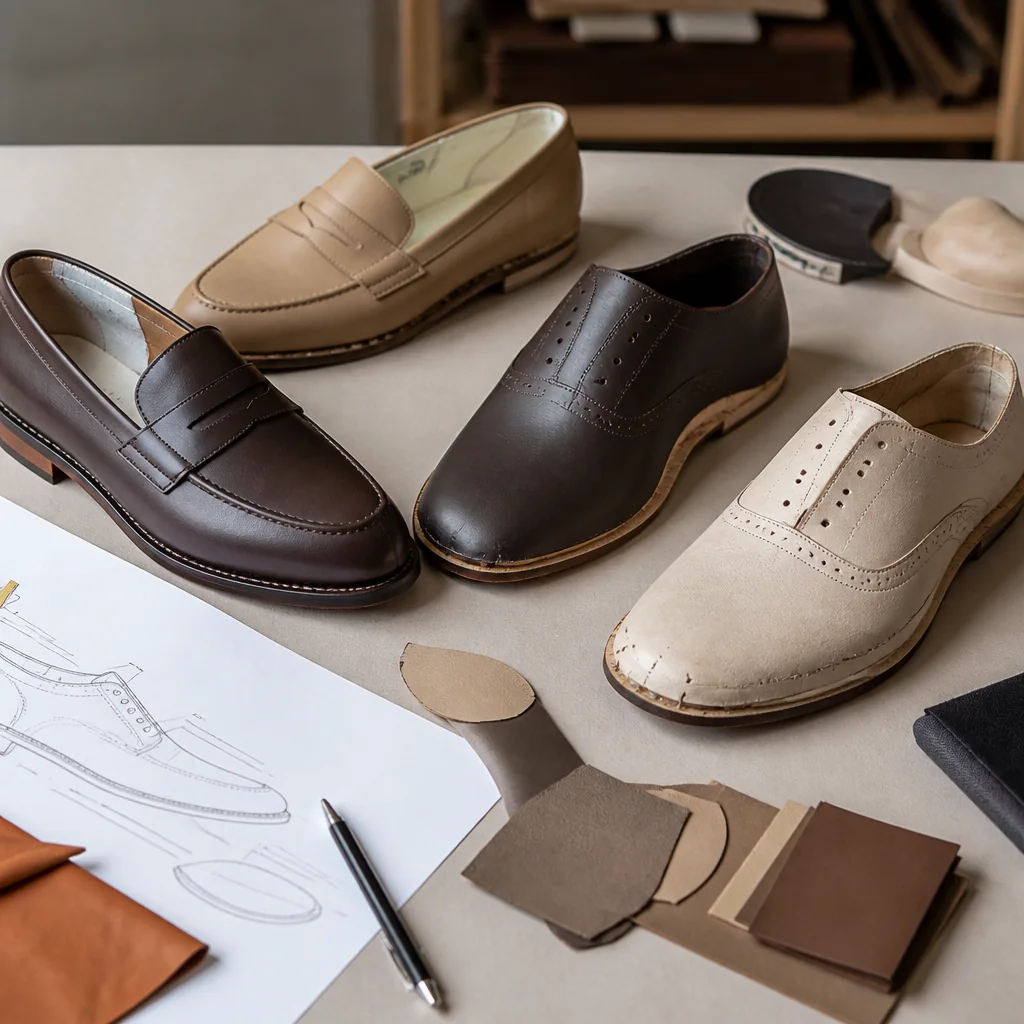
A sample pull or a unit-price ask often arrives before the project has a commercial shape. That sequence is common among importers, private-label teams, and footwear product managers—and it is also why the first manufacturer reply rarely matches the step the buyer needed.
An OEM leather footwear commercial frame is the set of fields that must be stated together so a factory can tell whether definition, development, sampling, or quotation review is the right next step. When market, style family, price position, size range, and delivery need stay undecided, those paths collapse into one another. Freezing the frame is a buyer-side readiness gate. It is not optional background for a price request, and it is not a claim that every inquiry already includes a full development program.
Why the first manufacturer step is often the wrong one
A rough style photo plus a quantity guess, without a declared customer, market, or delivery need, leaves the conversation without a steering point. Finance may want a number. Merchandising may want a sample. Product may still be open on last shape, construction, branding, and packaging.
Those asks are reasonable on their own. They become the wrong first step when they stand in for a private label leather footwear brief that has not been frozen as one commercial unit. Without that unit, a manufacturer cannot tell whether the project still needs definition work, whether construction decisions should be developed and sampled, or whether product-plus-commercial inputs are complete enough for quotation review. Development, sampling, and quotation get conflated because the readiness gate was skipped.
Freeze the commercial frame as one unit
On the OEM and ODM brief, the commercial frame is frozen by stating a fixed set of fields together rather than adding them after a price or sample request. The published fields are customer, market, style family, target price position, expected quantity, size range, delivery need, and the decisions the factory may propose.
- Customer — who the program is for, including private-label or wholesale channels when that changes how the product will be read.
- Market — selling region or channel context that shapes fit expectations, styling norms, and later compliance conversation.
- Style family — the repeatable core (for example a men's core penny loafer), not a one-off sketch with no control language.
- Target price position — the commercial band the product must live in, stated early so construction and materials are not designed against an impossible number.
- Expected quantity — the volume assumption used for planning, not a final purchase order.
- Size range — the run the product must cover, which affects last work, grading, and sampling scope.
- Delivery need — timing pressure that shapes whether the next step should be definition, development, or quotation review.
- Decisions the factory may propose — explicit room for factory input where the buyer has not locked every technical choice.
Editorial recommendation for buyers: declare these fields as one package. Adding market after a quote, or size range after a sample, reopens cost and construction assumptions that the first answer already treated as settled.
Buyer locks versus decisions the factory may propose
The same OEM brief draws a responsibility boundary that is easy to miss. The buyer states the commercial frame. Inside that frame, the freeze explicitly includes room for decisions the factory may propose. That is not the same as handing the factory ownership of brand intent, market, or price position.
| Input | Primary ownership | Why the boundary matters |
|---|---|---|
| Customer, market, style family | Buyer states | These set who the shoe is for and which family must stay repeatable across samples and reorders. |
| Target price position, expected quantity, size range, delivery need | Buyer states | These set commercial pressure and planning assumptions before anyone costs or samples. |
| Open technical or construction choices | Buyer may leave open for factory proposals | The freeze invites factory proposals where the buyer has not locked every decision; it does not invent a bundled service for every inquiry. |
Keep buyer locks and factory-proposed decisions separate in the brief. If the brand has already locked last geometry, sole type, or branding placement, say so. If those remain open, say that the factory may propose within the stated style family and price position. Ambiguity here is what turns a sampling request into an unscoped development conversation.
Style-family freeze for a repeatable core loafer
Style family becomes operational only when control points travel with the name of the style. On the published loafers page, a men's core penny loafer is described with a fixed control set: saddle proportion, apron symmetry, vamp length, opening retention, heel hold, and flex for a repeatable core style. Use that list only as a style-family freeze illustration, not as a completed customer program or a claim about any specific order.
| Published control point | What freezing it protects |
|---|---|
| Saddle proportion | Keeps the signature penny-loafer balance stable across samples and size runs. |
| Apron symmetry | Prevents left-right or pattern drift that changes the read of the style family. |
| Vamp length | Locks how much foot coverage the core style presents on the foot. |
| Opening retention | Protects entry shape and wear behavior at the throat. |
| Heel hold | Stabilizes fit at the rear so comfort claims do not float free of the last. |
| Flex | Defines how the shoe is expected to break and walk for a repeatable core. |
When a buyer freezes "men's core penny loafer" with those control points named, the style family is no longer a mood board. It is a commercial object that development, sampling, and later production can refer back to. Other families need their own control language; do not borrow the loafer set as a universal checklist.
Product definition and commercial inputs reviewed together
On the quotation request path, product and commercial inputs are reviewed as one frame. The published review language covers style, market, quantity, size range, materials, branding, packaging, and delivery need together rather than pricing them as isolated line items.
That matters for how an OEM leather shoe project definition should be written. A materials list without market and size range is incomplete. Branding and packaging without delivery need invite answers that cannot survive the calendar. Quantity without style family and price position invites a number that does not map to the shoe the brand will actually approve.
Editorial recommendation for buyers: assemble the product definition and the commercial inputs in the same document or message. Do not send a materials deck on one day and a delivery need later and expect a stable reading of the frame. The review model above is a together-reading, not a sequence of disconnected line items.
Map freeze completeness to development, sampling, or quotation
Leather footwear sampling vs quotation is not a preference of temperament. It is a readiness reading of freeze completeness.
Use the published freeze fields and the together-review of product and commercial inputs as the ceiling for what can be claimed. The path map below is editorial guidance a buyer can apply, not a factory threshold, MOQ, or timeline promise.
- Incomplete freeze stays in definition. If customer, market, style family, price position, expected quantity, size range, or delivery need is still missing, keep the project in definition work. Asking for a quote or a sample here usually produces answers that expire as soon as the missing field arrives.
- Frozen commercial frame with open construction points toward development or sampling. When the commercial unit is stated but last, construction, materials, or fit still need decisions the factory may propose, the next step is development and sampling conversation, not a finished unit cost treated as final.
- Frozen product-plus-commercial frame supports quotation review. When style, market, quantity, size range, materials, branding, packaging, and delivery need can be read together, quotation review is a coherent request because the inputs are no longer isolated line items.
This sorting protects both sides. The buyer avoids numbers built on floating assumptions. The manufacturer avoids sampling a style family that was never controlled, or quoting a delivery need that was never stated.
Send one current definition and ask which path applies
The useful close is not a bare RFQ. Share the current leather footwear definition as one package: the commercial freeze fields, the style-family control language you already know, and the product inputs that should be reviewed with them. Then ask which development, sampling, or quotation options may apply to the project. That question keeps path selection open without treating those options as already-scoped services for a specific order.
- State customer, market, style family, target price position, expected quantity, size range, and delivery need in one place.
- Name which technical decisions are locked and which the factory may propose.
- Attach style-family controls when you have them (for a core penny loafer, the published control set is a usable model for how specific that language should be).
- Include materials, branding, and packaging intent so product and commercial inputs can be read together.
- Ask explicitly which path fits the freeze as written: further definition, development or sampling, or quotation review.
If you are ready to put that package in front of a manufacturer, share the current definition and ask which development, sampling, or quotation options may apply. For program structure context, see the OEM and ODM footwear brief. For how a loafer family can be controlled in language the factory can reuse, review the custom loafers manufacturer notes. Later production stages, including material and process controls described on the factory quality page, sit after this readiness gate rather than replacing it.
Sources and verification
- OEM Shoes & ODM Leather Footwear | Custom Shoe Manufacturer First-party site source
- Request a Quote | Leather Shoe Manufacturer First-party site source
- Custom Loafers Manufacturer | OEM & Private Label Leather Loafers First-party site source
Share the current leather footwear definition and ask which development, sampling or quotation options may apply to the project.
Send your project brief