
Sourcing
Factory Shoe Sourcing Brief for Kitchener Buyers
A Kitchener-area factory shoe search is more useful when it becomes a structured leather footwear brief with the commercial frame, product fields, and visible approval points ready for manufacturer review.
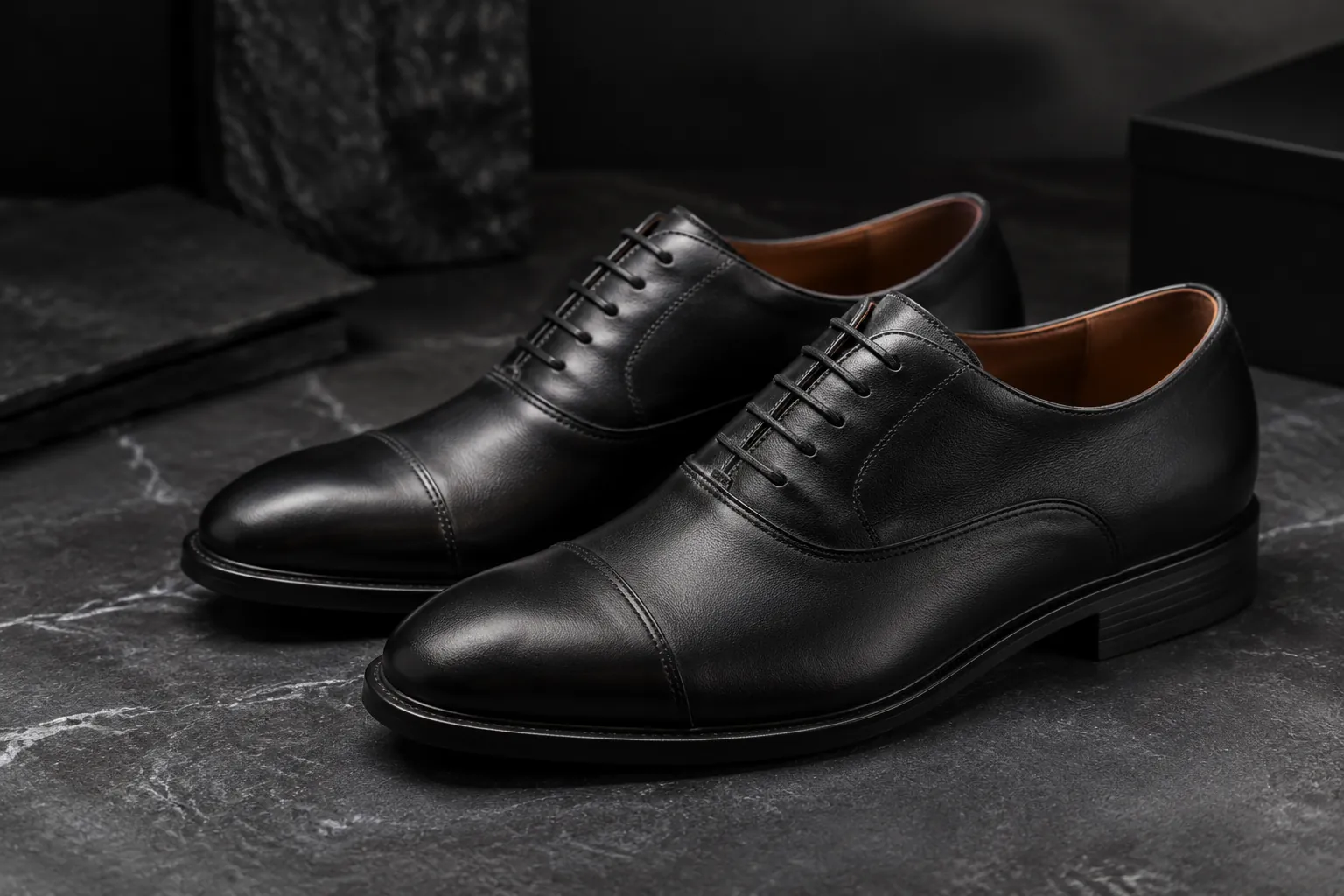
Factory shoe sourcing brief for Kitchener buyers means turning a local-sounding search into a manufacturer-ready project definition. The useful work is not finding proof of a Kitchener factory. It is deciding what a leather footwear manufacturer would need to review before discussing development, sampling, or quotation options.
The evidence available here does not support claims about local Canadian production, local inventory, factory visits, lead times, minimum order quantities, certifications, prices, capacity, or completed customer outcomes. It supports a narrower sourcing task: define the product and commercial frame clearly enough for a first review.
That boundary matters. A buyer may search around factory shoe Kitchener because the category, location, or supplier type is still unclear. The first contact with an OEM or private-label leather shoe manufacturer still has to answer practical questions about the project itself.
Make the First Message About the Project
A style name is a weak starting point when it stands alone. Dress shoes, loafers, leather sneakers, and made-to-spec footwear programs can sit under the same broad category, but they are different conversations once market, size range, materials, branding, packaging, and delivery need enter the review.
Leather Shoe Manufacturer's OEM and ODM page describes the brief stage as freezing the commercial frame. The excerpt says to state the customer, market, style family, target price position, expected quantity, size range, delivery need, and the decisions the factory may propose. Those are documented inputs for the brief stage. They should be treated as buyer-supplied project information, not as a guarantee that any particular production, sampling, or quotation result will follow.
For the buyer, the editorial recommendation is to put that frame before the quote request. The manufacturer can then read the inquiry as a project definition rather than as a loose request for a shoe price.
The Commercial Frame to Freeze First
Use this section as the front page of the sourcing brief. It does not need to settle every detail, but it should separate fixed decisions from open questions.
- Customer: State the buying role or channel, such as brand, importer, wholesaler, retailer, or product team.
- Market: Name the market or selling context the footwear is intended for.
- Style family: Identify whether the project concerns dress shoes, loafers, leather sneakers, or another leather shoe direction. If more than one family is being reviewed, list them separately.
- Target price position: Present the intended price position for review. Do not write it as a confirmed factory price.
- Expected quantity: Share the expected scale if it is known. If it is not known, mark it as still being defined.
- Size range: Include the intended size run early, rather than treating it as a later detail.
- Delivery need: State the required timing or selling window as a need for review, not as an assumed lead time.
- Factory-proposed decisions: Ask which project decisions may need buyer review as the discussion develops.
This is the practical role of a leather shoe factory brief: it keeps the first exchange focused on the buyer's product, market, and open decisions.
Review Fields That Belong Together
The contact-page excerpt gives the quotation discussion a wider frame. It states that Leather Shoe Manufacturer reads the product and commercial frame, and that style, market, quantity, size range, materials, branding, packaging, and delivery need are reviewed together rather than priced as isolated line items.
| Review field | Buyer definition | Supported way to phrase it |
|---|---|---|
| Style | The product family or style direction under discussion. | Use the style name as an anchor, then add the commercial frame around it. |
| Market | The destination market or selling context. | State what is known and mark unresolved market questions separately. |
| Quantity | The expected project scale, if available. | Share the current expectation without presenting it as final if it is still under review. |
| Size range | The intended size run. | Include the size range in the first brief so the project scope is not left incomplete. |
| Materials | The material direction currently being considered. | Describe only what the buyer can support at this stage. |
| Branding | The branding requirement or brand direction for the project. | Present it as a requirement to review, not as a confirmed service outcome. |
| Packaging | The packaging expectation that belongs with the product definition. | Use the documented term packaging and keep unresolved details open. |
| Delivery need | The timing requirement or selling window. | Ask for review rather than assuming a lead time. |
As an editorial recommendation for a private label shoe quotation checklist, place these fields in one clear message. That does not make pricing automatic. It gives the manufacturer the same project context the buyer is using internally.
Where Formal Shoes Need Visible Standards
Cap-toe Oxford examples show why a buyer should not rely on the style label alone. Leather Shoe Manufacturer's dress shoe page describes a black cap-toe dress shoe as D-01, core business, cap-toe Oxford. In that excerpt, facing gap, toe proportion, cap placement, polish, and pair symmetry are treated as control points for the referenced shoe.
A separate men's leather shoes excerpt describes a black cap-toe Oxford as M-01, core formal, cap-toe Oxford. That excerpt says facing gap, toe shape, polish level, and pair symmetry need a documented approval standard for the referenced direction.
Those two lists should stay separate because they come from separate source excerpts. Together, they support a limited point: for a cap-toe Oxford direction, visible details may need to be named in the buyer's brief. They do not prove a universal inspection checklist for every Oxford, and they do not prove a specific sampling or approval workflow.
For an OEM leather footwear sourcing inquiry, the buyer's preparation should match the actual product. If the project is a cap-toe Oxford, the cited language supports asking how the relevant visible points should be documented for review. If the project is a loafer, leather sneaker, or another shoe family, the buyer should not copy Oxford-specific control points unless they truly apply.
Brief Gaps That Make Price Review Premature
A search can sound specific while the project remains too thin. The gaps below are buyer-side editorial recommendations drawn from the supported brief-stage inputs, the contact-page review fields, and the cap-toe Oxford excerpts.
| Brief gap | Why it weakens the inquiry | Cleaner buyer wording |
|---|---|---|
| Asking for price from a style name only | The contact-page excerpt says the product and commercial frame are read together. | "We are defining a leather loafer project for this market and price position. Please advise which quotation options may apply." |
| Leaving the market unstated | Market is named in the OEM and ODM brief-stage excerpt and in the contact-page review fields. | "The intended market is stated below; related requirements are still under internal review." |
| Omitting the size range | Size range is a stated input in the brief stage and a stated field in quotation review. | "The planned size range is included. Please advise what other project information is needed before review." |
| Treating packaging as separate from quotation review | Packaging is part of the contact-page review set. | "Packaging expectations are listed as part of the project definition and remain open for review." |
| Using a formal shoe name without visible approval language | The cited cap-toe Oxford excerpts identify visible control points or documented approval-standard needs for the referenced shoes. | "For the Oxford direction, we are documenting the visible points that need buyer approval." |
One hypothetical example: a Kitchener-area importer might begin with a nearby-factory search, then send a more useful inquiry that defines market, style family, target price position, expected quantity, size range, materials, branding, packaging, delivery need, and open decisions. That is an illustration of brief structure, not evidence of a real local customer or completed order.
Questions to Settle Before the RFQ
Before requesting a quote, the buyer should answer what can be answered and label the rest as open. These are preparation prompts for the buyer. They are not presented as documented company services.
- Which style family is being discussed?
- Which market or selling context is the footwear for?
- What target price position is being considered?
- What expected quantity can be shared now?
- What size range should be reviewed?
- What material direction is intended?
- What branding requirement should be reviewed?
- What packaging expectation belongs in the project definition?
- What delivery need should the manufacturer review?
- For a cap-toe Oxford direction, which cited visible points should be addressed in the buyer's approval standard?
The brief can be short. It should not be vague. A compact message that distinguishes fixed decisions from open decisions is more useful than a long message that leaves out market, size range, delivery need, or packaging expectation.
Turn the Search Into a Reviewable Contact
When the brief is ready, connect it to the relevant footwear family where useful. A dress shoe project can reference dress shoes. A men's formal or casual leather footwear project can reference men's leather shoes. A custom or private-label project can use the OEM and ODM context to frame the commercial brief.
The contact step should stay within the evidence: share the current leather footwear definition through the contact page and ask which development, sampling, or quotation options may apply to the project. For a Kitchener buyer, that turns a broad factory shoe search into a usable manufacturer conversation without claiming a local factory, fixed price, confirmed lead time, or undocumented service outcome.
Sources and verification
- OEM Shoes & ODM Leather Footwear | Custom Shoe Manufacturer First-party site source
- Custom Leather Dress Shoes Manufacturer | OEM & Private Label First-party site source
- Men's Leather Shoes Manufacturer | Custom Oxfords & Loafers First-party site source
- Request a Quote | Leather Shoe Manufacturer First-party site source
Share the current leather footwear definition and ask which development, sampling or quotation options may apply to the project.
Send your project brief