
Direct answer
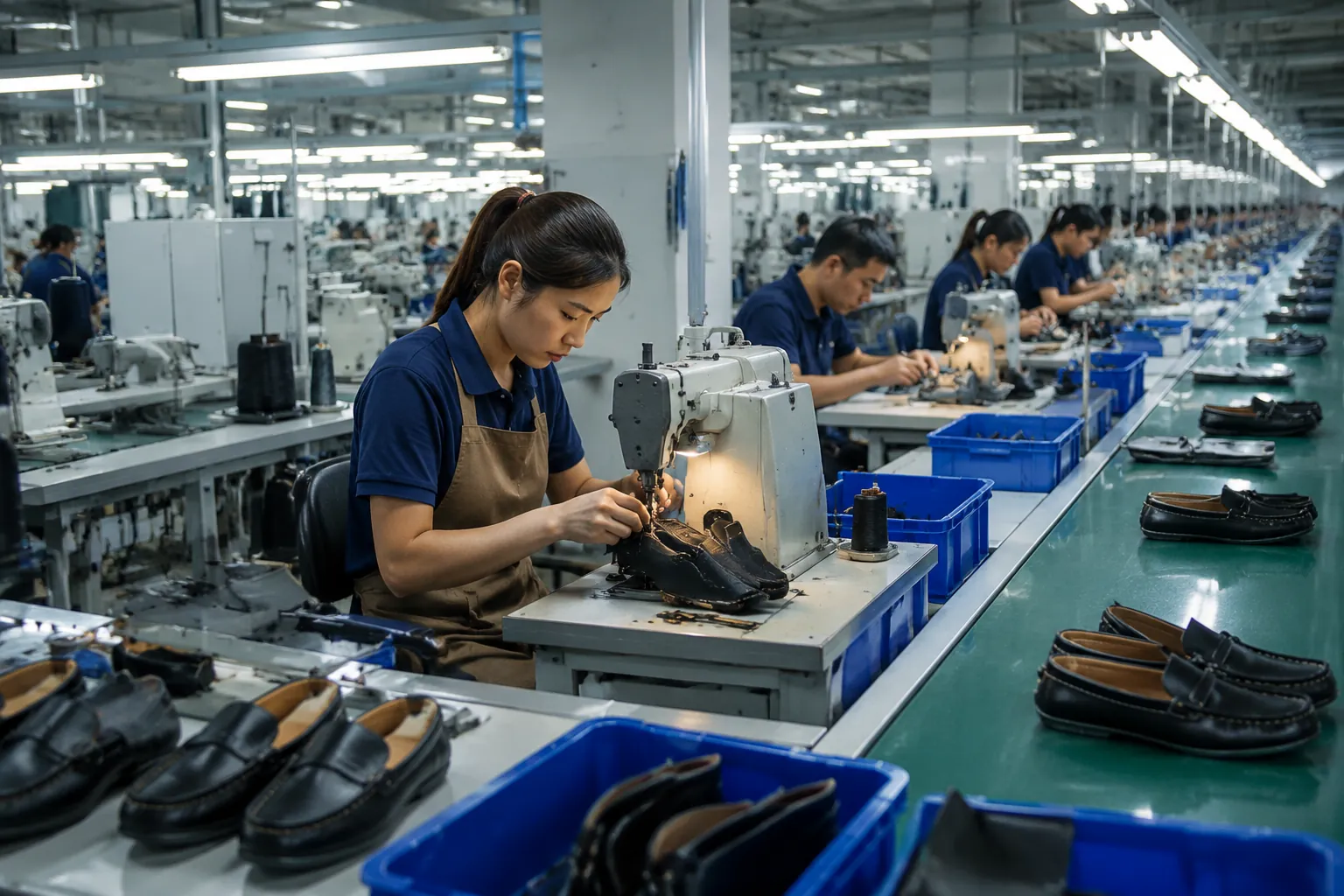
Map the order workflow before choosing. Identify who develops the product, owns the quotation, buys materials, controls subcontracting, approves changes, inspects production, holds payment, manages documents, and resolves claims. Verify the legal and operational parties match the agreement.
Buyer terminology and search intent
Buyers often reach the same sourcing problem through different phrases. Use each term to build a controlled product brief rather than a broad supplier promise.
- shoe factoryThis guide uses the phrase as a practical buying topic and connects it to the specification, risk, and approval decisions behind shoe factory direct vs trading company: how to choose.
- shoe manufacturerThis supplier-search phrase usually signals commercial intent. Buyers should still verify the actual factory, category capability, and order model.
- footwear manufacturersThis supplier-search phrase usually signals commercial intent. Buyers should still verify the actual factory, category capability, and order model.
- shoes manufacturing companyThis product phrase should be qualified by target customer, material, construction, fit, size range, outsole, and intended occasion.
Specification points to confirm
Use these five controls to make quotations and samples comparable. Name the reference, method, tolerance, owner, and approval status for every point that can change cost or quality.
| Control point | What the buyer should define | Why it matters |
|---|---|---|
| Product development | Confirm who interprets the brief, makes patterns, manages lasts and tooling, comments on samples, and controls revisions. | An intermediary adds value only when technical decisions remain accurate and traceable. |
| Production identity | Record the legal seller, actual factory or factories, subcontracted processes, addresses, audit access, and change-notification rule. | Buyers need to know where and by whom the approved product is made. |
| Commercial transparency | Compare included services, commission or margin, payment terms, material minimums, tooling, inspection, logistics, and claim handling. | A higher quoted price may include useful coordination, while a lower price may shift work to the buyer. |
| Quality responsibility | Define incoming control, first-piece approval, inline checks, final inspection, testing, evidence, release authority, and failure disposition. | More parties can improve oversight or create gaps unless ownership is explicit. |
| Communication and escalation | Set named contacts, response standards, technical language, decision authority, document control, and escalation path. | Fast messaging is not the same as accountable communication. |
A four-stage buyer workflow
Turn the research into a decision that the factory can quote, sample, manufacture, inspect, and repeat.
Normalize the baseline
Compare options against the same consumer, specification, quantity, quality level, trade term, and approval scope. Apply this control: Confirm who interprets the brief, makes patterns, manages lasts and tooling, comments on samples, and controls revisions. An intermediary adds value only when technical decisions remain accurate and traceable.
Separate real tradeoffs
List the effects on fit, appearance, performance, tooling, minimums, unit cost, landed cost, and reorder risk. Apply this control: Record the legal seller, actual factory or factories, subcontracted processes, addresses, audit access, and change-notification rule. Buyers need to know where and by whom the approved product is made.
Validate with evidence
Use samples, sections, measurements, test results, factory records, and qualified professional advice where required. Apply this control: Compare included services, commission or margin, payment terms, material minimums, tooling, inspection, logistics, and claim handling. A higher quoted price may include useful coordination, while a lower price may shift work to the buyer.
Record the decision
Document why the selected option fits the range and which assumptions must be reconfirmed before bulk or reorder. Apply this control: Define incoming control, first-piece approval, inline checks, final inspection, testing, evidence, release authority, and failure disposition. More parties can improve oversight or create gaps unless ownership is explicit.
Sourcing risks and practical controls
Raise the assumptions most likely to change fit, appearance, cost, quality, or delivery before final sample approval.
A supplier claims to be a factory but avoids production details
Control: Verify legal records, site, process, equipment, staff, production evidence, and subcontracting.
The intermediary changes factories after sample approval
Control: Require written approval for production-site changes and revalidate materials, sample, and QC controls.
Direct sourcing leaves the buyer without local control
Control: Budget for technical management, inspection, testing, logistics, and issue resolution rather than assuming the factory covers them.
RFQ checklist
Attach images, drawings, a reference pair, or a tech pack, then state the order, market, and approval assumptions the factory must confirm.
- Product development: Confirm who interprets the brief, makes patterns, manages lasts and tooling, comments on samples, and controls revisions.
- Production identity: Record the legal seller, actual factory or factories, subcontracted processes, addresses, audit access, and change-notification rule.
- Commercial transparency: Compare included services, commission or margin, payment terms, material minimums, tooling, inspection, logistics, and claim handling.
- Quality responsibility: Define incoming control, first-piece approval, inline checks, final inspection, testing, evidence, release authority, and failure disposition.
- Communication and escalation: Set named contacts, response standards, technical language, decision authority, document control, and escalation path.
- Order architecture: Estimated pairs by style, color, material, and size, plus launch and reorder expectations.
- Market requirements: Destination, channel, labels, testing, packaging, trade term, and customer-specific standards.
- Approval path: Sample purpose, reviewers, comment format, physical references, inspection plan, and release authority.
Frequently asked questions
These answers frame the most common buying decisions for this topic.
Is buying direct from a shoe factory always cheaper?
Not necessarily. Compare total cost including development, travel, communication, inspection, consolidation, logistics, quality loss, and management time.
Can a trading company provide better quality control?
It can if it has capable staff, clear authority, documented standards, factory access, and accountable reporting. Verify the system rather than the company label.
What should a buyer ask in the first meeting?
Ask who owns the company, where production occurs, which processes are in-house, what is subcontracted, who develops samples, how QC works, how changes are controlled, and who signs the commercial agreement.