
OEM Development
Custom Suede Shoes Commercial Frame Before Appearance Talk
Appearance talk on custom suede reworks the brief when customer, market, style family, and price position still move. Freeze the commercial frame, scope factory proposals, then open materials questions.
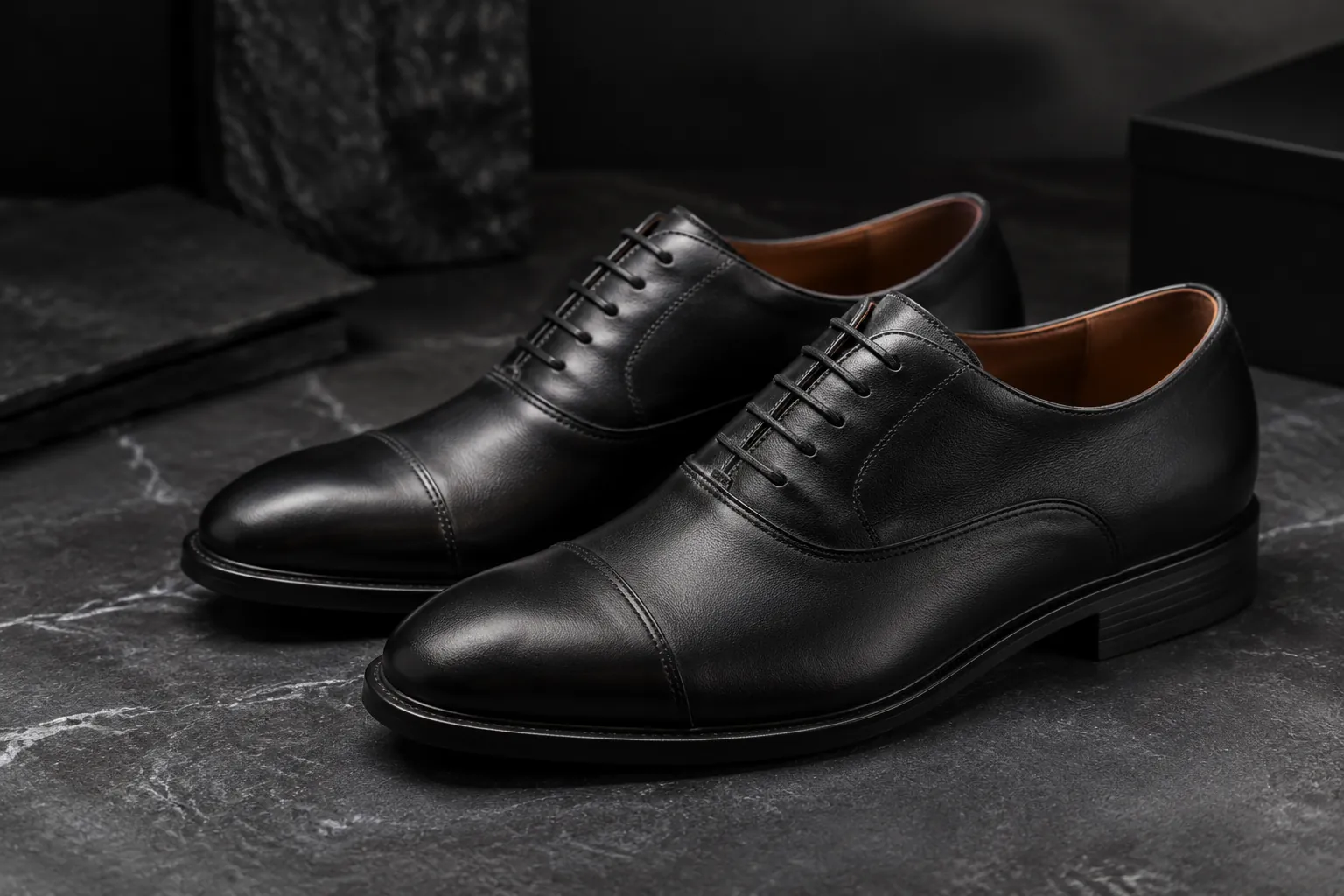
A custom suede program has two layers of work. One is commercial identity. The other is appearance range. The custom suede shoes commercial frame is the first layer: customer, market, style family, target price position, expected quantity, size range, delivery need, and the decisions the factory may propose. Until that frame is frozen, sample comments and material talk lack a fixed commercial object. Treat the OEM brief stage as a hard pre-sampling gate for that freeze. Open appearance-range questions only after the locks hold.
This guide stays on that gate. It does not rebuild quotation-spec packs, appearance-boundary registers, suede-versus-nubuck comparisons, or seasonal style rankings. It maps who freezes which commercial inputs, which private label suede shoes factory decisions stay open for proposal, and how a custom suede footwear development brief should separate locks from second-stage materials questions. Company-specific claims stay inside the published OEM brief clause, the materials appearance-range questions, and the formal Oxford program language on the dress and men's pages.
Commercial inputs the OEM brief freezes
On the OEM and ODM footwear path, the brief stage is explicit: freeze the commercial frame. State customer, market, style family, target price position, expected quantity, size range, delivery need, and the decisions the factory may propose. That list is the ceiling for company-specific commercial-frame claims here. It is not a menu of guaranteed services, MOQs, or lead times.
- Customer: who sells the product and under what brand or private-label structure.
- Market: channel, region, and the retail or wholesale context that sets acceptance standards.
- Style family: dress shoe, loafer, sneaker-adjacent form, or another named family that later bounds last and construction talk.
- Target price position: the commercial band the finished pair must defend, stated as a position rather than a negotiated factory quote.
- Expected quantity: the planning volume the team is designing against, without treating any number as a published MOQ policy.
- Size range: the run that will actually ship, not a catalog ideal.
- Delivery need: the calendar pressure that limits sampling loops and material options.
- Factory proposal rights: which open decisions the factory is invited to propose against once the locks above are stable.
An OEM brief for custom suede shoes written this way gives the factory one commercial object to work against. Do not open appearance-range questions until each field has a current owner and a current value. If a field is still a hypothesis, label it open rather than pretending the freeze is complete.
What goes wrong when appearance talk starts early
Teams often start a factory conversation with a suede swatch, a mood board, or a last preference. The sequence feels practical, yet it bypasses the control gate that decides whether any upper choice matters. A suede loafer aimed at a mid-tier retail channel, a limited wholesale drop, and a private-label capsule for a different climate will not share the same acceptable material cost, size run, or delivery risk. When those conditions stay fluid, later appearance talk becomes a proxy fight over price position or quantity.
The failure mode is an unfrozen commercial frame, not a missing swatch. Color approvals fail after the target customer shifts. Hide-pairing rules get renegotiated after volume changes. Sample comments drift because the style family was never named tightly enough to tell the factory which proposals are welcome. Freezing the frame first does not slow development. It stops the team from sampling several versions of a brief that still lacks a single commercial identity.
Keep the practical rule short: if customer, market, style family, or target price position can still change without a written change note, sampling is testing goodwill rather than a fixed commercial object.
Buyer locks versus factory proposal rights
The same brief language separates ownership. The buyer freezes commercial identity. The factory may propose only on decisions the buyer has left open in writing. That split matters for private label suede shoes factory decisions, because suede programs invite early aesthetic debate that can quietly override commercial locks when ownership is not recorded.
| Decision area | Who should lock it | Why it belongs there |
|---|---|---|
| Customer, market, and brand role | Buyer | Defines who accepts the product and under what commercial story. |
| Style family and price position | Buyer | Sets which construction and material paths are even relevant. |
| Expected quantity, size range, delivery need | Buyer | Shapes planning risk before any sample is cut. |
| Decisions explicitly marked as open | Factory may propose | Keeps proposal rights scoped, not assumed as a blanket capability. |
| Appearance-range rules after freeze | Shared after commercial locks | Materials questions only stabilize once the commercial object is fixed. |
Do not convert "the factory may propose" into a promise that every construction, last, or suede grade will be offered. Proposal rights attach only to decisions the brief leaves open. Everything else stays a buyer lock until the buyer reopens it on purpose.
Which appearance questions open after the freeze
Once the commercial frame is stable, materials guidance becomes useful rather than circular. The leather shoe materials guidance frames appearance range as a set of questions: what variation is natural, what becomes a defect, how colors are approved, and how hides or component lots are paired across the order. Those questions attach cleanly to a custom suede footwear development brief only after customer, market, and price position stop moving.
- State the frozen commercial frame in one short block so every later sample comment has a fixed reference.
- Ask what surface variation on the intended suede is natural for the named market and price position, and what marks or shading become defects against that same position.
- Agree how color will be approved for the program, including whether a physical standard, a master pair, or another method will govern reorders.
- Define how hides or component lots will be paired across the order so left-right and unit-to-unit continuity follows the commercial quantity and size range already locked.
These are buyer questions to raise, not a claim that a fixed sampling protocol already exists for every suede style. Evidence for this site does not publish suede-specific tolerances, lot sizes, or sampling step counts. Name those gaps in the inquiry instead of inventing process claims. After the commercial freeze is written down, ask which development, sampling, or quotation options may apply to the project. That invitation is not itself a documented service menu.
Keep appearance-range items in a separate block from the commercial locks. Mixing them in one freeform email is how teams lose the gate.
Where cap-toe Oxford control points stop applying
Formal dress-shoe language on this site is program-scoped. On the dress shoes page, the black cap-toe Oxford is presented as the disciplined anchor of a formal program, with facing gap, toe proportion, cap placement, polish, and pair symmetry treated as control points. On the men's leather shoes page, the cap-toe Oxford is described as a disciplined business and uniform direction where facing gap, toe shape, polish level, and pair symmetry need a documented approval standard.
Those two descriptions cover formal Oxford programs. They are not a transferable checklist for every custom suede program. Copying Oxford facing-gap or polish control points onto a suede loafer or casual suede dress silhouette invents a standard the source pages do not assign to suede uppers. If your style family truly is a formal Oxford program, use the formal pages on their own terms through the dress shoes and men's leather shoes program descriptions. If the style family is suede and not that formal anchor, keep Oxford control language out of the brief and write control points that match the actual style family after the commercial freeze.
Preserve actor and scope. Extending formal Oxford control points to suede without a matching style-family decision is a buyer error, not a factory default.
Contact package that keeps locks separate from open items
A contact-ready package should read like a control document, not a mood board. Package it so a reader can see, in one pass, what is frozen, what the factory may propose, and which appearance questions open only after confirmation of the frame.
- Lead with the frozen commercial frame: customer, market, style family, target price position, expected quantity, size range, and delivery need.
- List open decisions in a separate block so proposal rights are explicit rather than implied by silence.
- Attach appearance-range questions as a second stage: natural variation versus defect, color approval method, and hide or component-lot pairing across the order.
- State any evidence gaps you still need answered, such as sampling path, packing detail, or quotation format for this project, without presenting those topics as already promised services.
- Invite only the development, sampling, or quotation options that may apply once the factory has the frozen frame.
One hypothetical pattern is enough: a buyer preparing a private-label suede loafer for a single wholesale market freezes customer, market, style family, price position, size range, and delivery need first, then asks the factory which open construction or lining decisions it may propose, and only after that alignment asks how color approval and lot pairing should work for the planned order. That pattern is hypothetical, not a case history.
If your team is ready to share that definition of the program, use the contact form to send the frozen commercial frame, the open factory decisions, and the second-stage appearance questions. Keep locks and open items visually distinct so sampling does not restart every time a commercial assumption changes.
Do not buy a sample loop first and invent continuity later. Freeze the commercial frame, write factory proposal rights only where the brief is open, and treat appearance-range questions as the second stage. That is the working meaning of a pre-sampling OEM gate when a small brand or importer intends to reorder the same custom suede shoe.
Sources and verification
- OEM Shoes & ODM Leather Footwear | Custom Shoe Manufacturer First-party site source
- Leather Shoe Materials | Full Grain, Suede, Lining & Outsoles First-party site source
- Custom Leather Dress Shoes Manufacturer | OEM & Private Label First-party site source
- Men's Leather Shoes Manufacturer | Custom Oxfords & Loafers First-party site source
Share the current leather footwear definition and ask which development, sampling or quotation options may apply to the project.
Send your project brief