
Sourcing and Product Development
Custom Suede Shoes: Set the Appearance Boundary
A buyer-focused appearance decision register for separating confirmed requirements from unresolved custom suede shoe questions.
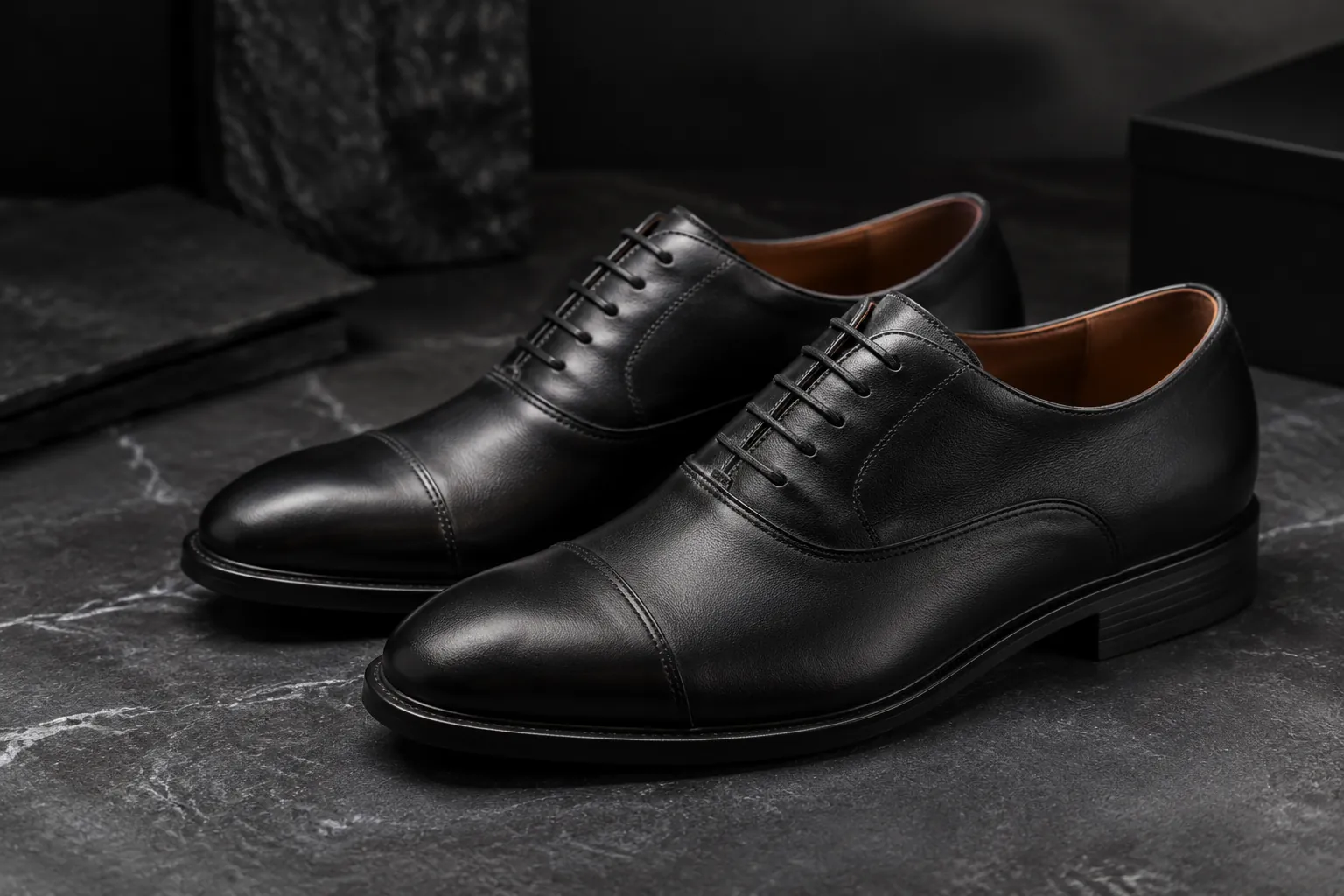
Consider a hypothetical suede shoe brief that already names the style, material, and color. Those entries define a direction, yet the rows for acceptable variation, defect classification, color approval, and lot pairing remain blank. Until those decisions are addressed, the brief contains no stated boundary for reviewing appearance.
A practical editorial recommendation is to give appearance its own decision register. This buyer-created record can show what has been confirmed, what still requires discussion, and which matters are open to a factory proposal. It also keeps visual questions from being buried inside a general material description.
The evidence boundary for this register is narrow. The cited materials page tells buyers to ask what variation is natural, what becomes a defect, how colors are approved, and how hides or component lots are paired across the order. It publishes questions, not numerical tolerances, inspection procedures, testing protocols, matching guarantees, or project-specific answers. The recommendations below organize those questions without supplying the missing answers.
Build the appearance decision register
Give each materials-page question a separate entry. A single instruction such as “match the reference” cannot show whether the buyer means color, component coordination, pair appearance, or another visible condition. Separate entries make the scope and status of each decision explicit.
| Decision subject | Buyer-proposed entry | Question for the inquiry | Suggested buyer record |
|---|---|---|---|
| Natural variation | Identify the material, component, and visible area to be discussed. Mark the acceptance boundary as unresolved if it has not been established. | What variation is natural for the stated material and scope? | Named references, current decision status, and any written qualifications. |
| Defect classification | List the observable conditions for which the buyer needs a classification. Avoid substituting broad terms such as “good quality” for an actual decision. | What becomes a defect for this project definition? | A buyer-approved classification linked to a named area, component, or reference. |
| Color approval | Identify the current color reference and the person responsible for buyer-side approval. | How may color be approved for this project? | Reference identifier, buyer-defined status, approval owner, date, and written qualifications where applicable. |
| Hide or component lot pairing | State which components or areas the buyer wants included in the discussion. Do not assume that a particular pairing outcome is available. | How may hides or component lots be paired across the defined order? | The response, its scope, any qualifications, and any point that remains unresolved. |
These suggested records are editorial documentation practices for the buyer. They are not representations of factory inspection, approval, matching, or lot-management services.
Connect appearance to the commercial brief
An appearance register needs a clear project identity. The company’s OEM and ODM page instructs the buyer to state the customer, market, style family, target price position, expected quantity, size range, delivery need, and the decisions the factory may propose.
That final field deserves careful wording. The source asks buyers to identify decisions the factory may propose; it does not say that the factory will propose or resolve every open decision. Keep fixed buyer requirements outside that field, and list only the subjects on which a proposal is being invited.
- Customer
- State the intended customer so the response can be associated with the correct brief.
- Market
- Name the intended market. As an editorial recommendation, record any buyer-confirmed market requirement separately from visual preferences.
- Style family
- Identify the footwear direction and the components covered by the appearance register.
- Target price position
- Provide the intended price position as a commercial input, without treating it as confirmation that a material, construction, or appearance result is feasible.
- Expected quantity
- State the buyer’s current expectation without presenting it as an accepted minimum or confirmed production quantity.
- Size range
- Record the requested range as part of the current product definition.
- Delivery need
- State the requested timing as a buyer input, not as a confirmed completion or delivery date.
- Decisions the factory may propose
- Name only the unresolved decisions for which the buyer is inviting a proposal.
This structure is particularly useful when discussing private label suede shoe development because commercial inputs and appearance decisions can change independently. The register preserves that distinction: customer and market describe the project, while the four appearance rows identify questions that still need answers.
Document a boundary without inventing tolerances
Precision does not require an unsupported number. Where no project tolerance or review method has been established, leave that point open and describe the decision that is needed. A blank marked “unresolved” is more accurate than a factual-looking limit with no source or agreed basis.
The following fields are editorial recommendations for buyer-maintained documentation:
- Define the subject. Identify whether the entry covers the complete pair, a named upper component, a visible edge, or another specified area.
- Assign a reference identifier. Give each submitted image, material reference, color direction, or other buyer-provided item a distinct label.
- Mark the reference status. Distinguish an item under discussion from one approved through the buyer’s own process.
- Record the decision status. Use buyer-defined labels that make clear whether an entry is proposed, under review, approved, qualified, or unresolved.
- Name the buyer-side owner. Identify who can approve the entry and which decisions may remain open to a factory proposal.
For suede shoe appearance approval, observable wording is usually more useful than broad adjectives. The buyer can identify the component and the condition requiring review while withholding an acceptance limit until a supportable project basis exists. Shade, nap, texture, panel coordination, and pair appearance can each be named as discussion subjects, but the available evidence does not establish limits for them.
Keep Oxford criteria within their published scope
Style geometry can create additional appearance decisions, but published criteria must remain attached to the style direction from which they came. The dress shoes page treats facing gap, toe proportion, cap placement, polish, and pair symmetry as control points for its black cap-toe Oxford direction.
The men’s leather shoes page separately says that facing gap, toe shape, polish level, and pair symmetry need a documented approval standard for its black cap-toe Oxford direction.
| Published direction | Source-specific criteria | Scope limit |
|---|---|---|
| Black cap-toe Oxford on the dress shoes page | Facing gap, toe proportion, cap placement, polish, and pair symmetry | Retain these as the control points stated for that direction. |
| Black cap-toe Oxford on the men’s leather shoes page | Facing gap, toe shape, polish level, and pair symmetry | Retain the source’s requirement for a documented approval standard for that direction. |
The lists are similar, but they are not interchangeable. Toe proportion and toe shape are separately sourced terms; polish and polish level must also remain distinct. Cap placement appears only in the first list. Neither source extends these criteria to loafers, sneakers, or all custom suede shoes.
Separate requirements, questions, and invited proposals
Before sending an inquiry, sort every entry by who has defined it and what response is being requested. The buyer can use the following editorial structure to prevent an open question from looking like a confirmed requirement or documented factory service.
| Inquiry section | Recommended content |
|---|---|
| Buyer-confirmed requirements | Selected style family, defined components, current color direction, brand requirements, reference identifiers, and buyer-side approval authority. |
| Open appearance questions | Separate entries for natural variation, defect classification, color approval, and hide or component lot pairing. |
| Commercial inputs | Customer, market, target price position, expected quantity, size range, and delivery need. |
| Decisions open to proposal | Only the subjects the buyer has expressly identified as decisions the factory may propose. |
For suede shoe color approval, include the current reference and its buyer-defined status. Name the buyer-side approval owner if one has been assigned. When the approval basis is still undecided, mark it unresolved and ask what information or options may apply.
Prepare the inquiry
The resulting package can be concise: the current style definition, identified suede components, color direction, labeled references, buyer-side approval ownership, commercial brief, and the four separate appearance questions. Confirmed requirements should read as requirements. Assumptions should be labeled, and unanswered matters should remain visible instead of being converted into specifications.
Share the current footwear definition through the contact page and ask which development, sampling, or quotation options may apply to the project. This phrasing leaves availability, methods, commercial terms, and acceptance procedures open for an applicable response.
Sources and verification
- Leather Shoe Materials | Full Grain, Suede, Lining & Outsoles First-party site source
- OEM Shoes & ODM Leather Footwear | Custom Shoe Manufacturer First-party site source
- Custom Leather Dress Shoes Manufacturer | OEM & Private Label First-party site source
- Men's Leather Shoes Manufacturer | Custom Oxfords & Loafers First-party site source
Share the current leather footwear definition and ask which development, sampling or quotation options may apply to the project.
Send your project brief