
Sourcing Guides
Buyer Review: custom suede shoe supplier comparison checklist
A procurement framework for separating documented supplier answers, factory proposals, buyer requirements and unresolved questions during custom suede shoe supplier review.
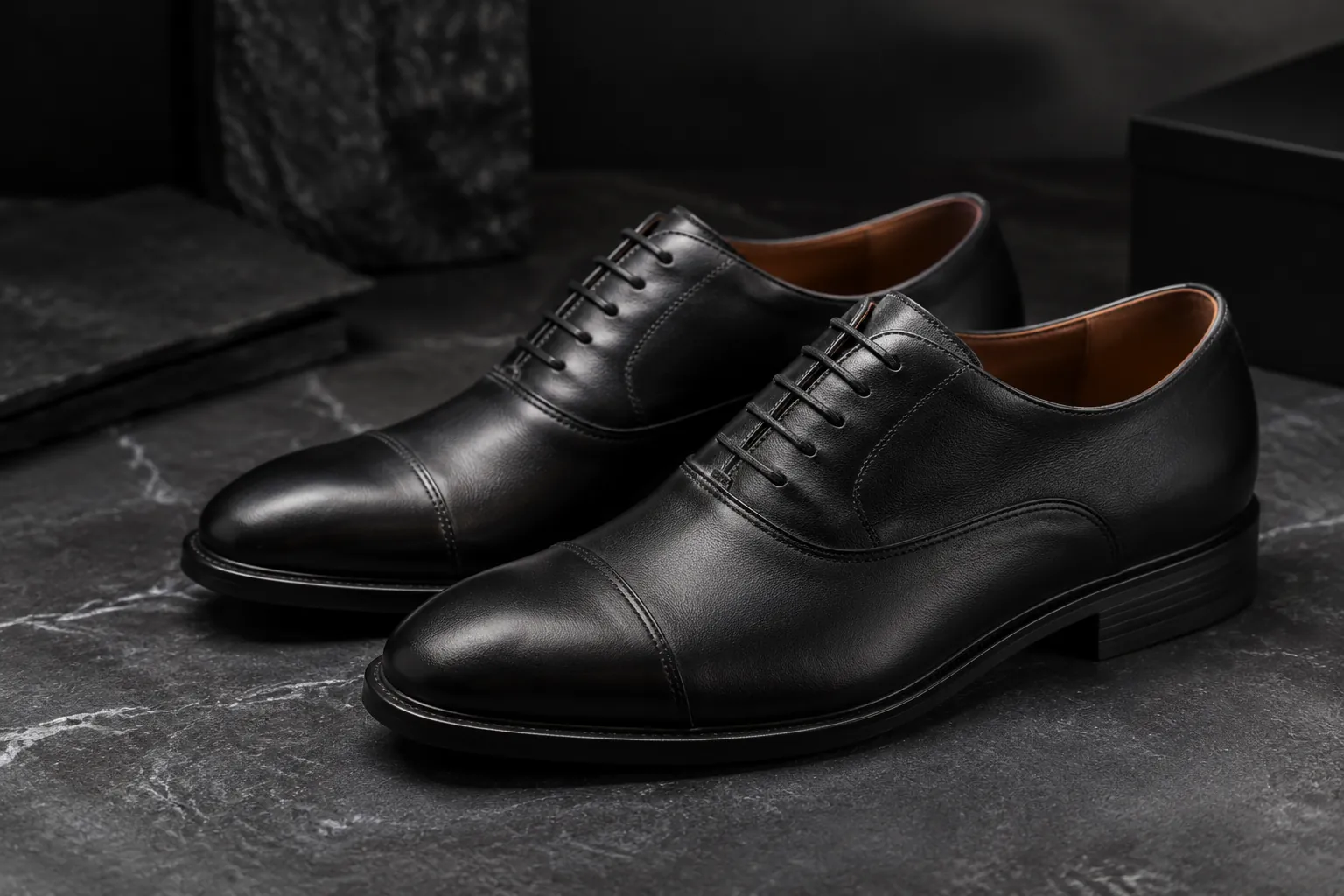
When supplier replies arrive, the buyer needs to place each answer against the same product and commercial definition. This custom suede shoe supplier comparison checklist provides an editorial method for organizing that review. It focuses on what each response documents, the scope of the answer and the questions that remain open.
The worksheet should preserve the responsible actor. A buyer requirement is not a factory proposal, and a proposal is not an accepted product term. A requested answer is also not evidence that a service, process or capability is available.
The cited OEM and ODM brief supports the commercial fields used below. The materials reference supports four separate appearance questions. The two Oxford references support narrow, style-specific control points. None of these excerpts establishes supplier performance, selection results, numerical tolerances or commercial commitments.
Build a common review record
Start by checking whether every reply addresses the same commercial frame. The OEM and ODM brief lists the customer, market, style family, target price position, expected quantity, size range and delivery need. It also identifies the decisions the factory may propose.
For this review method, create one row for each field and preserve the wording submitted to each supplier. Use a separate row for decisions identified in the brief as ones the factory may propose. This keeps a factory option from being recorded as a buyer requirement or agreed production term.
| Commercial field | Buyer record | Comparison question |
|---|---|---|
| Customer | The customer stated in the current brief. | Does the response refer to the submitted customer context? |
| Market | The market identified for the project. | Is the answer scoped to that market, or does it require clarification? |
| Style family | The current footwear category and style definition. | Is the supplier answering for that style rather than a broader footwear category? |
| Target price position | The position stated in the brief. | Does the commercial response use the same basis? |
| Expected quantity | The quantity expectation stated by the buyer. | Is it addressed directly, conditionally or not at all? |
| Size range | The submitted size range. | Does the answer apply to that range? |
| Delivery need | The delivery need stated in the brief. | Does the reply address the need without requiring the buyer to infer a commitment? |
| Decisions the factory may propose | The decisions identified in the brief as ones the factory may propose. | Is each option still recorded as a proposal, or has it been incorporated into the current definition? |
For a consistent suede footwear supplier evaluation, compare only rows based on equivalent inquiry inputs. Where the submitted definitions differ, mark that difference before comparing the replies.
Tag statements by actor and certainty
This framework uses four response labels. Attach the supplier's original wording and its document location to each label so an internal summary does not broaden the answer.
- Buyer requirement
A condition or specification stated by the buyer. Record the applicable product definition or revision with it.
- Factory proposal
An option presented by the factory for buyer consideration. It remains a proposal until it is incorporated into the current product definition.
- Documented supplier answer
A direct answer recorded with its stated material, style, commercial or development scope. Preserve any condition included in the response.
- Unresolved inquiry
A point that is absent, ambiguous, conflicting or outside the scope of the reply. Record it as open rather than inferring yes or no.
Apply the labels before assessing completeness. If a response proposes a material direction, record the proposal separately from the buyer's current material requirement. If the supplier answers only for one style, do not convert that answer into a general footwear capability.
Copy the buyer question or requirement into the review record.
Record the supplier's answer without expanding its scope.
Assign the actor label and a response status.
Note any condition and the source location.
Write the next inquiry where the answer remains incomplete.
Separate the four appearance questions
The materials reference tells buyers to ask what variation is natural, what becomes a defect, how colors are approved, and how hides or component lots are paired across the order. Keep these as four independent rows in a private label suede shoe sourcing checklist.
A statement about natural variation does not define the point at which variation becomes a defect. A color response does not document how hides or component lots are paired. Combining partial replies would create a broader claim than the source material or supplier response supports.
| Buyer question | Information to record | Keep open unless documented |
|---|---|---|
| What variation is natural? | The response's description of natural variation and the material or component to which it applies. | Any suede grade, visual boundary or numerical range not stated in the response. |
| What becomes a defect? | The response's stated boundary and any reference attached to that answer. | Any rejection rule or tolerance that would otherwise have to be inferred. |
| How are colors approved? | The approval approach stated or proposed in the response, including its applicable scope. | Any approval tool, sequence, responsible party or acceptance standard not identified. |
| How are hides or component lots paired across the order? | The answer exactly as scoped, including the hides, components or conditions it names. | Any general pairing procedure, order-wide rule or guarantee not documented in the reply. |
Keep evidence from separate documents separate unless the supplier explicitly connects it to the same project scope. A statement about color in one response and a statement about components in another should remain two entries until their relationship is documented.
Add Oxford rows only within Oxford scope
The dress-shoes reference describes the D-01 black cap-toe Oxford direction. It treats facing gap, toe proportion, cap placement, polish and pair symmetry as control points.
The men's leather shoes reference separately describes the M-01 black cap-toe Oxford direction. It identifies facing gap, toe shape, polish level and pair symmetry, and states that those points need a documented approval standard for that direction.
Do not merge these two lists into a universal set of custom suede shoe controls. When the project is not within the cited cap-toe Oxford scope, build comparison rows from the current footwear definition instead of importing the published Oxford points.
| Reference | Documented scope | Comparison use |
|---|---|---|
| D-01 | Black cap-toe Oxford direction | Review facing gap, toe proportion, cap placement, polish and pair symmetry only when this cited direction is applicable. |
| M-01 | Black cap-toe Oxford direction | Review facing gap, toe shape, polish level and pair symmetry only when this cited direction is applicable. |
| Loafer, sneaker or another style | Not covered by either Oxford excerpt | Use questions derived from the current product definition and keep undocumented controls open. |
If the compared product is a suede cap-toe Oxford, applicability still needs to be checked against the cited direction. The excerpts do not establish that every listed black cap-toe control automatically becomes a requirement for a suede program.
Review completeness without a ranking
This editorial method uses non-numeric statuses. It does not assign weights, supplier scores or pass thresholds because the supplied evidence does not support those measures.
- Answered: The response directly addresses the row within the current project scope.
- Conditional: The answer depends on a later material, product, development or commercial decision.
- Proposed: The factory has presented an option that has not been incorporated into the current definition.
- Open: The point is absent, ambiguous, conflicting or outside the response's stated scope.
Add a source reference beside each status. The reference may identify the relevant quotation section, message or development document. This is an editorial recordkeeping recommendation, not a claim about a supplier's document system.
Do not turn the number of answered rows into a performance ranking. Under this method, the buyer reviews whether each answer is relevant to the current decision and identifies which open items must be resolved before selection.
Prepare the selection handoff
The selection handoff should let another stakeholder see the submitted definition, the supplier's documented response and the remaining decisions without reconstructing the review.
Include the current footwear definition and identify the revision being reviewed.
Attach the normalized commercial frame: customer, market, style family, target price position, expected quantity, size range and delivery need.
List the decisions identified in the brief as ones the factory may propose.
Include the comparison table with actor labels, response statuses, conditions and source locations.
Add an evidence-gap register containing the unresolved questions that affect development, quotation or supplier selection.
Keep the handoff tied to the current project. A documented answer from a different material, style or commercial context should not be carried forward without confirmation that it applies.
Keep undocumented topics open
The supplied excerpts do not document suede grades, numerical appearance tolerances, color-approval tools, lot-pairing procedures, sampling stages, minimum quantities, lead times, testing protocols or supplier-selection outcomes. They also do not provide a universal control list for custom suede shoes.
Retain any relevant topic as an inquiry rather than converting it into a company claim. Send the current footwear definition, normalized commercial frame, comparison record and evidence-gap register through the project inquiry page. Ask which development, sampling or quotation options may apply to the project. Where minimum quantity, packing or other commercial information is needed, state it as a question for the project response.
Sources and verification
- OEM Shoes & ODM Leather Footwear | Custom Shoe Manufacturer First-party site source
- Leather Shoe Materials | Full Grain, Suede, Lining & Outsoles First-party site source
- Custom Leather Dress Shoes Manufacturer | OEM & Private Label First-party site source
- Men's Leather Shoes Manufacturer | Custom Oxfords & Loafers First-party site source
Share the current leather footwear definition and ask which development, sampling or quotation options may apply to the project.
Send your project brief