
Sourcing Guides
Custom Leather Sneakers: A Variant Quote Scope Matrix
A related sneaker collection can still contain different product and commercial inputs. This buyer-managed matrix separates shared specifications, variant requirements, and unresolved decisions for a clearer inquiry.
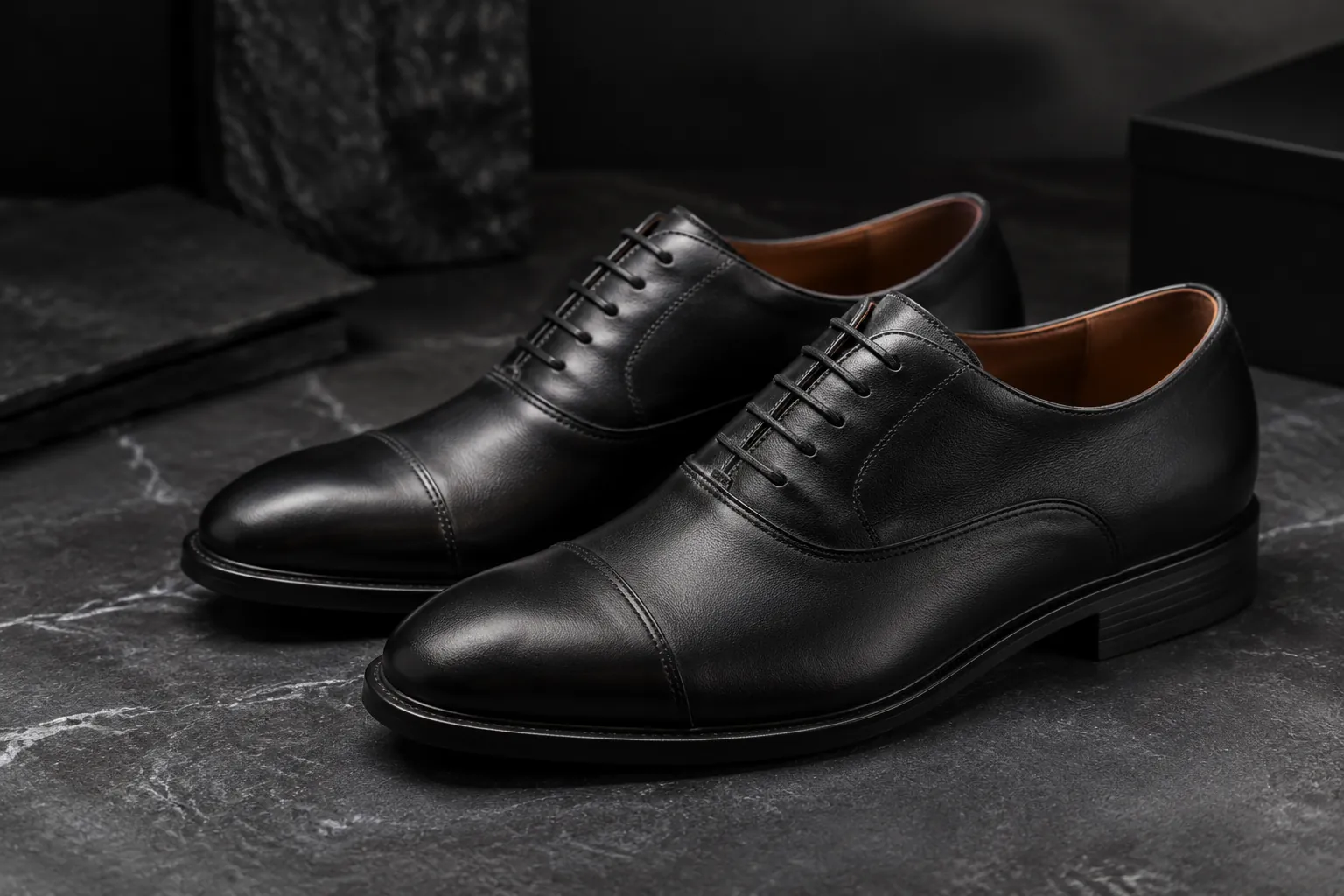
A collection of custom leather sneakers can share a style family while still containing different materials, branding, packaging, size ranges, markets, quantities, and delivery needs. Treating all of those differences as though they apply equally to every variant leaves too much interpretation in the inquiry.
A scope matrix is an editorial recommendation for the buyer preparing a collection definition. It separates requirements that are genuinely common from requirements that belong to a particular variant. It also shows whether a requirement is fixed, unresolved, or open to a factory proposal. The matrix is the buyer's working document; it is not presented as a documented manufacturer template or service.
One collection, more than one scope
The first task is to distinguish a collection label from its actual requirements. A colorway, material change, branding treatment, packaging difference, market requirement, or size-range exception may need to be associated with one variant rather than the whole collection.
This distinction matters before a leather sneaker quotation discussion because the submitted definition should show what is shared and what changes. A broad collection note can remain useful as context, but it should not replace a row-level record when a requirement differs.
For the buyer, the practical question is simple: if a reader looked only at one variant row, would that reader know which collection-wide requirements apply and which details are unique to that row? When the answer is no, move the detail into a more specific part of the matrix or mark it unresolved.
The collection commercial frame
The OEM and ODM page asks the customer to state the customer, market, style family, target price position, expected quantity, size range, delivery need, and decisions the factory may propose. These are inputs for the buyer to state. They do not establish that every requirement will be accepted or that an open item will receive a proposal.
Record this frame before building the variant rows. It provides commercial context without turning assumptions into settled requirements.
- Name the customer or brand connected to the collection.
- State the intended market or markets.
- Identify the style family.
- Record the target price position as the buyer's current reference.
- State the expected quantity as the buyer's current expectation.
- List the intended size range and any known differences by market or variant.
- Describe the delivery need currently known to the buyer.
- Identify any decisions the buyer may wish to leave open to a factory proposal.
Unknown information should be marked as unresolved. That is more precise than wording that makes an incomplete decision appear final.
Shared specifications and variant rows
The following structure is editorial buyer guidance for a private-label sneaker collection. Put a requirement in the shared layer only when it applies to every defined variant. Use a separate row when the requirement changes by SKU, colorway, market, or another defined distinction.
| Field | Shared specification layer | Variant row |
|---|---|---|
| Style identifier | Collection or style-family reference | Variant, SKU, or colorway reference |
| Market | Market only when common to all rows | Market-specific requirement or exception |
| Size range | Range only when it applies to every row | Variant-specific or market-specific range |
| Upper, lining, outsole | Common material or component requirement | Article, color, or component detail for that row |
| Hardware and branding | Common rule only when no row differs | Placement, finish, and artwork assignment |
| Packaging | Common packaging requirement | Market-specific or variant-specific packaging detail |
| Expected quantity | Collection-level expectation where useful | Current expectation for the individual variant |
| Delivery need | Common delivery need where applicable | Variant-specific or market-specific need |
| Decision status | Status of a shared open item | Status of the individual requirement |
Keep the shared layer narrow. A requirement used by most variants is still not a shared requirement if one or more defined variants differ. Put the exception in its own row instead of relying on a collection-wide statement with hidden qualifications.
Decision ownership at field level
The OEM and ODM brief includes decisions the factory may propose. A status field is an editorial way for the buyer to communicate what that means for each requirement. Use the status at the level where the decision exists: a collection-wide upper may be fixed while the branding finish for one variant remains open.
- Buyer-fixed
- The buyer is presenting the requirement as currently set.
- Factory-may-propose
- The buyer is inviting a proposal for the specified field. This invitation does not indicate that a proposal, material option, development path, or technical response will be available.
- Unresolved
- The buyer has not finalized the requirement and has not marked it as open to a factory proposal.
A single status for the entire collection can obscure material or branding differences between rows. Assigning status by field makes the current definition easier to read without representing uncertainty as an approved alternative.
Material identity belongs with its product
For the buyer's matrix, keep material and component references attached to the relevant shared specification or the relevant variant row. This is particularly useful when recording a leather article, color, thickness, lining, outsole, hardware, packaging, artwork, or lot reference.
The factory-quality page states that incoming control reviews leather article, color, thickness, lining, outsoles, hardware, packaging, artwork, and lot identity before mixed or unclear materials enter production. That incoming-control statement does not describe the buyer's matrix as part of quotation, development, or sampling. It instead gives a narrow reason to avoid detached material and artwork references in the buyer's own collection definition.
When an upper applies across the collection but a lining differs, place the upper in the shared layer and identify the lining in the affected rows. When artwork has not been assigned to a product, mark the assignment unresolved rather than treating the artwork as applicable to all variants.
A final conflict check
Before submitting the inquiry, run a buyer-side reconciliation pass. This is an editorial recommendation, not a documented company reconciliation or change-control process.
- Check whether a requirement marked shared is contradicted by a variant row.
- Check that every branding or artwork item is assigned to a defined variant or marked unresolved.
- Check that packaging is associated with the relevant market when more than one market is listed.
- Check that shared size-range information does not conflict with size ranges recorded in variant rows.
- Check whether a delivery need is collection-wide or belongs to a particular variant.
- Check whether an unresolved item is described elsewhere as buyer-fixed.
- Check that material, hardware, packaging, artwork, and lot references remain associated with the correct shared layer or variant row.
Where a conflict appears, revise the field that creates it. Depending on the issue, the buyer may need to move a requirement into a variant row, split one broad statement into several requirements, or change the status to unresolved.
Inquiry questions for quotation review
The contact page says that style, market, quantity, size range, materials, branding, packaging, and delivery need are reviewed together, rather than priced as isolated line items. That statement concerns the submitted product and commercial frame. It does not state that every variant receives the same outcome.
A matrix helps the buyer ask focused questions about the current definition. For a custom sneaker manufacturer inquiry, keep the questions conditional and tied to the submitted collection.
- Which defined variants can be reviewed under the submitted product and commercial frame?
- Which stated requirements need clarification for further review?
- For fields marked factory-may-propose, which topics may be open to a proposal, if any?
- Do listed differences in materials, branding, packaging, size range, or delivery need require separate treatment during review?
- Which development, sampling, or quotation options may apply to the submitted collection definition?
These are buyer questions, not descriptions of guaranteed services. They do not promise a quotation, sample, recommendation, production decision, or response time.
Share the current collection definition
Once the commercial frame, shared layer, variant rows, and status labels reflect the collection as currently defined, submit them through the contact page. Include the current definition of the leather sneaker collection and ask which development, sampling, or quotation options may apply to the project.
The matrix remains a buyer-managed way to express how the collection is organized. It can make shared requirements, variant differences, and unresolved decisions visible without representing them as settled commercial terms or confirmed production arrangements.
Sources and verification
- OEM Shoes & ODM Leather Footwear | Custom Shoe Manufacturer First-party site source
- Request a Quote | Leather Shoe Manufacturer First-party site source
- Leather Shoe Factory in China | Capability & Export QC First-party site source
Share the current leather footwear definition and ask which development, sampling or quotation options may apply to the project.
Send your project brief