
Custom Leather Sneakers
A Material Identity Plan for Custom Leather Sneakers
A buyer-created material identity record can connect the current sneaker definition to its references, decision status, commercial frame, and unresolved questions.
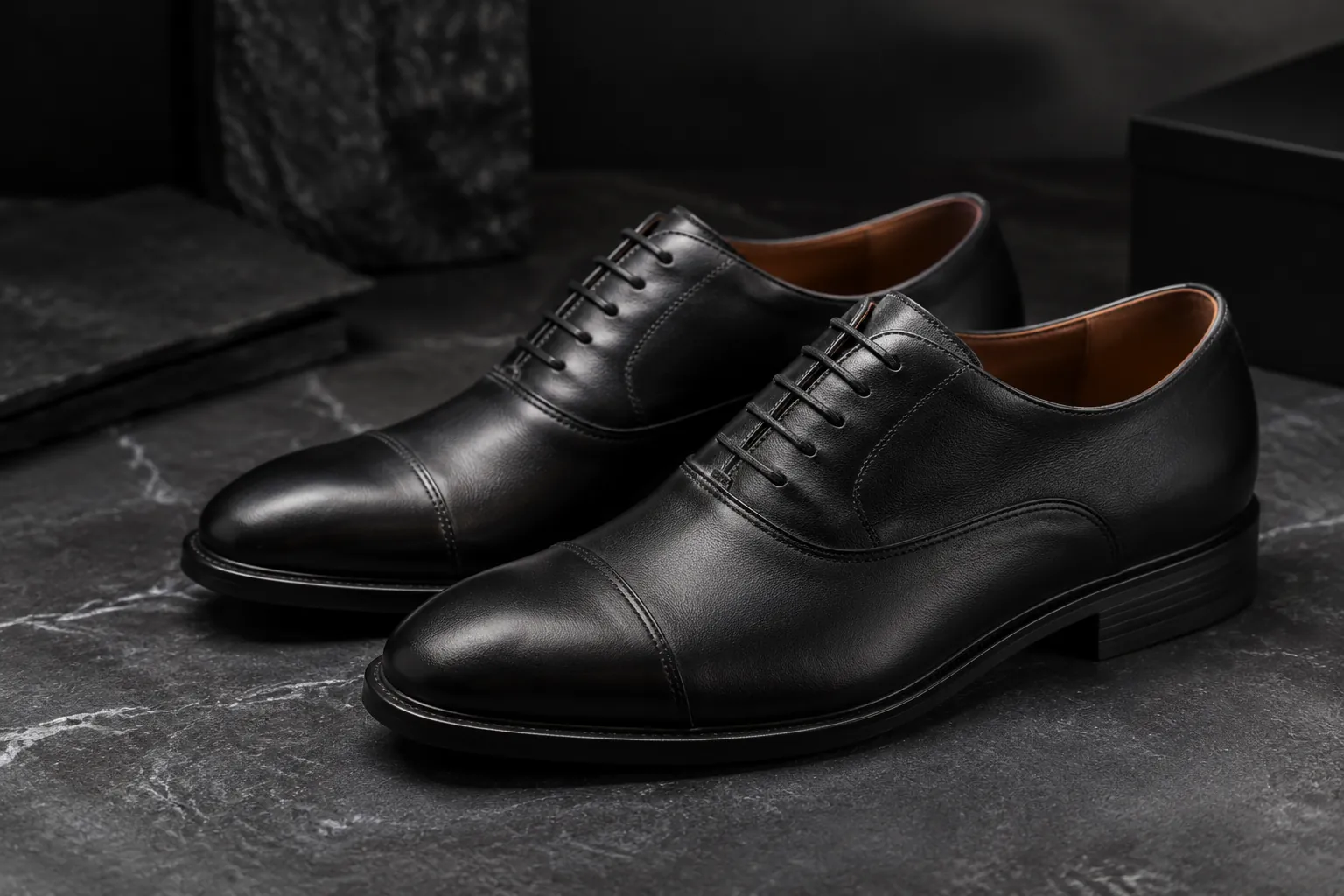
The sneaker concept has been approved visually. The leather looks right in the reference image, the outsole suits the design, and the branding appears in place. Yet the handoff may still lack a controlled answer to a basic question: which exact material, file, or sample does each part of the current sneaker definition refer to?
A buyer can address that gap with a material identity record. In this article, that record is an editorial recommendation for organizing project information, not a documented manufacturer system. It gives each named component a current reference and a buyer-assigned status so that fixed choices, intentional variables, and unresolved points remain visible during project review.
Build the record around material identity
A photograph or development sample can communicate appearance without identifying every input behind it. A material description can also remain ambiguous when several swatches, files, or sample versions have circulated. Buyers should therefore use the record as an index to the current sneaker definition rather than as another collection of descriptive notes.
For each component, the recommended record should answer four questions:
- What is the component called in this project?
- Which current swatch, sample, file, image, or other buyer reference identifies it?
- Is the decision fixed, intentionally variable, or awaiting discussion?
- What uncertainty must be raised with the manufacturer?
The buyer should also identify which sneaker style or version the record covers. That connection helps distinguish the current definition from earlier concepts without requiring the buyer to invent details that have not been decided.
Map the record to the documented incoming review
The documented factory-quality process says controlled materials are confirmed by reviewing leather article, color, thickness, lining, outsoles, hardware, packaging, artwork, and lot identity before mixed or unclear materials enter production. That source does not specify a buyer record format, tolerances, test methods, acceptance thresholds, or a guaranteed outcome.
The following table turns the named review inputs into a recommended buyer-side structure:
| Documented review input | Buyer reference to identify | Status to assign | Question to expose |
|---|---|---|---|
| Leather article | Current swatch, sample, or project reference | Fixed, variable, or awaiting proposal | Does the reference identify the leather article intended for this version? |
| Color | Current color reference associated with the leather | Fixed, variable, or awaiting proposal | Is the named color connected to the reference now under discussion? |
| Thickness | Current buyer specification or reference, when available | Fixed, variable, or unresolved | Has the buyer defined this field, or must it remain open for review? |
| Lining | Current lining swatch, sample, image, or project reference | Fixed, variable, or awaiting proposal | Which lining reference belongs to the submitted sneaker definition? |
| Outsoles | Current outsole sample, image, or project reference | Fixed, variable, or awaiting proposal | Does the reference correspond to the style version being discussed? |
| Hardware | Current reference for each named hardware component | Fixed, variable, or awaiting proposal | Does any named component still lack a current reference or decision? |
| Packaging | Current packaging definition and related buyer files | Fixed, variable, or unresolved | Is this packaging definition associated with the current project? |
| Artwork | Current artwork file or visual reference | Fixed, variable, or unresolved | Can the current artwork be distinguished from superseded files? |
| Lot identity | Available lot information for the material presented for review | Available or unresolved | What lot identity is available for the input under discussion? |
Leather article, color, and thickness appear as separate fields because each is named separately in the source. A buyer may connect them to related references, but should avoid collapsing them into a single description that leaves one of the fields unclear.
Pair descriptions with current references
Descriptions and references serve different purposes in the recommended record. A description tells the reader what the buyer means in general terms. A reference points to the particular project item being discussed.
- Descriptive label
A buyer-written name for the component or intended appearance. It can make the record readable, but may not distinguish among similar project materials or files.
- Identifying reference
A pointer to the buyer's current swatch, sample, image, artwork file, packaging definition, or other project record. This article does not prescribe a particular identifier format.
- Decision status
A buyer-assigned marker that shows whether the entry is fixed, intentionally variable, or awaiting discussion or a possible proposal.
For example, buyers should link a leather description to the current swatch when one exists. An outsole entry should point to the sample or image now being used for the project. Artwork should identify the current file rather than relying only on a general logo description. These links make the record an index to existing project references rather than a replacement for them.
Separate fixed choices from open decisions
The OEM and ODM guidance instructs the brief to state the customer, market, style family, target price position, expected quantity, size range, delivery need, and the decisions the factory may propose. Buyers can support that brief by assigning a clear status to each entry in the material record.
- Mark fixed selections. Buyers should use this status for entries presented as the current selection for factory review.
- Identify intentional variables. Buyers should reserve this status for planned differences between versions, rather than using it to cover inconsistent instructions.
- Show unresolved entries. When the buyer has not made a decision, the record should say so directly.
- Mark requests for a possible proposal. Buyers should use “awaiting proposal” only when they want to ask whether the factory may propose that decision. The wording does not establish that a proposal will be available.
Related entries may need different statuses. Packaging artwork could be fixed while another part of the packaging definition remains unresolved. Hardware could be selected for one version and open for another. Buyers should record those differences instead of assigning one status to an entire group of components.
Connect materials to the commercial frame
The company's contact guidance states that style, market, quantity, size range, materials, branding, packaging, and delivery need are reviewed together rather than priced as isolated line items. The material identity record should therefore be submitted as part of the current project definition, not treated as an independent pricing list.
As an editorial check, the buyer should compare the material record with the inquiry and confirm that both identify the same style and version. The market, quantity, size range, and delivery need should belong to that project. Materials should remain connected to the correct style definition. Branding and packaging should also point to the files or references intended for that project.
This reconciliation does not predict price, minimum quantity, timing, or the outcome of factory review. Its purpose is to present the product and commercial inputs together, matching the scope described on the contact page.
Reconcile the handoff
Before submitting the current custom sneaker material specification, buyers should review it for internal consistency:
- Confirm that each attached reference is current for the submitted sneaker version.
- Use consistent component names across the record, inquiry, artwork, and packaging files.
- Give leather article, color, and thickness their own identifiable entries.
- Check that lining, outsoles, and hardware are connected to the references now under discussion.
- Keep artwork and packaging linked to the correct style or version.
- Separate fixed selections from intentional variables and unresolved decisions.
- Record available lot identity without filling gaps with assumed information.
- Remove superseded references or label them clearly so they are not presented as current instructions.
The documented factory process reviews the named inputs and lot identity before mixed or unclear materials enter production. Buyers should treat the checklist as preparation for that review, without interpreting the review as a guarantee of conformity, traceability, substitution prevention, or error-free production.
Raise incomplete entries as project questions
A buyer does not need to disguise an unresolved point as a final instruction. Open entries can instead be presented as questions for project review:
- Which development, sampling, or quotation options may apply to the current sneaker definition?
- Which unresolved decisions, if any, may the factory be able to propose?
- What references should accompany the current leather, lining, outsole, hardware, branding, artwork, and packaging definition?
- Which sampling, MOQ, packing, or quotation information applies to this project?
- Does any entry need clarification before the product and commercial frame can be reviewed together?
These are inquiry topics, not statements that a particular service, proposal, or response is available. Keeping them in question form preserves the difference between the buyer's needs and the manufacturer's documented practices.
Submit the current definition
Send the material identity record with the commercial frame to which it belongs. Include the current references, show the status of each component, and leave unresolved entries visible. That gives the manufacturer a defined project to review without forcing the buyer to present assumptions as settled choices.
Share the current custom leather sneaker definition and ask which development, sampling, or quotation options may apply to the project.
Sources and verification
- Leather Shoe Factory in China | Capability & Export QC First-party site source
- OEM Shoes & ODM Leather Footwear | Custom Shoe Manufacturer First-party site source
- Request a Quote | Leather Shoe Manufacturer First-party site source
Share the current leather footwear definition and ask which development, sampling or quotation options may apply to the project.
Send your project brief