
Footwear Product Development
Custom Leather Penny Loafer Design Controls
A buyer-side record for defining the six named L-01 penny-loafer topics while keeping material identity, commercial inputs, and inquiry questions separate.
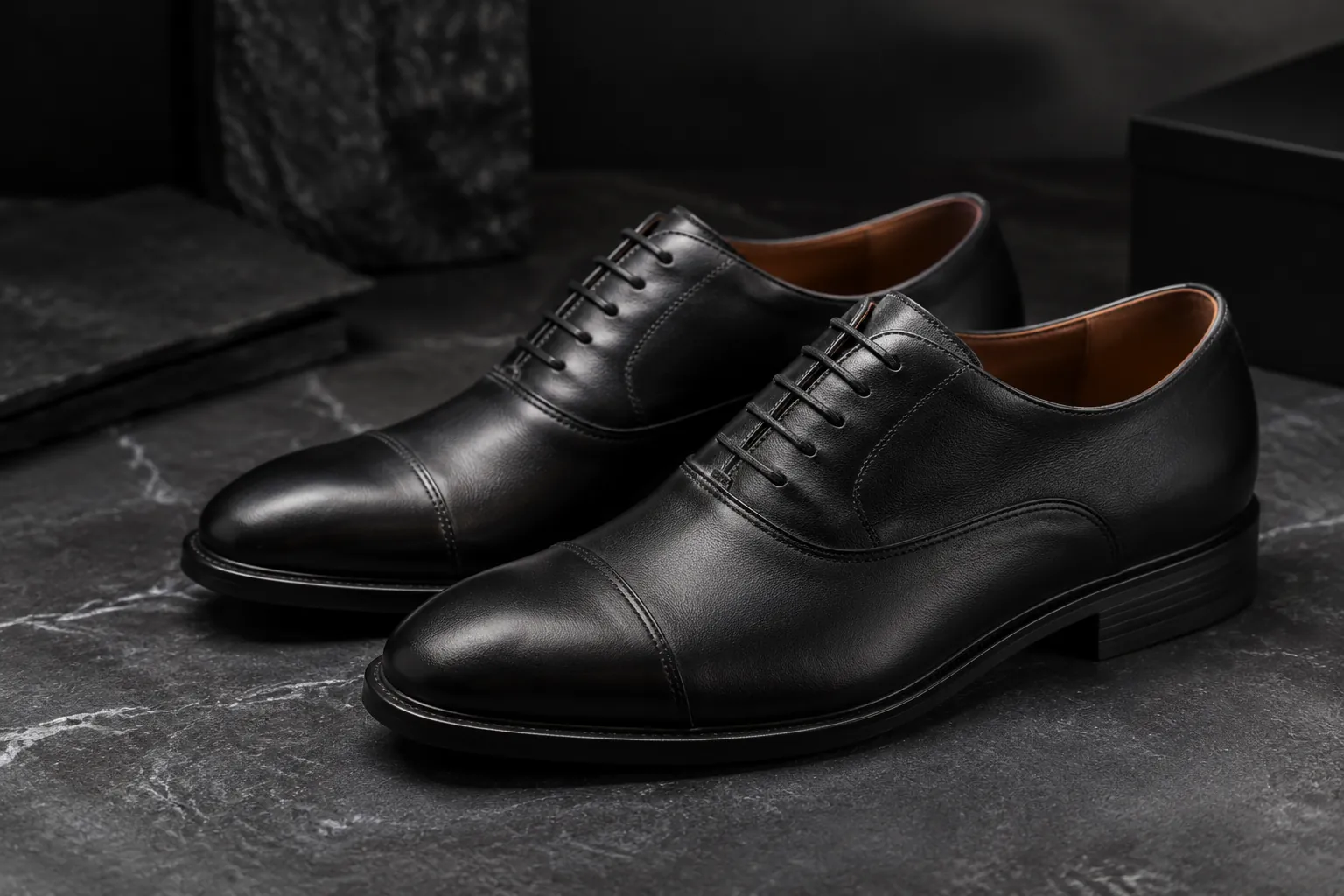
For a footwear product team, custom leather penny loafer design controls are most useful when they are recorded as individual decisions. A style name or reference file can remain part of the package, but this article recommends adding fields for each source-named topic, its current status, the buyer's own intent, and any question that still needs a project-specific answer.
The source basis is narrow. The published L-01 excerpt names saddle proportion, apron symmetry, vamp length, opening retention, heel hold, and flex for a repeatable core style. The record structure below is editorial buyer guidance. It is not a description of a guaranteed factory workflow, technical standard, or available service.
What belongs in the buyer's control record?
A buyer can begin with one row for each named topic. This keeps an unresolved point visible without filling it with an assumed measurement, test, or result. The following fields form a reusable editorial template:
| Field | Buyer-side use |
|---|---|
| Topic | Enter one source-named L-01 topic. Do not combine several topics under a general fit, comfort, or appearance label. |
| Current intent | State the team's present direction in its own words, or leave the field open when no direction has been chosen. |
| Reference identifier | Name the drawing, image, sample code, or other buyer record that reviewers should consult. The identifier does not turn the reference into a technical standard. |
| Status | Mark the entry as defined, open, or for discussion according to the editorial definitions below. |
| Owner | Identify the buyer-side person or team responsible for clarifying the entry. |
| Inquiry question | Record the project-specific information the buyer wants to request without assuming that an option or outcome is available. |
In this template, defined means the buyer has recorded a current direction. Open means there is no current direction. For discussion means the buyer can state an objective but needs project-specific information before finalizing the entry. These labels are editorial recommendations, not published L-01 approval states.
Six topics, six separate entries
The loafers page identifies tan men's penny loafer L-01 as a men's core penny loafer. Its excerpt names six control topics for a repeatable core style. For a private label penny loafer specification, the buyer can preserve that separation in the working record:
| Named L-01 topic | Recommended buyer entry | Possible status |
|---|---|---|
| Saddle proportion | Record the current direction in the buyer's own terms and identify any supporting buyer reference. | Defined, open, or for discussion |
| Apron symmetry | State the present objective separately from the saddle entry, even when both appear in the same reference. | Defined, open, or for discussion |
| Vamp length | Record whether the buyer has a current direction. Do not add a dimension or grading rule unless the buyer has established one independently. | Defined, open, or for discussion |
| Opening retention | Describe the desired outcome in the buyer's own language or mark the topic open. Do not infer a definition or assessment method from the term alone. | Defined, open, or for discussion |
| Heel hold | State the buyer's objective or the question that remains. Do not convert the topic into an unsupported fit or comfort claim. | Defined, open, or for discussion |
| Flex | Record the intended objective if one exists, or keep the entry open pending project-specific information. | Defined, open, or for discussion |
The supplied L-01 excerpt names these topics but provides no definitions, dimensions, tolerances, assessment methods, testing protocols, or acceptance thresholds. The buyer record should therefore show the team's current decision state rather than present any of those details as published L-01 requirements.
Where does the reference stop helping?
A buyer may use a reference identifier to show which file informed a current design direction. Editorially, that reference should not be asked to establish information it does not contain. In particular, the buyer should avoid treating an unspecified image or style reference as evidence of opening-retention behavior, heel-hold performance, or flex.
Use the reference identifier to direct reviewers to the same buyer-provided file.
Write the current intent as a separate field so the file is not left to explain itself.
Keep an objective marked for discussion when project-specific information is still required.
This format also leaves room for revision. Changing one entry does not require the buyer to describe the entire loafer direction as approved, rejected, or complete.
Design identity versus material identity
The factory-quality page uses the process instruction Confirm controlled materials. It separately directs review of leather article, color, thickness, lining, outsoles, hardware, packaging, artwork, and lot identity before mixed or unclear materials enter production.
For buyer-side documentation, this article recommends keeping those material fields in a record separate from the L-01 control map. The design record can then describe the current direction for each named penny-loafer topic without being treated as confirmation of a leather, outsole, package, or other input.
| Buyer record | Information to enter | Boundary |
|---|---|---|
| L-01 control map | One current-intent entry and status for each of the six named topics. | Does not identify or confirm materials. |
| Material record | Known, pending, or unresolved information for leather article, color, thickness, lining, outsoles, hardware, packaging, artwork, and lot identity. | Does not resolve the six design-control entries. |
The source wording is process-oriented. It does not state that controlled materials have already been confirmed for a particular inquiry, nor does it establish a leather type, origin, certification, finish, performance result, or sustainability attribute.
The commercial record has another job
The OEM and ODM page instructs the reader to freeze the commercial frame. Its brief excerpt says to state the customer, market, style family, target price position, expected quantity, size range, delivery need, and the decisions the factory may propose.
As an editorial recommendation, the buyer can record these items without presenting planning inputs as confirmed terms:
- Customer, market, and style family
State the current commercial context and identify the penny-loafer style under discussion.
- Target price position
Record the buyer's current position, if one exists, without representing it as a quote or accepted price.
- Expected quantity, size range, and delivery need
Enter current planning information and leave uncertain fields visibly unresolved.
- Decisions the factory may propose
List relevant decision areas under this conditional wording. The source does not say that the factory will make a proposal for every inquiry.
This commercial record gives the inquiry context, while the control map holds the six L-01 topics and the material record holds material identity. Keeping the records distinct avoids presenting one type of information as proof that another has been settled.
Which items are documented as reviewed together?
The contact page states that style, market, quantity, size range, materials, branding, packaging, and delivery need are reviewed together rather than priced as isolated line items. That documented company scope is limited to those eight inputs.
| Record group | Scope |
|---|---|
| Documented contact-page group | Style, market, quantity, size range, materials, branding, packaging, and delivery need. |
| Editorial buyer addition | The separate L-01 control map, reference identifiers, decision statuses, owners, and inquiry questions recommended in this article. |
Combining these records into one readable buyer package is an editorial recommendation. The contact-page excerpt does not say that the company reviews L-01 control-map entries, status labels, or buyer-assigned owners together. It also does not promise development, sampling, or quotation options for a particular project.
A current definition without false certainty
A custom loafer product definition can show both decisions and gaps. The buyer does not need to turn every open field into a presumed specification before making an inquiry. This article recommends assembling the current information in the following order:
Identify the style under discussion and the buyer's reference files.
Complete one row for each of the six named L-01 control topics.
Attach the separate material record with known and unresolved entries clearly distinguished.
State the commercial brief inputs currently available to the buyer.
List project-specific questions without presenting the requested information as an available service or confirmed outcome.
Share that current definition through the contact page. Ask which development, sampling, or quotation options, if any, may apply to the project. This keeps the request conditional and allows unresolved design, material, and commercial points to remain identifiable.
Sources and scope boundaries
Custom Loafers Manufacturer: identifies tan men's penny loafer L-01 and names six control topics for a repeatable core style.
Leather Shoe Factory in China: instructs the process to confirm controlled materials and names the incoming items to review.
OEM Shoes and ODM Leather Footwear: names the inputs to state when freezing the commercial frame.
Request a Quote: identifies eight product and commercial inputs that are reviewed together rather than priced as isolated line items.
The supplied excerpts do not establish technical tolerances, grading rules, testing protocols, fit or comfort results, certifications, material origin or performance, tooling requirements, minimum order quantities, prices, lead times, delivery commitments, sampling availability, project availability, or guaranteed proposal and quotation outcomes.
Sources and verification
- Custom Loafers Manufacturer | OEM & Private Label Leather Loafers First-party site source
- Leather Shoe Factory in China | Capability & Export QC First-party site source
- OEM Shoes & ODM Leather Footwear | Custom Shoe Manufacturer First-party site source
- Request a Quote | Leather Shoe Manufacturer First-party site source
Share the current leather footwear definition and ask which development, sampling or quotation options may apply to the project.
Send your project brief