
Sourcing Guides
Why Custom Leather Loafers Core Style Controls Must Travel
A sealed sample proves one pair. Assortment drift starts when saddle, apron, vamp, opening, heel, and flex never leave the sample room with the commercial frame.
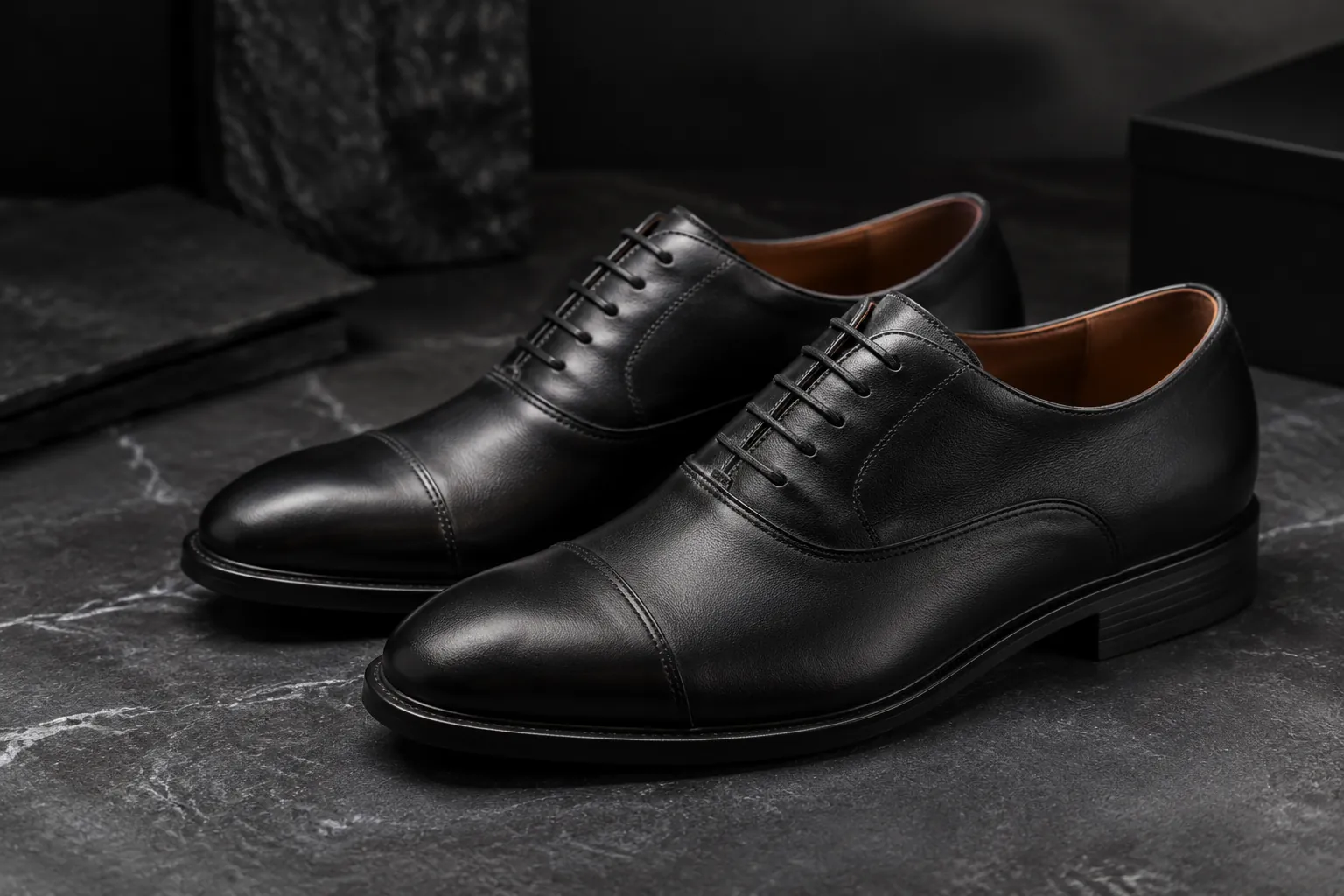
You can seal a strong custom leather loafer and still lose the assortment. Colorways land, the size run widens, a lining or hardware set changes, retail packaging is added—and the line that once read as one core style starts to look like several near-matches. The gap is missing custom leather loafers core style controls: the geometry that made the sealed pair repeatable never becomes a buyer-owned record that rides with the commercial frame, so later reviewers treat design notes as optional.
On the published men's core penny loafer reference (L-01, also described as a tan men's penny loafer), that record is six names: saddle proportion, apron symmetry, vamp length, opening retention, heel hold, and flex. Everything that follows either stress-tests those names or sits beside them. Quantity, size range, materials, branding, packaging, and delivery need still belong in one product-and-commercial review; they should not quietly rewrite the style layer while being priced as spare parts.
Why a sealed pair stops owning the assortment
Sealing one sample proves fit and appearance for that pair in that moment. It does not automatically govern the next size, the next leather article, or the next box artwork.
Drift usually begins in the handoff. Teams treat the sample as a finished product definition and leave geometry unwritten. Someone stretches the saddle for a stiffer leather, rebalances the apron after a size complaint, or shifts vamp length to chase a material change—without asking whether the core style is still the same product. On the commercial side, the same file splits into separate pricing requests. Style, market, quantity, size range, materials, branding, packaging, and delivery need are meant to be read together; when they arrive as isolated line items, the geometry record often never sits in the same review.
Editorial recommendation for product teams: put the six-name style record in the same package as the commercial frame before you authorize color, hardware, or packaging variants. That is buyer practice. It is not a claim that any single sealed sample already enforces later SKUs.
The L-01 style record in six names
Name the set once here as the acceptance record you recheck when sizes and materials change. The expansions below are buyer acceptance guidance only. The loafers page does not publish construction methods, lab tests, or operational pass/fail criteria beyond naming these controls.
- Saddle proportion – Relative width, placement, and visual weight of the band that defines the penny silhouette.
- Apron symmetry – Left-right and seam balance on the moccasin-style face across pairs and sizes.
- Penny loafer vamp length – Where the vamp ends relative to the throat and saddle when pattern work is adjusted.
- Loafer opening retention – How the topline and opening should hold shape in normal handling and wear.
- Heel hold – Backpart grip and seat relationship consistent with the core style.
- Flex – Where and how the shoe is expected to bend under the forefoot.
Later sections use short handles: saddle, apron, vamp, opening, heel, flex. If a change forces a new reading of any of them, treat it as a style change, not a drop-in option on the same core code. For the geometry reference on men's core penny loafers, use the loafer program page rather than as a stock catalog claim.
Does size range rewrite the style, or test it?
Expected size range belongs in the commercial frame early, with customer, market, style family, target price position, expected quantity, delivery need, and the decisions the factory may still propose. In a custom loafer size range brief, write the span you expect to sell and state that acceptance remains against the same six names. Grading is a stress test of saddle, apron, vamp, opening, heel, and flex—not a reason to reopen them after the core style is meant to stay repeatable.
Hypothetical example only: if a team later finds the largest size softens the opening more than the sealed mid-size pair, record whether opening still matches the core rule instead of silently accepting a new opening as “what large sizes do.” That judgment stays editorial until you and the manufacturer agree a control update in writing.
Keep size grading language separate from material language. A thicker upper or a different lining can change how the same graded pattern feels; review that interaction when materials are confirmed, without erasing either the size-range field or the style layer.
Where materials and pack sit relative to geometry
Incoming control on the factory quality page is scoped to confirming controlled materials before mixed or unclear inputs enter production. That list is leather article, color, thickness, lining, outsoles, hardware, packaging, artwork, and lot identity. It is a production-entry gate for material identity, not finished-goods inspection, and not a license to rewrite L-01 geometry when a new article arrives.
| Field group | What belongs here | How it relates to the style record |
|---|---|---|
| Core style geometry | Saddle, apron, vamp, opening, heel, flex (L-01) | Buyer acceptance record for the repeatable core |
| Upper and component identity | Leather article, color, thickness, lining, outsoles, hardware | Confirm before production entry; judge whether geometry still reads true |
| Brand and pack | Packaging, artwork, related brand marks as specified | Commercial identity; pack art does not redefine vamp or saddle |
| Lot trace | Lot identity for controlled materials | Keeps mixed or unclear materials from entering production against the sealed core |
When a new color or lining is proposed, re-read the style record first. If the proposal only changes article, color, or thickness and the six names still hold, document the material change under incoming identity. If it needs a different vamp or opening behavior to “work,” you are no longer on the same core style, and the commercial code should reflect that. For private-label programs that also need factory development paths, keep the style layer visible with OEM and ODM briefing fields.
What freezes in the brief, and what stays open
The OEM and ODM brief step is to freeze the commercial frame by stating customer, market, style family, target price position, expected quantity, size range, delivery need, and the decisions the factory may propose. Use those fields exactly. Do not invent service promises, free design programs, or fixed MOQs the public pages do not state here.
- Customer and market – Who the product is for and where it sells, so price position and presentation make sense against the same core style.
- Style family – Name the core as a men's penny loafer family tied to the six controls, so later variants stay inside or deliberately outside that family.
- Target price position – A position band for discussion, not a unit price published in these sources.
- Expected quantity and size range – Commercial scale and span that must still pass the same style acceptance layer.
- Delivery need – Timing as a planning input, without turning it into a quoted lead time the excerpt does not provide.
- Decisions the factory may propose – Leave this marked open. It is an invitation for options at brief stage, not a documented ODM catalog, guaranteed design outcome, or already-approved construction path.
Freeze what you own—market, style family, control set, quantity intent, size range, delivery need, and material or pack identity when known—and list open factory proposals as questions, not as accepted specs. That separation keeps assortment expansion from rewriting geometry under the cover of a factory suggestion.
Pricing the product whole, not as spare parts
On the quote request path, the stated method is to read the product and commercial frame together. Style, market, quantity, size range, materials, branding, packaging, and delivery need are reviewed together rather than priced as isolated line items. Attach the six controls inside “style.” Materials, branding, and packaging ride as co-equal commercial fields, not as substitutes for geometry.
Isolated line-item pricing is how saddle and opening fall out of the conversation. A hardware quote without vamp, or a packaging quote without lot identity for the upper leather, produces numbers that no longer describe one product. Ask for options against the full frame. A buyer may also ask which sampling, MOQ, packing, or quotation information applies to the project; that is a fair project question, not a claim that any specific MOQ, sample path, or price is already published in these sources.
Confirm controlled materials and lot identity before mixed or unclear materials enter production, and keep that gate after the style record is written so material approval cannot become an accidental redesign. See incoming material and export QC framing for the incoming list scope, and keep finished-pair QC language out of that step unless your own program adds it.
One send package for development, sampling, or quotation
Close the file as one current definition, not as three disconnected emails. Share that definition and ask which development, sampling, or quotation options may apply, without inventing outcomes the evidence does not support.
- Style acceptance list – The six L-01 controls named against the men's core penny loafer reference, with photos or callouts of the sealed sample if you have one.
- Commercial frame fields – Customer, market, style family, target price position, expected quantity, size range, delivery need, plus a clearly labeled list of decisions you want the factory to propose.
- Material and identity list – Leather article, color, thickness, lining, outsoles, hardware, packaging, artwork, and lot identity requirements or known values, marked confirmed or open.
- Open questions only – Sampling path, packing detail, MOQ discussion, or quotation structure as questions for the project, not as assumed commitments.
Send that package through the quote and contact path so style and commercial fields arrive in one review. If a field is unknown, leave it marked unknown rather than filling it with a guess that later looks like an approval. The assortment stays coherent only if saddle, apron, vamp, opening, heel, and flex remain the same acceptance record every time size, color, or packaging expands around them.
Sources and verification
- Custom Loafers Manufacturer | OEM & Private Label Leather Loafers First-party site source
- OEM Shoes & ODM Leather Footwear | Custom Shoe Manufacturer First-party site source
- Leather Shoe Factory in China | Capability & Export QC First-party site source
- Request a Quote | Leather Shoe Manufacturer First-party site source
Share the current leather footwear definition and ask which development, sampling or quotation options may apply to the project.
Send your project brief