
Footwear Development
Custom Leather Boot Color Approval: Appearance Boundaries
Custom leather boot color approval is clearer when the requested color direction is kept apart from the unanswered questions that define its acceptable appearance range.
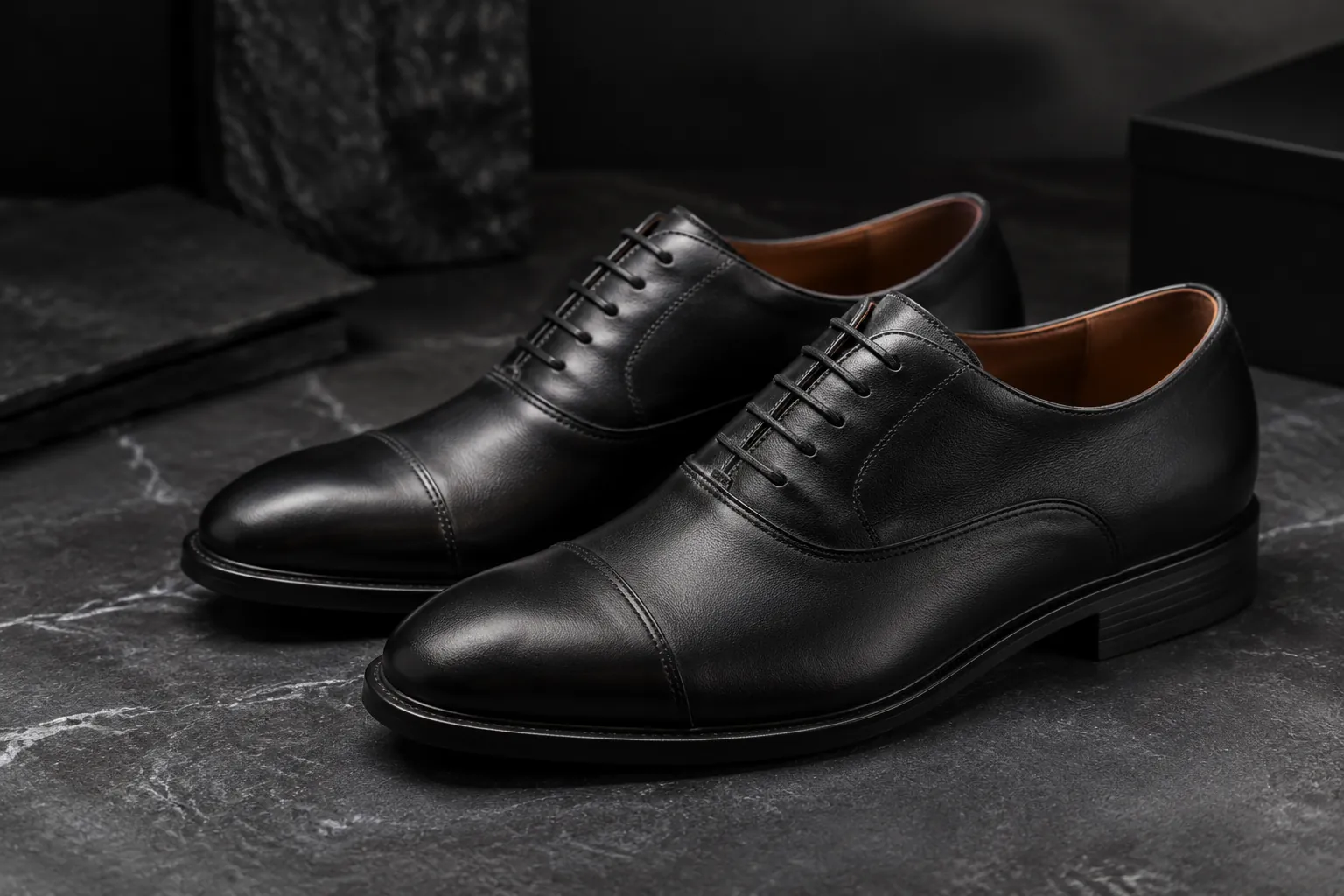
Treat a color name as a starting point for custom leather boot color approval, not as a complete appearance decision. The materials page asks what variation is natural, what becomes a defect, how colors are approved, and how hides or component lots are paired across an order. Those prompts identify issues to discuss; they do not supply a project-specific answer, tolerance, or visual outcome.
For the buyer's own planning, it helps to distinguish the intended color from the boundary of acceptable appearance. A request might name a color direction confidently while leaving natural variation, defects, approval, and lot pairing unresolved. Keeping that uncertainty visible prevents an open question from being recorded as an agreed requirement.
Build a Two-Part Appearance Record
The following is a buyer planning framework, not a factory form or a documented approval procedure. Its purpose is to put the requested direction and the unanswered appearance decisions in different places.
| Record part | What the buyer can enter | Purpose |
|---|---|---|
| Color direction | Requested color description, leather article if known, and any reference the buyer wants to discuss. | States the current visual intention without implying that an appearance boundary has been set. |
| Appearance questions | Individual entries for natural variation, defect boundaries, color approval, and hide or component-lot pairing. | Keeps each unresolved decision visible until the project receives an applicable response. |
For the buyer, the useful test is simple: can someone read the color-direction entry without mistaking it for an answer to the four appearance questions? If not, move the unresolved points into the second part of the record. Do not fill those fields with an assumed tolerance or an assumed matching result.
Name the Material Before Discussing the Boundary
The factory-quality page says to review leather article, color, thickness, lining, outsoles, hardware, packaging, artwork, and lot identity before mixed or unclear materials enter production. For buyer recordkeeping, an editorial recommendation is to keep those source-named inputs identifiable rather than reducing them to a general note such as "boot materials."
| Source-named input | Buyer record entry |
|---|---|
| Leather article | Leather article |
| Color | Requested color direction |
| Thickness | Thickness |
| Lining | Lining |
| Outsoles | Outsoles |
| Hardware | Hardware |
| Packaging | Packaging |
| Artwork | Artwork |
| Lot identity | Relevant lot identity, where the buyer has one to discuss |
This identity list does not establish that every listed item affects the finished leather color. Its narrower value is organizational: it gives the buyer a way to identify the material or component to which an appearance question belongs.
Ask the Four Questions Individually
For leather hide variation approval, use a separate line for each materials-page prompt. A swatch, image, or color name should not be treated as a substitute for asking these questions. The wording below is buyer guidance for preparing an inquiry, not a statement of the manufacturer's practices.
- Natural variation
Ask what variation is natural for the leather definition under discussion. Identify the leather article and requested color direction alongside the question so that any response has a clear material context.
- Defect boundary
Ask what becomes a defect. Leave the answer open rather than adding an unverified threshold. This preserves the distinction between a discussion of natural variation and a discussion of an unacceptable appearance condition.
- Color approval
Ask how colors are approved for the project. The supplied materials-page excerpt raises this question but does not describe an approval method or state that a particular reference establishes a production match.
- Hide or component-lot pairing
Ask how hides or component lots are paired across the order. Keep leather component lot pairing questions tied to the relevant hide or boot component instead of leaving the inquiry at a general request for matching.
In private label boot leather color matching discussions, four short questions are more informative than one broad request for consistent color. They show exactly which decisions remain open and avoid treating a general appearance preference as a documented specification.
Read the Incoming-Control Statement Narrowly
The incoming-control excerpt has a defined limit. It describes review of named controlled materials before mixed or unclear materials enter production. It does not describe a buyer's approval standard.
| What the excerpt states | What it does not establish |
|---|---|
| Named material inputs are reviewed before mixed or unclear materials enter production. | A buyer acceptance criterion, a numerical color tolerance, a hide or component-lot pairing method, or a final visual result. |
This distinction matters when preparing the record. The published review statement can help a buyer identify material fields to name. It should not be converted into a claim that the project has an agreed appearance boundary.
Place the Appearance Record Beside the Commercial Brief
An editorial recommendation is to send the appearance record with, rather than in place of, the project context. The OEM and ODM page says the commercial frame should state the customer, market, style family, target price position, expected quantity, size range, delivery need, and decisions the factory may propose.
Separately, the contact page says that style, market, quantity, size range, materials, branding, packaging, and delivery need are reviewed together rather than priced as isolated line items.
Neither excerpt documents an appearance-approval workflow. For the buyer, the practical use of the two statements is to keep the color discussion connected to the project while leaving the appearance questions distinct. That avoids presenting the commercial brief as proof of color acceptance or presenting the appearance record as a confirmed production instruction.
Send an Inquiry With Open Questions
Once the current definition is ready to discuss, the buyer can use a bounded inquiry. This draft is a communication aid, not a representation of available services or a commitment to a development, sampling, or quotation route.
Current leather definition: [leather article, requested color direction, thickness, and relevant lot identity].
Appearance questions: Please explain what variation is natural, what becomes a defect, how colors are approved, and how hides or component lots are paired across the order.
Commercial context: [project details provided separately]. Please identify which development, sampling, or quotation options may apply to this project.
The structure keeps the material definition, appearance questions, and commercial context legible without declaring any of them settled. It also asks about possible next steps without assuming that a particular option is available.
What the Excerpts Leave Open
The supplied excerpts support an informed inquiry, not an approval promise. They do not document a numerical color tolerance, a particular approval workflow, a reference-to-production match, a lot-pairing procedure, or final visual uniformity. They also do not establish lead times, minimum quantities, or the availability of a specific development, sampling, or quotation option.
Share the current leather footwear definition and ask which development, sampling, or quotation options may apply to the project.
Sources and verification
- Leather Shoe Materials | Full Grain, Suede, Lining & Outsoles First-party site source
- Leather Shoe Factory in China | Capability & Export QC First-party site source
- OEM Shoes & ODM Leather Footwear | Custom Shoe Manufacturer First-party site source
- Request a Quote | Leather Shoe Manufacturer First-party site source
Share the current leather footwear definition and ask which development, sampling or quotation options may apply to the project.
Send your project brief